The Biggest Cruise Mistakes I See as a Travel Agent — And How to Avoid Them
After booking cruises for clients across every major cruise line — and personally sailing on many of them — I’ve watched the same cruise mistakes come up over and over again. Most of them are completely avoidable. Most of them cost real money, real comfort, or in some cases real safety.
This isn’t a generic list of cruise mistakes pulled from a travel forum. These are the ten cruise mistakes I see most often as a cruise travel agent — the ones I spend the most time helping clients fix, and the ones I wish every first-time cruiser knew before they booked.
The Cruise Mistakes I See Most Often
These are the ten cruise mistakes that come up again and again with clients — some cost money, some cost comfort, and a few can genuinely derail a trip. Here’s how to avoid each one.
1. The Most Expensive Cruise Mistake You Can Make — Skip Travel Insurance
This is the single biggest mistake cruisers make — and the one with the most serious consequences.
I’ve seen clients miss their cruise because of a medical emergency the day before departure. One client faced medical bills at sea that would have financially devastated their family without coverage. Another came home to find their trip cancellation claim covered every penny of a $4,000 vacation they never took. In every single one of these situations, the difference between a manageable situation and a financial catastrophe was travel insurance.
Cruise ship medical care is not free — it’s billed like a private hospital visit. A medical evacuation from international waters can cost $50,000 or more without coverage. Trip cancellation coverage protects a vacation investment that can run into the thousands of dollars.
Travel insurance is not optional. It is an essential part of every cruise booking regardless of your age, your health, or how many times you’ve cruised before. The one time you need it will make every previous premium you ever paid feel like the best money you ever spent.
RoamRight Travel Insurance — Get a Quote →
2. A Cruise Mistake That Ruins Your Sleep — Booking the Wrong Cabin
Where your cabin is located on the ship has a bigger impact on your cruise experience than almost any other decision you make at booking — and most first-time cruisers have no idea what to avoid.
Avoid these cabin locations:
Under the pool deck — foot traffic, dragged deck chairs, and the sound of the pool pump running at all hours. This is one of the most common complaints I hear from clients who didn’t know to avoid it.
Next to, above, or below a nightclub or entertainment venue — music and bass travel through the ship’s structure. If you’re a light sleeper this will ruin multiple nights of your cruise.
Below the sun deck or buffet restaurant — foot traffic and kitchen noise start early. Very early.
First cabin from the elevator bank — constant foot traffic, door sounds, and elevator noise around the clock. One of the quietest upgrades you can make is simply moving a few cabins down the corridor.
What to do instead: When booking ask your travel agent specifically to avoid these locations. A good agent knows the deck plans and can steer you toward quieter midship cabins on lower decks — which also happen to be the most stable in rough seas. This is one of the most common cruise mistakes first-time cruisers make simply because no one told them what to ask for.
3. Not Booking Through a Fee-Free Travel Agent
Most first-time cruisers book directly through the cruise line’s website because they assume it’s the same price or cheaper. It almost never is.
A fee-free cruise travel agent costs you nothing — agents are compensated by the cruise line, not by charging you a fee. The price you pay is the same as booking direct. But a good agent brings things the cruise line website doesn’t: knowledge of which cabins to avoid, which promotions are actually worth taking, and — in many cases — onboard credit or added perks that the cruise line won’t offer you if you book direct.
I’ve had clients come to me after booking direct and ask why their friends who used an agent got a free specialty dinner and $100 onboard credit on the same sailing at the same price. The answer is simple: their agent negotiated it.
Avoiding this cruise mistake is simple — book through a fee-free agent. It costs nothing and frequently gets you more.
4. Expired Passport — Or No Passport At All
As someone with a law enforcement background who has watched tourists navigate international situations without proper documentation, I want to be direct about this one: your passport is your most important travel document and it deserves the same attention you’d give your wallet or your phone.
This is one of the most preventable cruise mistakes, and also one of the most common. Two mistakes I see constantly:
No passport at all — A government-issued ID and birth certificate will get you on a cruise from a US port to certain Caribbean destinations — but it will not get you back into the United States if something goes wrong in a foreign port. If you miss the ship, if you have a medical emergency, if you need to fly home from an international port — you need a passport. A cruise is not the place to find out your backup documentation isn’t enough.
Expired passport — Check your expiration date right now, before you book. Many countries require your passport to be valid for at least six months beyond your travel dates. A passport that expires two months after your cruise may be rejected at a foreign port. Passport renewal currently takes several weeks — sometimes longer. Do not leave this until the week before you sail.
This cruise mistake is one of the easiest to prevent — check your passport today. If it expires within the next year — renew it now.
5. The Cruise Mistake That Ruins Embarkation Day — Wrong Bag Packing
This is a mistake that ruins the first few hours of almost every cruise it affects — and it’s completely avoidable.
Your checked luggage goes through the port terminal, gets loaded onto the ship, and is delivered to your cabin. That process takes hours. On a busy embarkation day it can take until late afternoon or early evening.
If your seasickness medication is in your checked bag and the ship sails into rough weather before your luggage arrives, you have a problem. If your swimsuit and sunscreen are in your checked bag and you want to spend embarkation afternoon at the pool, you have a problem.
The rule: anything you might need in the first six hours goes in your carry-on. That means:
- All prescription and over-the-counter medications
- Swimsuit and cover-up
- Sunscreen
- A change of clothes if your flight was long
- Valuables and electronics
Avoid this cruise mistake — pack your carry-on as if your checked bag won’t arrive until dinner. Because sometimes it doesn’t.
6. Not Pre-Purchasing Dining and Drink Packages
Two of the most common post-cruise regrets I hear from clients involve specialty dining and drink packages — specifically, not buying them before they boarded.
Specialty dining packages are almost always cheaper when purchased before you board. The same 3-restaurant package that costs $150 per person pre-cruise can run $200 or more once you’re on the ship. If you know you want to eat at specialty restaurants — and you should, they’re worth it — buy the package before you go.
Drink packages follow a similar pattern with an added urgency: most cruise lines close pre-cruise beverage package purchases 3 days before sailing. Miss that window and you’re paying full onboard prices — which are significantly higher. Prices on drink packages also fluctuate weekly on many cruise lines, so if you see a good price when you’re browsing, buy it. It may not be there next week.
One more tip most cruisers don’t know: on most cruise lines you can cancel and rebook drink and dining packages if you find a better price later. So if you see a decent price, book it now and keep watching. If it drops, cancel and rebook at the lower rate. You have nothing to lose by locking in early.
Also worth knowing: Royal Caribbean runs sales on beverage and dining packages around major holiday weekends — Memorial Day, Fourth of July, Labor Day, and Black Friday are historically strong sale periods. If your sailing is far enough out, it may be worth timing your purchase around one of these windows.
Avoiding this cruise mistake is easy — log into your cruise line’s pre-cruise planner the moment you book and check what packages are available. Set a reminder to check drink package pricing weekly until you buy.
7. Not Booking Private Island Passes and Excursions in Advance
Two of the most disappointing conversations I have with clients happen after they’ve returned from their cruise:
“We tried to get into Hideaway Beach at Perfect Day at CocoCay but it was sold out.”
“We wanted to do the zip line in Roatan but every excursion was full by the time we looked.”
Both of these situations are completely preventable — and both happen for the same reason. Popular cruise line private island experiences and shore excursions sell out. Sometimes weeks before the ship sails.
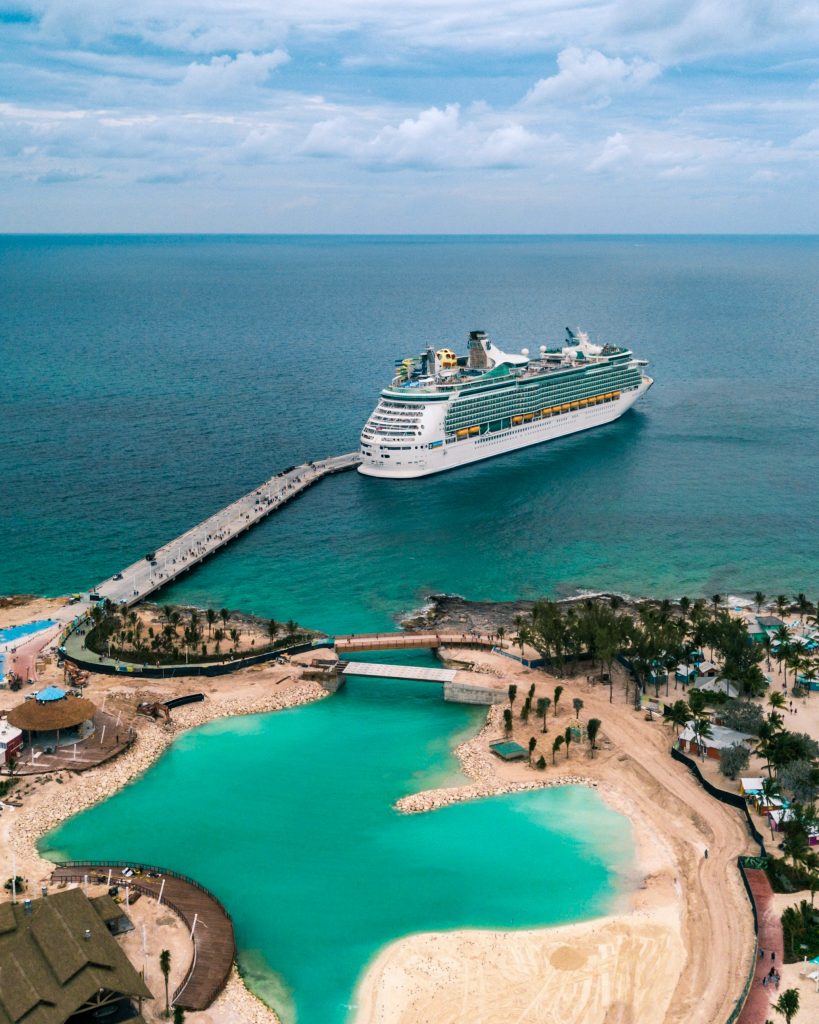
Hideaway Beach at Perfect Day at CocoCay — Royal Caribbean’s adults-only beach club — sells out on popular sailings. The balloon ride, the waterslides, the cabanas — all of these have limited capacity and all of them can be gone before you board if you wait.
Shore excursions through the cruise line and through third-party operators like Viator work the same way. The best excursions at the most popular ports fill up fast.
The rule: book your private island passes and excursions the moment they become available — usually 90 days before sailing for most cruise lines. Check your cruise line’s app or website regularly after booking. Waiting too long is one of the cruise mistakes that’s completely within your control to avoid.
Insider tip: Royal Caribbean in particular runs holiday weekend sales on private island passes and shore excursions — the same Memorial Day, Fourth of July, Labor Day, and Black Friday windows that apply to drink and dining packages. If you’re sailing on Royal Caribbean and your departure is a few months out, checking during these sale windows can save real money on Hideaway Beach passes and popular excursions.
8. Not Reviewing Your Cell Phone Plan Before Boarding
Most cruisers don’t think about their cell phone plan until they’re standing in a foreign port watching their data charges add up. By then it’s too late.
Your phone is your map, your emergency contact, your camera, and your way to reach the ship. It needs to work in port — and you need to know what it costs to use at sea.
The short version:
- T-Mobile customers on qualifying plans get free international coverage in port at no extra charge — but pay expensive per-minute rates at sea on the ship’s network. Use ship Wi-Fi at sea instead.
- AT&T offers a $20/day International Day Pass that covers both port days and at-sea use on one plan
- Verizon requires two separate add-ons — TravelPass for port days and Cruise Daily Pass for at sea
Don’t make this cruise mistake — set up your international plan before you leave home. Do not assume your current plan covers you. Do not find out what it costs after you’ve already used it.
For the full breakdown of every carrier’s cruise coverage read: How to Use Your Cell Phone in a Cruise Port Without Getting Hit With Surprise Charges
9. The Cruise Mistake That Strands People — Not Arriving the Day Before
Of all the cruise mistakes on this list, this is the one with the highest stakes. I cannot overstate how many cruises I’ve seen clients miss — or nearly miss — because they flew in the morning of embarkation day.
Flights get delayed. Flights get cancelled. Luggage gets lost. Traffic happens. A connection gets missed. Any one of these things on embarkation morning means you’re watching your ship sail without you.
This cruise mistake is the one I see break people’s hearts — the ship does not wait. The ship has a schedule, a maritime itinerary, and hundreds of other passengers on board. If you are not on the gangway before all-aboard time, you are not getting on that ship.
The rule: fly in the day before embarkation. Every time. Without exception. Book a hotel near the port, get a good night’s sleep, and arrive at the terminal relaxed and on time. The cost of one extra hotel night is a fraction of what it costs to catch up to your ship at the next port — if that’s even possible.
10. Three Cruise Mistakes Packed Into One — What Not to Forget
These three items come up constantly in post-cruise regrets — and they’re all inexpensive fixes that make a significant difference in your experience.
Portable charger: Your phone is not just a camera and a social media device on a cruise. It is your map, your emergency contact, your ship app, and your documentation tool if something goes wrong in port. A dead phone in an unfamiliar port is a safety issue, not just an inconvenience. A 10,000mAh portable charger fits in any day bag and covers 2-3 full charges. Families and multi-device travelers should consider the 50,000mAh version.
Cabin fan: Cruise ship air conditioning is centrally controlled — you can adjust it within a limited range but you cannot fully control the airflow. Cruise cabins have very little air circulation, and on warm-weather Caribbean sailings that stillness is genuinely uncomfortable for light sleepers and anyone who runs warm. A magnetic rechargeable cabin fan sticks to your cabin’s metal wall, runs whisper-quiet, and charges via USB-C. Most cruisers who bring one would never sail without it again.
Bonus Tip: Cruise-Approved Power Strip
Cruise-approved power strip: Most cruise cabins have two outlets. Most cruisers travel with four to six devices. A cruise-approved power strip solves this — but cruise lines require strips with no surge protection. A standard home power strip will be confiscated at embarkation. The Cruise On power strip is specifically designed to meet cruise line requirements and works on all major lines. Alternatively the Belkin 112W 4-Port Charging Block is the modern replacement — four ports, 112 watts, universally accepted.
For more planning essentials, check out our guides to cell phone plans for cruise travel and 10 Cruise Port Safety Tips From a Retired NYPD Officer.
Travel safe. Travel smart. Enjoy every wave.
— Rick Hayes, Travel Safety Authority
Planning your first cruise and not sure where to start? I offer one-on-one cruise planning consultations — personalized guidance on ship selection, cabin location, dining strategy, and port safety for your specific sailing — not travel agent services. I don’t earn commission on your booking, so there’s no financial incentive pushing my recommendations. Work with Rick for honest, unbiased guidance on your specific sailing.
This article contains affiliate links. If you purchase, book, or make a reservation through a link on this page, I may earn a small commission at no additional cost to you. Affiliate relationships include but are not limited to Amazon Associates, Viator, RoamRight, and other travel and product partners. This does not influence my recommendations — I only link to products, services, and experiences I would genuinely recommend to my own clients. Travel insurance recommendations are provided for informational purposes only. I am not a licensed insurance agent. Please review all policy details carefully before purchasing. See my full Disclaimer for details.
The information in this article is provided for general educational purposes only and reflects the personal experience and professional background of the author. It is not a substitute for professional security consultation or official government travel guidance. Safety conditions at any destination can change rapidly — always verify current advisories at travel.state.gov before your trip. Reliance on any information in this article is at your own risk. This site may contain affiliate links; see the full Disclaimer for details.