Is St. Thomas Safe for Cruise Passengers? What to Expect at the Port and Ashore
St. Thomas is one of the busiest cruise ports in the Caribbean, and one of the most-searched: is St. Thomas safe for cruise passengers? Start with the fact most guides skip — this is US soil, split across two separate cruise docks that shape how your entire port day unfolds. This guide covers both docks, the taxi system, the beaches and attractions worth your time, and what’s changing at the port later this year.
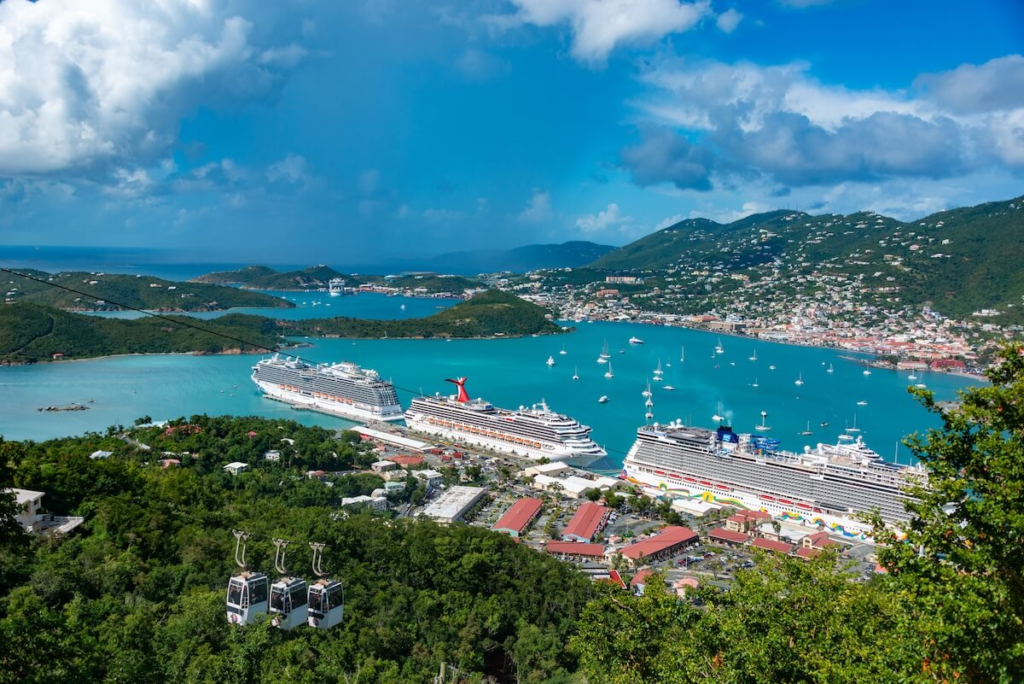
The St. Thomas Cruise Port — Havensight or Crown Bay?
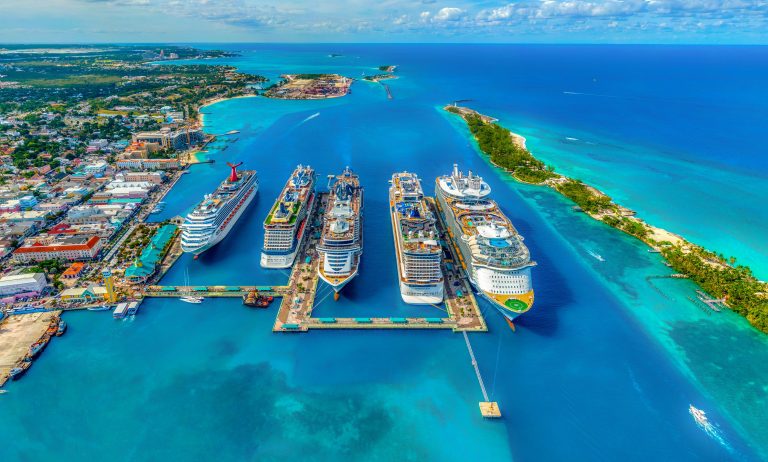
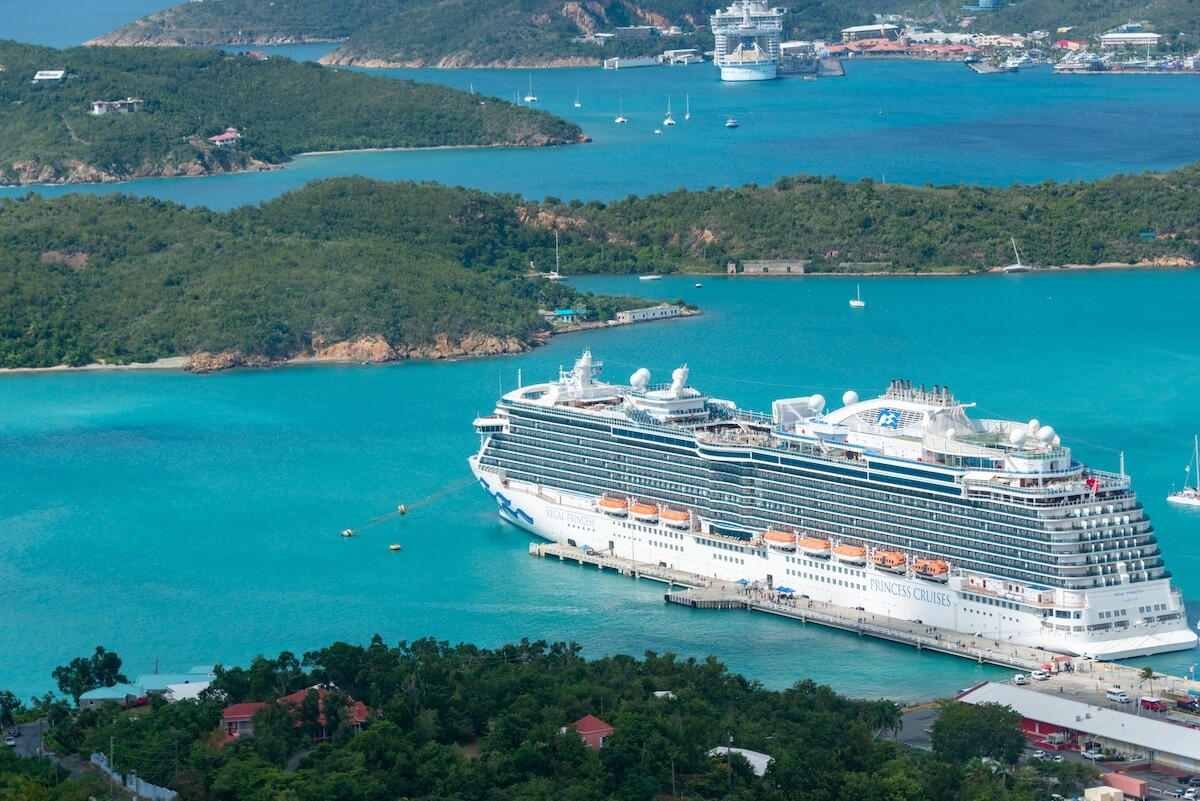
St. Thomas has two cruise facilities, run by two different operators. Havensight — officially the West Indian Company Limited (WICO) Dock — sits closer to downtown Charlotte Amalie and is run by WICO. Crown Bay, officially the Austin “Babe” Monsanto Marine Terminal, is run by the Virgin Islands Port Authority (VIPA) and sits on the other side of the harbor.
Dock assignments aren’t fixed by cruise line. They depend on ship size, port traffic, and berth availability — meaning your ship could dock at Havensight on one sailing and Crown Bay the next. WICO and VIPA publish their schedules separately, so the most reliable way to know your dock before you sail is to check both official schedules for your actual sailing date rather than relying on “my cruise line always docks at ___.” Either way, the dock is only half the picture — being on US soil changes more about your port day than most guides mention.
Insider Tip: Don’t plan your shore excursion pickup point off a blog post or a forum thread. Check your cruise line’s own port information in your cruise planner a few days before sailing — it will confirm the exact dock for your specific ship and date, which is the only reliable version of this information.
What Being on US Soil Changes
The US Virgin Islands are a US territory, not a foreign country. That has a few real, practical effects on a port day. Your phone typically works on your normal domestic plan without international roaming charges once you’re ashore — major carriers treat the USVI as domestic coverage, the same as anywhere else in the US. That coverage applies on land; some carriers bill usage differently while you’re still aboard the ship itself, so don’t assume your carrier covers the whole sailing the same way it covers the shore day.
You won’t need a passport for the visit itself, since the USVI is a US territory — but bring a government-issued photo ID. Your cruise line still requires proof of identity and citizenship to sail, whether that’s a REAL ID-compliant license, a passport, or a license plus a birth certificate depending on your line’s policy. Separately, your ship issues its own ID card for getting on and off at each port — leave that in your cabin and you have a problem, passport or not.
The State Department’s Travel Advisory system only covers foreign destinations, so you won’t find a Travel Advisory rating for the USVI. That’s not a safety guarantee either way — it just means the tool most people check first for “how safe is this place” doesn’t apply here.
The rest of this guide draws on territorial law enforcement, the hospital that serves the island, and a foreign government that does publish USVI-specific guidance for its own citizens.
Is St. Thomas Safe for Cruise Passengers?
Yes — St. Thomas is generally safe for cruise passengers. The realistic risk is property crime, like unattended bags at beaches, not violent crime, which concentrates in residential areas away from cruise terminals. Standard precautions — securing valuables and staying in populated, well-lit areas — cover most of the risk.
St. Thomas draws over a million cruise passengers a year, and the overwhelming majority have a completely uneventful port day. That risk mostly plays out as someone walking off with a bag left unattended on a beach towel, or a phone or wallet grabbed in a crowded shopping area — property crime, not violent crime. Headline crime statistics for the island as a whole paint a different picture, mostly because they’re driven by activity in residential areas cruise passengers never visit.
Staying Safe in Charlotte Amalie
I’d approach Charlotte Amalie and the areas near both docks with the same situational awareness I relied on for years as a retired NYPD Anti-Terrorism and Transit Special Operations officer: treat it like any crowded, unfamiliar downtown. Keep your bag zipped and in front of you, your phone in a front pocket rather than a back one, and leave valuables on the ship rather than carrying them ashore. The Virgin Islands Police Department (VIPD) recently secured additional legislative support for staffing in the visitor-heavy districts — a sign the territory is actively investing in police presence where cruise traffic concentrates. For an emergency, call 911, the same as home. For a non-emergency matter, VIPD’s St. Thomas/St. John line is 340-776-9110.
Canada’s official government travel advisory for the US Virgin Islands — last updated July 29, 2026 — rates the territory at its lowest risk tier, “take normal security precautions,” the same level assigned to travel within Canada itself. Its specific guidance: secure your belongings, including any travel documents, at all times, and avoid isolated or unpopulated areas, particularly after dark. That’s a useful, non-alarmist anchor for how to behave here.
Insider Tip: The safest version of a St. Thomas port day is the boring one — stick to areas with steady foot traffic, keep your group together, and treat “I’ll just leave my bag on the sand while we swim” as the single most common way tourists lose something here. It’s not a St. Thomas problem specifically; it’s a beach-anywhere problem, but it’s worth saying plainly.
Taxis, Safari Trucks, and How Fares Work
There’s no Uber or Lyft on St. Thomas. Your options ashore are licensed taxis and open-air “safari” trucks — converted flatbeds with bench seating, common throughout the territory. The Virgin Islands Taxicab Commission — a territorial body with legal authority to set standards for drivers and vehicles, investigate complaints, and enforce rate compliance — regulates both.
The Taxicab Commission prices St. Thomas taxi fares per person, not per vehicle, and sets rates by destination rather than by meter — worth knowing before you get in one. Most US visitors aren’t used to that system, and it’s the single most common source of “I think I got overcharged” complaints. Before you get in:
- Confirm the destination and per-person price out loud with the driver, before the ride
- Check for official Taxicab Commission markings — a taxi plate and signage
- Note the total price upfront if you’re traveling as a group, since it’s per person, not per vehicle
If you have a dispute about a fare or a driver’s conduct, the Taxicab Commission is the correct body to contact, not the cruise line or the port operator.
Beaches You Can Reach
Neither Havensight nor Crown Bay puts you within a real walk of swimmable water — Charlotte Amalie’s harbor area is a working port and downtown district, not a beach. Magens Bay, the island’s best-known beach, requires a taxi from either dock.
Magens Bay isn’t the only option. Sapphire Beach and Lindquist Beach sit on the island’s east end, both known for calmer water and mountain views, and both a taxi ride from either dock. Coki Point, on the same side of the island, is the smallest of the group but the most popular for snorkeling — it sits right next to Coral World Ocean Park, making the two an easy pairing for a beach and attraction day.
Magens Bay is run by the Magens Bay Authority, a public body, which is worth knowing because it means the beach is actually managed rather than an open, unsupervised stretch of sand. There’s a small entrance fee, lifeguards are on duty, and the park closes to the public in the late afternoon — so a beach afternoon needs to work backward from that closing time and your ship’s all-aboard time, not just from when you feel like leaving.
The Water Safety Nobody Mentions
One thing almost no cruise guide mentions: the Virgin Islands Department of Planning and Natural Resources (DPNR) publishes a weekly beach water quality advisory, testing specific beaches for bacteria levels after rain and flagging which ones don’t meet the territory’s swimming standard that week. It’s a genuinely useful, easy check before you commit a precious port day to a particular beach — especially after heavy rain, when runoff can temporarily affect water quality anywhere on the island. The National Weather Service also issues rip current statements covering St. Thomas when conditions warrant it, the same way it would for any US coastline.
Insider Tip: If you want to do one five-minute thing before a beach day here, search “DPNR beach advisory” for the current week rather than assuming every beach on the island is cleared for swimming just because it’s a well-known one. It’s a free, official check that most visitors never think to make.
What’s Actually Here
Charlotte Amalie’s Shopping District
Charlotte Amalie’s duty-free shopping district lines the streets near the harbor — jewelry, liquor, and luxury goods stores are a legacy of the island’s long history as a free port. It’s walkable from Havensight, and it’s also where most of the island’s restaurants and historic sites cluster, so a day that starts with shopping can easily turn into a day of wandering the old town.
Skyride to Paradise Point
A tram just outside Havensight climbs about 700 feet above the harbor to Paradise Point, where there’s a restaurant, a bar, and a lookout with views across the harbor and, on a clear day, toward Puerto Rico. Few attractions sit this close to the pier rather than a taxi ride away, which makes it a realistic option even on a short port day.
Coral World Ocean Park
Coral World is a marine park on the island’s east end, next to Coki Point Beach, with an underwater observatory, a shark encounter, and a variety of marine exhibits. Getting there takes a taxi from either dock, but it pairs naturally with a beach stop at Coki, since the two sit right next to each other.
Blackbeard’s Castle
A 1679 Danish watchtower turned boutique historic site above Charlotte Amalie, Blackbeard’s Castle is one of only five National Historic Landmarks in the US Virgin Islands. General admission includes the tower climb, a rum tasting, and pool access, with a restaurant and bar on-site. A short taxi ride from either dock, it’s a good option if you want a couple of hours built around history and a view rather than a beach.
Excursions and What to Verify Before You Book
Whether you book through the ship or go independently — our Ultimate Independent Cruise Shore Excursion Guidewalks through that decision in more depth than fits here — the same basic checks apply before you hand over money for a St. Thomas excursion: confirm the operator carries real liability insurance, confirm your own travel insurance actually covers the activity you’re booking, and build in a real buffer before your ship’s all-aboard time rather than cutting it close. That last one matters more here than at a lot of ports — a missed return from an independent excursion is a missed ship, full stop.
Medical Care for St. Thomas Cruise Passengers
Schneider Regional Medical Center’s Roy Lester Schneider Hospital is the only acute care hospital on St. Thomas. It’s a 169-bed facility with a 24-hour emergency department, serving both residents and the roughly 1.2 million visitors who arrive by air and cruise ship each year. It earned full Joint Commission accreditation in January 2026, a national quality benchmark.
The hospital is located at 9048 Alton Adams Sr. Drive, St. Thomas, VI 00802. Its general information line is 340-776-8311 — that’s the hospital switchboard, not a direct emergency line, so for an actual emergency call 911 first, the same as you would at home. More information is available at srmedicalcenter.org.
Being on US soil doesn’t mean every health insurance plan or cruise medical policy works exactly the way it would at home, and it doesn’t eliminate the need for evacuation in a genuinely serious emergency. What actually matters in a serious situation is whether the specific specialty care you need is available locally at that moment — not the fact that you’re technically on US territory. Travel insurance that covers medical evacuation is worth having here for the same reasons it’s worth having anywhere you’re relying on a hospital you’ve never used before.
What’s Changing at the Port This Year
Construction on Charlotte Amalie Harbor begins in September 2026 and is expected to run through mid-2027, according to Seatrade Cruise News. The project will deepen the main channel to allow the largest cruise ships in the world to call at Havensight, which currently can’t accommodate them due to water depth. If your sailing falls within that window, it’s worth checking your cruise line’s port updates closer to your date — a major channel-deepening project is the kind of thing that occasionally affects berth assignments or scheduling, even when it doesn’t disrupt anything for most passengers.
Is St. Thomas safe for cruise passengers? For most, it comes down to the same everyday habits that serve you well in any unfamiliar port — nothing about this destination calls for extraordinary precautions.
Next Steps
If you’re sailing this same itinerary, Taino Bay Cruise Port: The Complete Safety Guide covers the other stop. For sun protection gear that works as well on St. Thomas’s beaches as it does on the pool deck, see Cruise Pool Deck Sun Protection.
Travel safe. See the island, not just the pier.
— Rick Hayes, Travel Safety Authority
Need an independent opinion on whether St. Thomas is the right fit for your travel style? Visit the Work With Rick page to schedule a consulting session. I provide independent safety and travel planning guidance, with no booking commissions or sales incentives.
This article contains affiliate links. If you purchase, book, or make a reservation through a link on this page, I may earn a small commission at no additional cost to you. Affiliate relationships include but are not limited to Amazon Associates, Viator, RoamRight, and other travel and product partners. This does not influence my recommendations — I only link to products, services, and experiences I would genuinely recommend to my own clients. Travel insurance recommendations are provided for informational purposes only. I am not a licensed insurance agent. Please review all policy details carefully before purchasing. See my full Disclaimer for details.
The information in this article is provided for general educational purposes only and reflects the personal experience and professional background of the author. It is not a substitute for professional security consultation or official government travel guidance. Safety conditions at any destination can change rapidly — always verify current advisories at travel.state.gov before your trip. Reliance on any information in this article is at your own risk. This site may contain affiliate links; see the full Disclaimer for details.