Cruise Medical Kit: The Pre-Departure Health Planning Guide
Picture day five of a seven-day Caribbean cruise. Somewhere on that ship, right now, a passenger is counting pills and realizing the math doesn’t work — the kind of gap a cruise medical kit is supposed to prevent. The refill they meant to request is sitting unfilled at a pharmacy fifteen hundred miles away, and the ship’s medical center — capable as it is — is not a walk-in pharmacy for their specific prescription.
That passenger’s problem started three weeks earlier, at home, when a refill request didn’t get made in time.
Your cruise medical kit — the medications, the records, the paperwork — is the least exciting part of getting ready to sail and one of the most consequential. A cruise puts you days from your doctor, your pharmacy, and your medical records, in a setting where the nearest full hospital might be a helicopter ride away. Most medical problems that ambush cruisers trace back to one of two things: something that should have been packed and wasn’t, or something that should have been written down and wasn’t. Both are fixable at home, in advance, which is what this guide is for.
This is the medical planning guide in my Cruise Preparation System. One boundary before we start: this guide covers what you do before you leave — the planning. What happens onboard, including the ship’s medical facilities and how care at sea actually works, is covered in my article on staying healthy on a cruise. And if you or someone in your party cruises with a disability or uses medical equipment, the onboard side of that lives in my accessible cruising series.
When You Can’t Answer the Questions
Nobody wants to think about this part, so we’ll do it first, while the stakes are still hypothetical.
In my law enforcement career, I responded to my share of medical emergencies involving people who couldn’t communicate — unconscious, disoriented, or simply overwhelmed. In those first minutes, responders are working almost blind. What’s this person’s name? Are they diabetic? Do they have a heart condition? Are they on blood thinners? Allergic to anything? Who do we call? Every one of those answers changes what happens next, and the patient can’t provide any of them.
The people who did best in those situations were the ones whose information spoke for them: a card in the wallet, a medical alert bracelet, a phone with emergency information accessible from the lock screen. That’s not morbid over-planning. It’s the difference between responders guessing and responders knowing — and on a cruise, where the responders are a ship’s medical team who have never met you and can’t pull your chart, it matters even more than it does at home.
What Medical Information Should You Carry on a Cruise?
Carry a one-card summary for each traveler: name, date of birth, medical conditions, every medication with dosage, allergies, blood type, your doctor’s phone number, and an emergency contact who isn’t sailing with you. Enter the same details in your phone’s emergency medical feature.
Build that card for every person in your party, then put it where someone will actually find it — one copy in each traveler’s wallet, one in the cabin. Add the phone version too. Both major platforms have an emergency medical feature that’s readable from the lock screen without a passcode, so a responder holding your phone can get to it without getting into anything else.
Insider Tip: Write the card so a stranger can use it at a glance, not so a doctor can admire it. Plain words, biggest facts first. “DIABETIC — INSULIN” on the first line does more in an emergency than a beautifully formatted medication table. If you take a medication that changes emergency treatment — blood thinners are the classic example — that goes at the top, in capitals. You’re writing for someone with thirty seconds, not thirty minutes.
Start With a Conversation, Not a Checklist
Most cruise medical problems are solved in a doctor’s office weeks before anyone packs a bag. That appointment is where the prescriptions, the paperwork, and the honest assessment of whether this itinerary suits your health all get handled at once.
How Far in Advance Should You See Your Doctor Before a Cruise?
See your doctor four to six weeks before you sail. The CDC recommends at least four weeks, which allows time for destination-specific vaccines, multi-dose schedules, and medication adjustments. Bring your itinerary, and ask for an updated medication list and a brief written medical summary.
Six is better than four whenever you can manage it. Those extra two weeks are what give you room to act on whatever the appointment turns up — a medication that needs adjusting, a vaccine series that runs longer than expected, a referral you didn’t know you needed.
This visit does three jobs. It confirms you’re good to travel, which for most people is a quick conversation. It gets your prescriptions squared away for the trip, which we’ll cover in detail next. And it produces the paperwork you want with you: an updated medication list and, for anyone with a significant medical history, a brief medical summary you can hand to an unfamiliar doctor. If your condition is complex, ask for that summary directly — a few paragraphs covering your conditions, treatments, and recent results. Any physician treating you in port or at sea will work faster and safer with it than without it.

Do You Need Vaccines for a Cruise?
Sometimes, and it depends on your ports rather than the ship. Check your cruise line’s own requirements first, then check destination entry rules on the State Department’s country information pages and the CDC’s Travelers’ Health site. Your doctor applies that guidance to your situation.
I’m not going to make vaccine recommendations here, because that’s between you and your doctor. What I will tell you is when to ask. The CDC’s Travelers’ Health pages list current guidance by destination, and you want to be reading them when you book, not when you pack — some vaccines involve multiple doses or need lead time to take effect, and neither compresses. Confirm your cruise line’s own requirements at the same time, since those sit separately from the destination guidance. One more pass in the week before you sail is worth it too — not for vaccines, but for outbreak and destination health notices, which change on their own schedule.
How Pregnant Can You Be to Go on a Cruise?
Cruise lines set the cutoff late in the second trimester and enforce it individually. Royal Caribbean won’t accept a guest more than 23 weeks pregnant at any point during the sailing; Carnival’s limit is entering the 24th week. Check your own line’s policy before booking.
Read that wording carefully, because it’s stricter than it first sounds. Both Royal Caribbean and Carnival write their limits to cover any point during the voyage, not just the day you board — so a longer itinerary can put you past the cutoff even when embarkation day alone wouldn’t.
This gets enforced at the pier — Royal Caribbean has guests attest to it on a health questionnaire before arrival — and there’s no refund waiting on the other side of a denied boarding. Check your own line’s policy page before you book, not after, and ask your doctor for a letter confirming you’re fit to travel with your due date on it. Carnival recommends one specifically, and it’s paperwork worth carrying whoever you sail with.
How Much Medication Should You Bring on a Cruise?
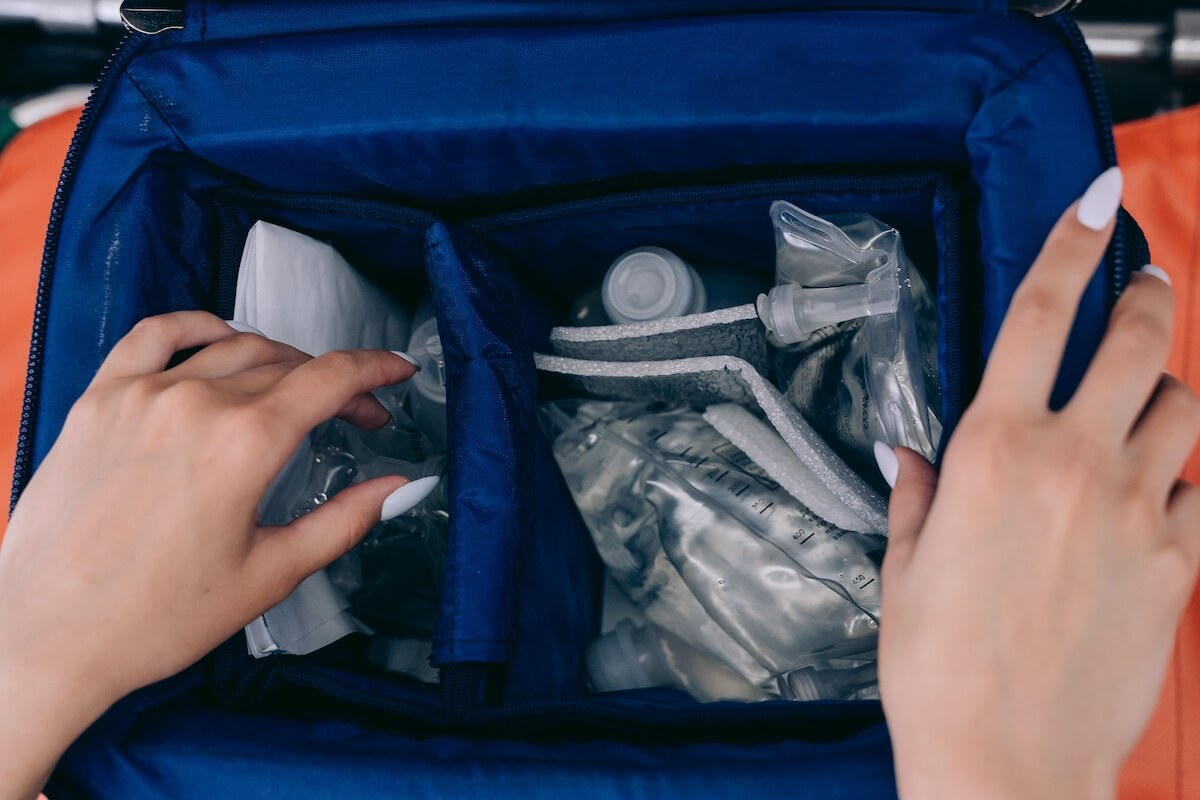
Pack enough medication for every travel day plus several extra days as a buffer against delays. Request refills about 30 days before sailing, keep everything in original labeled pharmacy containers, and carry it all in your hand luggage — never in checked or porter-handled bags.
How to Do the Medication Math
Medication problems on cruises are almost always math problems. Days of travel, plus a realistic buffer, versus pills on hand. Do the math early and you avoid most of what goes wrong. Four things to get right:
Count against the full trip, then add a cushion. Total your days door to door — including travel days on each end — and pack at least several extra days beyond that. Delays happen, and the recovery from a missed ship or a canceled flight shouldn’t include rationing medication.
Request refills 30 days out. Insurance plans often limit how early you can fill a refill, and some medications need your doctor’s sign-off for an early or extended fill — commonly called a vacation override, which is exactly what it sounds like: your insurer approving an early refill because you’ll be away when the normal refill date hits. Your pharmacist can tell you whether you need one and how your plan handles it. Thirty days gives you room for the request to bounce once and still get resolved.
Keep everything in its original pharmacy container. The labeled bottle connects the medication to your name and your prescriber. That matters at borders, it matters to any doctor treating you, and it matters if anyone ever questions what you’re carrying.
Check your medications against your destinations. Other countries restrict or ban some medications that are commonly prescribed in the United States — certain ADHD medications and some strong pain medications are recurring examples of the general pattern. If you take anything controlled or unusual, check the State Department’s country information pages for your ports, and when in doubt, contact that country’s embassy. Do this a month out, when there’s still time to talk with your doctor about alternatives or documentation.
Can You Bring Medication in a Pill Organizer on a Cruise?
Yes, but bring the original labeled bottles too. A pill organizer alone doesn’t connect a medication to your name or your prescriber, which matters at a border crossing or with a doctor treating you. Pack the organizer empty, fill it onboard, and keep the pharmacy containers with you.
This trips people up because nobody wants to travel with eight bottles when a pill organizer does the job day to day. You don’t have to choose — bring both, and keep the bottles in your bag for anyone who needs to see what you’re actually taking.
Insider Tip: Medications ride in your carry-on. Always. Never in checked luggage, never in a bag a porter takes at the terminal — those bags can surface hours after boarding or, occasionally, not at all. And before you pack them, photograph every prescription label. If a bottle is lost or damaged mid-trip, that photo gives any pharmacist or ship’s doctor the exact drug, dosage, and prescriber in one glance, which is the difference between a quick replacement and a long international phone call.

What Goes in Your Cruise Medical Kit: Records, Cards, and Documents?
A cruise medical kit is paperwork as much as pills: a one-card medical summary for each traveler, your full medication supply in original labeled containers, health and travel insurance cards, insurer phone numbers stored separately, and a doctor’s letter for injectables, devices, or controlled medications.
Beyond the medical summary card from earlier, a few documents belong in your travel folder:
Your insurance cards — health insurance and, if you buy it, travel insurance — plus a written note of each insurer’s phone number, stored separately from the cards themselves. The medication list and medical summary from your doctor visit. Documentation for anything a security checkpoint or border officer might ask about: a doctor’s letter for injectable medications and needles, for implanted medical devices, or for any controlled medication, saves you from explaining your medical history to a stranger in a line.
If you wear a medical alert bracelet or necklace, make sure the information on it is current before you travel — an outdated alert can misdirect care as easily as no alert. If you’ve been meaning to get one and you have a condition that first responders need to know about immediately, the weeks before a cruise are a good deadline to finally do it.
Digital copies of all of it — photographed, backed up to cloud storage you can reach from any device — follow the same three-layer routine as your travel documents, which I cover in the documents guide.
Medical Equipment: The One Pre-Trip Step That Can’t Wait
If anyone in your party travels with medical equipment — a CPAP machine, portable oxygen, a mobility device, anything that needs power, space, or supplies — there is one planning step that has to happen early: contact your cruise line’s special needs or accessibility department and tell them what you’re bringing, well before you sail. Lines have notice deadlines for certain equipment and arrangements, and those deadlines are commonly weeks before departure. Get the confirmation in writing and carry it with you.
This guide stops there on purpose — how equipment works onboard, cabin arrangements, and the full picture of cruising with medical needs is covered in my accessible cruising series, including the paperwork and pharmacy specifics in bringing medication on a cruise. The one thing to do now: put the special needs department call on your calendar the week you book, not the week you sail.
The Insurance Question, From the Medical Side
I’ve written a full guide on whether you really need travel insurance for a cruise, so I won’t repeat it here — but medical preparation is where the question gets real. Start with what most people assume wrong: care in the ship’s medical center isn’t included in your fare. According to the CDC, the exam, any tests, and any medications are typically billed separately.
Does Medicare Cover Medical Care on a Cruise?
Usually not. Medicare generally doesn’t cover care outside the United States, and many private plans limit international coverage. Care in the ship’s medical center is billed separately from your fare. The largest expense is evacuation to shore and transport home, which needs its own coverage.
Medicare.gov states it plainly, and what it means practically is one phone call: ask your own insurer exactly what your plan covers off U.S. soil, and get the answer before you rely on it. The expensive scenario isn’t the ship’s medical center — it’s needing more care than the ship can provide and having to move you to a foreign hospital and eventually home. Those costs land on you unless something covers them, and they can be substantial.
That’s the equation to run before you sail: what does my insurance actually cover out there, and am I comfortable carrying the gap myself? For some travelers — young, healthy, sailing close to home — accepting the gap is a reasonable call. For others, especially anyone managing a health condition, medical and evacuation coverage is the piece of travel insurance that earns its premium. Read the full article, look at your own situation, and decide on purpose. The one wrong answer is not deciding at all.
Your Cruise Medical Kit at a Glance
Everything covered in this guide, gathered in one place:
| Item | Where to Pack | Key Action |
|---|---|---|
| Prescription medications | Carry-on, original labeled containers | Pack full trip length + buffer days; never in checked or porter-handled bags |
| Pill organizer | Carry-on, packed empty | Fill onboard; keep original bottles alongside it |
| Medical summary card | Wallet + cabin | One per traveler; phone version too |
| Health & travel insurance cards | Travel folder | Insurer phone numbers noted separately from the cards |
| Doctor’s letter | Travel folder / digital | For injectables, devices, or controlled medications |
| Medical alert bracelet or necklace | Worn | Confirm info is current before you travel |
| Digital backups | Cloud storage | Photos of cards, labels, and letters — reachable from any device |
Putting It on the Calendar
Everything in this guide has a natural deadline, and my 90-day cruise checklist schedules all of it — the doctor visit at four to six weeks, refill requests at 30 days, the special needs call at booking, your line’s pregnancy policy if that applies, the wallet cards during packing week. Building a cruise medical kit isn’t a big job. It’s eight or ten small jobs that are only hard when they’re discovered late. Put them on the calendar early, and by sailing day the whole category is done. That’s the goal: prepared enough that you don’t have to think about it again until you’re home.

Next Steps
For what happens after the gangway — the ship’s medical center, illness at sea, and staying well onboard — read Staying Healthy on a Cruise. And to work through the coverage decision properly, see Do You Really Need Travel Insurance for a Cruise?
Travel safe. Your health travels with you.
— Rick Hayes, Travel Safety Authority
Need an independent opinion on whether your medical travel plan is the right fit for your travel style? Visit the Work With Rick page to schedule a consulting session. I provide independent safety and travel planning guidance, with no booking commissions or sales incentives.
This article contains affiliate links. If you purchase, book, or make a reservation through a link on this page, I may earn a small commission at no additional cost to you. Affiliate relationships include but are not limited to Amazon Associates, Viator, RoamRight, and other travel and product partners. This does not influence my recommendations — I only link to products, services, and experiences I would genuinely recommend to my own clients. Travel insurance recommendations are provided for informational purposes only. I am not a licensed insurance agent. Please review all policy details carefully before purchasing. See my full Disclaimer for details.
The information in this article is provided for general educational purposes only and reflects the personal experience and professional background of the author. It is not a substitute for professional security consultation or official government travel guidance. Safety conditions at any destination can change rapidly — always verify current advisories at travel.state.gov before your trip. Reliance on any information in this article is at your own risk. This site may contain affiliate links; see the full Disclaimer for details.