10 Cruise Port Safety Tips From a Retired NYPD Officer
Introduction
These cruise port safety tips come from years working plainclothes and uniformed with the NYPD’s Anti-Terrorism Unit and Transit Special Operations Division — protecting tourists in Times Square, Penn Station, and the NYC subway — where I saw exactly how criminals target people in crowded public spaces.
Cruise ports are no different — and these cruise port safety tips will prepare you for exactly that.
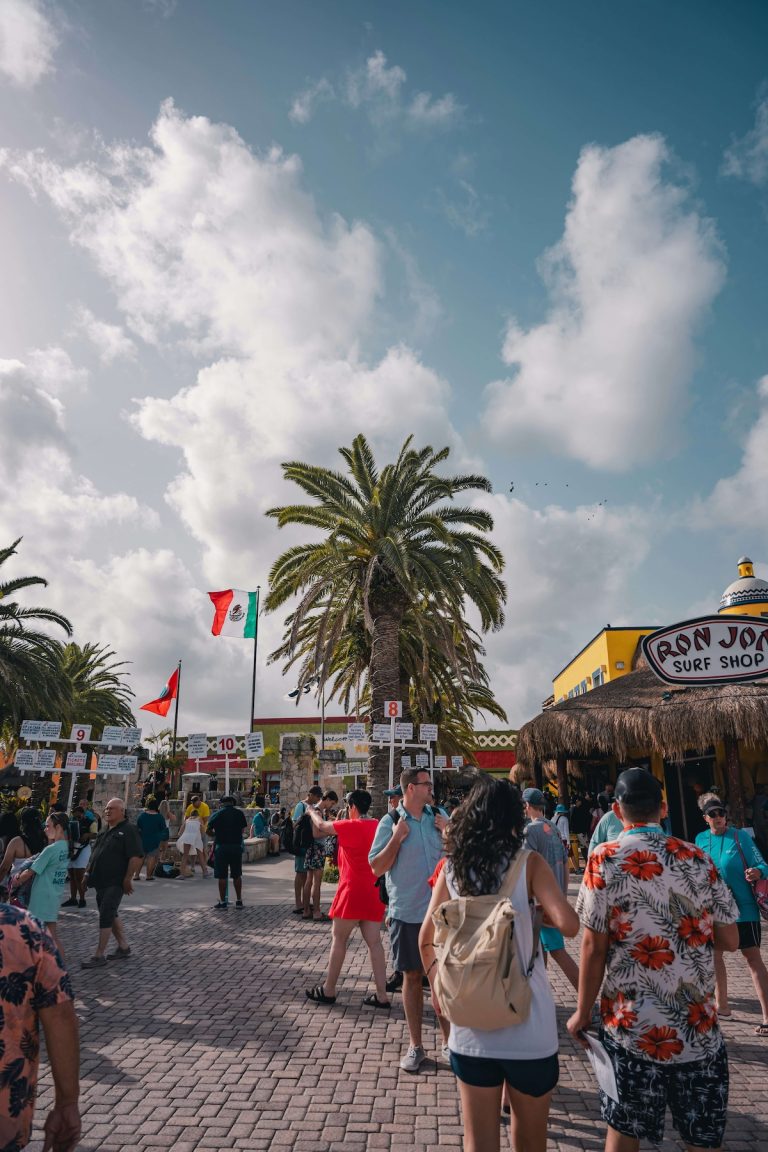
The same patterns I watched play out daily in Midtown Manhattan show up in Nassau, Cozumel, Roatán, and every other port your ship will visit. The good news: once you know what to look for, you can enjoy every port stop with confidence.
Here are 10 cruise port safety tips from someone who spent years watching these patterns play out in real time.
Tip 1: Cruise Port Safety Tips Start the Moment You Leave the Ship
TThe gangway and the immediate port area are where most tourist-targeting begins — your cruise port safety tips start here. Criminals position themselves at the exit points — just like pickpockets position themselves at subway turnstiles. The moment you step off the ship, your situational awareness should be at its highest, not its lowest.
What to do: Pause before you walk into the crowd. Take 30 seconds to observe the area, identify where the crowds are moving, and note any individuals who appear to be watching arriving passengers rather than moving with purpose.
Tip 2: Use the Buddy System — Always
In my years working tourist corridors in Manhattan, solo travelers were targeted at a dramatically higher rate than those in pairs or groups. There is safety in numbers — criminals look for easy, low-risk opportunities.
What to do: Never explore a port alone. If you’re a solo cruiser, join a ship-organized excursion or connect with fellow passengers for port days.
Tip 3: Know the Difference Between a Distraction and a Threat
One of the most common theft techniques I witnessed in Times Square — and that operates identically in Caribbean cruise ports — is the deliberate distraction. Someone spills something on you, asks for directions, offers a “free” gift, or creates a commotion nearby. While your attention is diverted, an accomplice moves in.
What to do: If a stranger initiates unexpected physical contact or creates an unexpected distraction, immediately secure your valuables and create distance. This isn’t rudeness — it’s awareness.
Tip 4: Carry Only What You Need
Leave your passport in the ship’s safe and carry a copy instead. Bring only the cash you plan to spend, one card for emergencies, and your ship card. The less you carry, the less you can lose.
Important exception: passport requirements differ by port and country. Before your trip, confirm the specific entry requirements for each destination on your itinerary — some ports require your original passport rather than a copy. When in doubt, carry the original and secure it in a money belt rather than leaving it unsecured in a bag.
What to do: Use an RFID-blocking wallet or money belt worn under your clothing. A quality RFID-blocking wallet or money belt worn under your clothing is one of the best investments you can make before any cruise. → My recommended RFID money belt on Amazon Keep your main cash in a front pocket, never a back pocket or open bag.
Tip 5: Stick to Known, Populated Areas
Every cruise port has a safe tourist zone and areas beyond it where the risk profile changes significantly. The ship’s shore excursion desk and reputable guidebooks identify these boundaries clearly.
An important reality check: even within secured port areas and designated tourist zones, bad actors operate. A controlled perimeter does not eliminate the presence of individuals with criminal intent — it only reduces it. Pickpockets, scam artists, and opportunistic thieves are aware that tourists feel safer inside secured areas and sometimes use that false sense of security to their advantage. Stay alert regardless of where you are in the port.
What to do: Research your specific port before arrival. If you’re venturing beyond the immediate port area, book through the ship or use a vetted local tour operator. Your cruise line’s recommended excursions come with a guarantee — if something goes wrong, the ship waits for you.

Tip 6: Protect Yourself From Scams, Not Just Theft
Scams in tourist environments follow predictable patterns — I saw the same structures operating in Lower Manhattan that show up in every major cruise port. Fake tour guides, taxi overcharging, “free” bracelet vendors, and photo opportunity scams are among the most common.
One scam worth knowing in detail: a person approaches you presenting themselves as a representative of the local tourist board or visitors bureau — appearing official, friendly, and helpful. They offer to arrange transportation to a nearby attraction at an unusually good price, directing you to a taxi they have pre-arranged. Once you arrive at your destination, the driver refuses to return you to the port unless you pay a significantly higher fare — sometimes many times the original agreed price. You are now stranded, far from the ship, under time pressure, with limited options. This scam is effective precisely because the setup feels legitimate.
Most major cruise ports operate an official taxi stand where all drivers are vetted and registered by the port authority — this is always your safest transportation option and the one I recommend over any unsolicited offer. That said, port vetting does not guarantee every driver will be honest about pricing or routes. A vetted driver and a fair driver are not always the same thing.
What to do: Always use the official port taxi stand rather than accepting rides arranged by strangers. Agree on the full round-trip price before getting in — not just the fare to your destination. Decline transportation arranged by unsolicited strangers regardless of how official they appear. Legitimate tourist board representatives do not approach arriving cruise passengers to arrange rides. If something feels wrong, trust that instinct and walk away.
Tip 7: Have a Meet-Up Plan Before You Leave the Ship
In crowd management situations — something I was trained for through COBRA cohort training and NIMS/CIMS emergency management certification — the single biggest variable is whether people know where to go if they get separated.
What to do: Before leaving the ship, establish a clear meeting point at the port that everyone in your group knows. Set a firm return time with a 30-minute buffer before all-aboard. Save the ship’s emergency contact number in your phone.
Tip 8: Know What Hostile Surveillance Looks Like
This comes directly from my Hostile Surveillance Detection training with the NYPD. Before most crimes occur — whether theft, scam, or assault — there is an observation phase. Someone is watching you, assessing whether you’re a good target.
One pattern I watched play out repeatedly in Herald Square and Times Square and subway performance areas is particularly worth knowing: while a street performer or musician draws a crowd, 2 to 3 individuals dressed to blend in as ordinary tourists position themselves toward the back of the crowd. They are not watching the performance. They are watching the audience — scanning for targets. Phones left in back pockets. Bags left unzipped. Distracted parents. Tourists counting cash. Once a target is identified, they move. The performance is not the attraction for these individuals — the crowd it creates is.
This same pattern operates identically in cruise port entertainment areas, busy market spaces, and anywhere a street performance draws a gathering of tourists. The setting changes. The playbook does not.
What to do: At any street performance or crowded entertainment area, position yourself with your back toward a wall or solid surface rather than open crowd behind you. Keep bags in front of your body and phones secured. A waterproof phone and document holder keeps your phone, cash, and documents secure and accessible without being an open target. Be aware of anyone in the crowd who appears to be watching people rather than the performance. If you notice individuals loitering at the edges of a crowd without watching the performer, move your group away from them. You do not need to confront anyone — simply removing yourself as an easy target is enough.
Tip 9: Get Travel Insurance — Every Single Time
This is non-negotiable. A medical emergency at a foreign cruise port can cost tens of thousands of dollars without coverage. I’ve seen what happens when travelers assume their health insurance covers them internationally — it usually doesn’t.
What to do: Purchase travel insurance that includes medical evacuation coverage before every cruise. Compare travel insurance policies before every cruise — look specifically for coverage that includes emergency medical evacuation, trip cancellation, and missed port protection. I recommend comparing policies through a reputable travel insurance comparison site — look specifically for coverage that includes emergency medical evacuation, trip cancellation, and missed port protection.
Tip 10: Trust Your Instincts — They’re Trained Too
After years of behavioral observation training and working in high-density tourist environments, I can tell you this with confidence: your instincts are more reliable than you think. If something feels wrong, it probably is.
What to do: Give yourself permission to walk away from any situation that feels uncomfortable — a vendor, a taxi, a tour guide, a street. You don’t owe anyone an explanation. Your safety is more important than being polite.
Conclusion
Cruise ports are overwhelmingly safe, enjoyable experiences — and the vast majority of travelers have zero issues. But the ones who do are almost always caught off guard by something predictable and preventable.
These cruise port safety tips aren’t generic travel advice. They’re built on years of operational experience protecting tourists in some of the busiest, most challenging public environments in the world.
For a full list of recommended cruise safety gear: Cruise Travel Gear — Recommended Products
If you’re headed to Nassau on your cruise, read this next: Is Nassau Bahamas Safe for Cruise Passengers? A Law Enforcement Perspective
And before you board, make sure you understand what the muster drill is actually preparing you for: Cruise Ship Emergency Procedures: What Every Passenger Needs to Know
Bookmark these cruise port safety tips before your next departure.
Enjoy every port. Stay aware. Travel safe.
Have a cruise safety question? Leave a comment below or use the contact form. And if you found this helpful, share it with someone who has a cruise coming up — it could make a real difference.
This article contains affiliate links. If you purchase, book, or make a reservation through a link on this page, I may earn a small commission at no additional cost to you. Affiliate relationships include but are not limited to Amazon Associates, Viator, and other travel and product partners. This does not influence my recommendations — I only link to products, services, and experiences I would genuinely recommend to my own clients. See my full Disclaimer for details.
The information in this article is provided for general educational purposes only and reflects the personal experience and professional background of the author. It is not a substitute for professional security consultation or official government travel guidance. Safety conditions at any destination can change rapidly — always verify current advisories at travel.state.gov before your trip. Reliance on any information in this article is at your own risk. This site may contain affiliate links; see the full Disclaimer for details.