Cruise Pool Deck Sun Protection: The Gear That Actually Works
Most cruisers get sunscreen right exactly once — the first coat, applied before heading up to the pool deck around 9 a.m. Then six hours pass. The ship never loses direct sun the way a shaded backyard does, and the water bounces UV rays back up at you from every angle. By 2 p.m., people who did everything “right” that morning are lobster red and wondering what happened. Real cruise sun protection takes more than one application to hold up through a full sea day.
II spent years working the NYC subway system with the NYPD’s Citywide Impact and Anti-Terrorism Unit, patrolling stations like Times Square and Penn Station — platforms with no airflow, no air conditioning, and commuters packed shoulder to shoulder in peak summer heat. For anyone who’s spent time in the city, the West 4th Street station is a good reference point — brutally hot, no breeze, no relief. You don’t need direct sun to see heat exhaustion set in. It happens fast, and it happens to people who have no idea it’s coming.
What to Watch For on a Hot Pool Deck
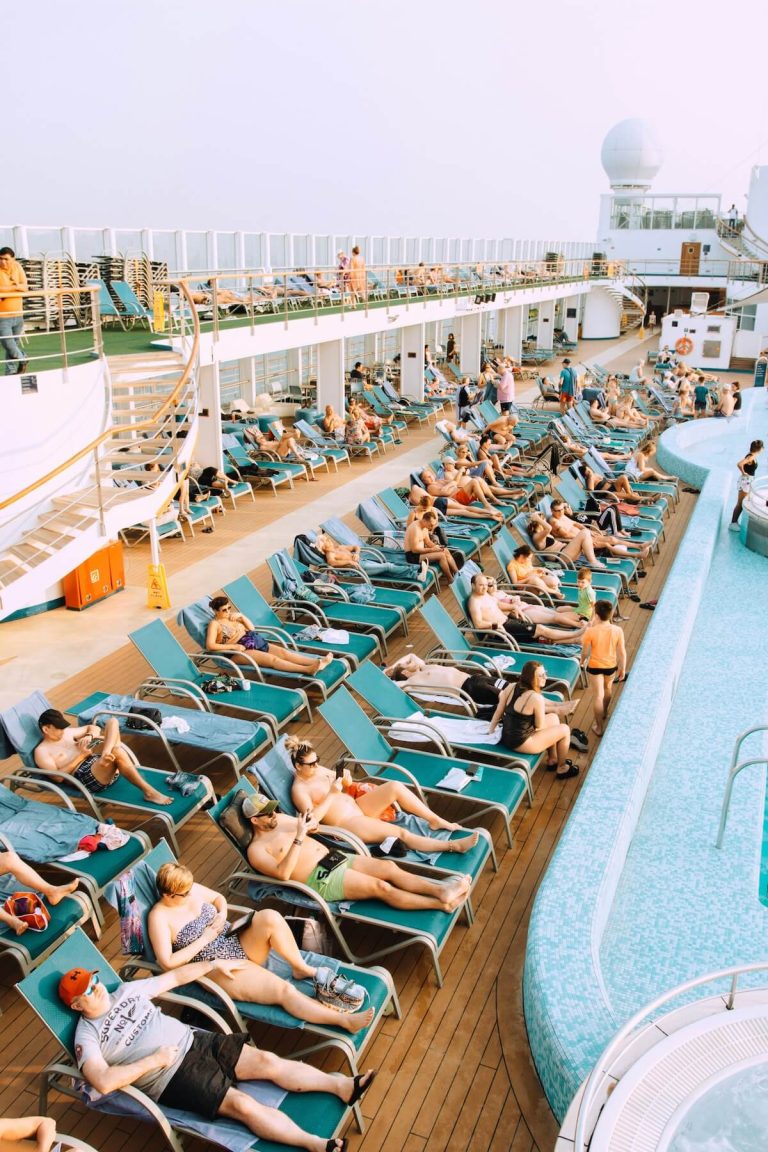
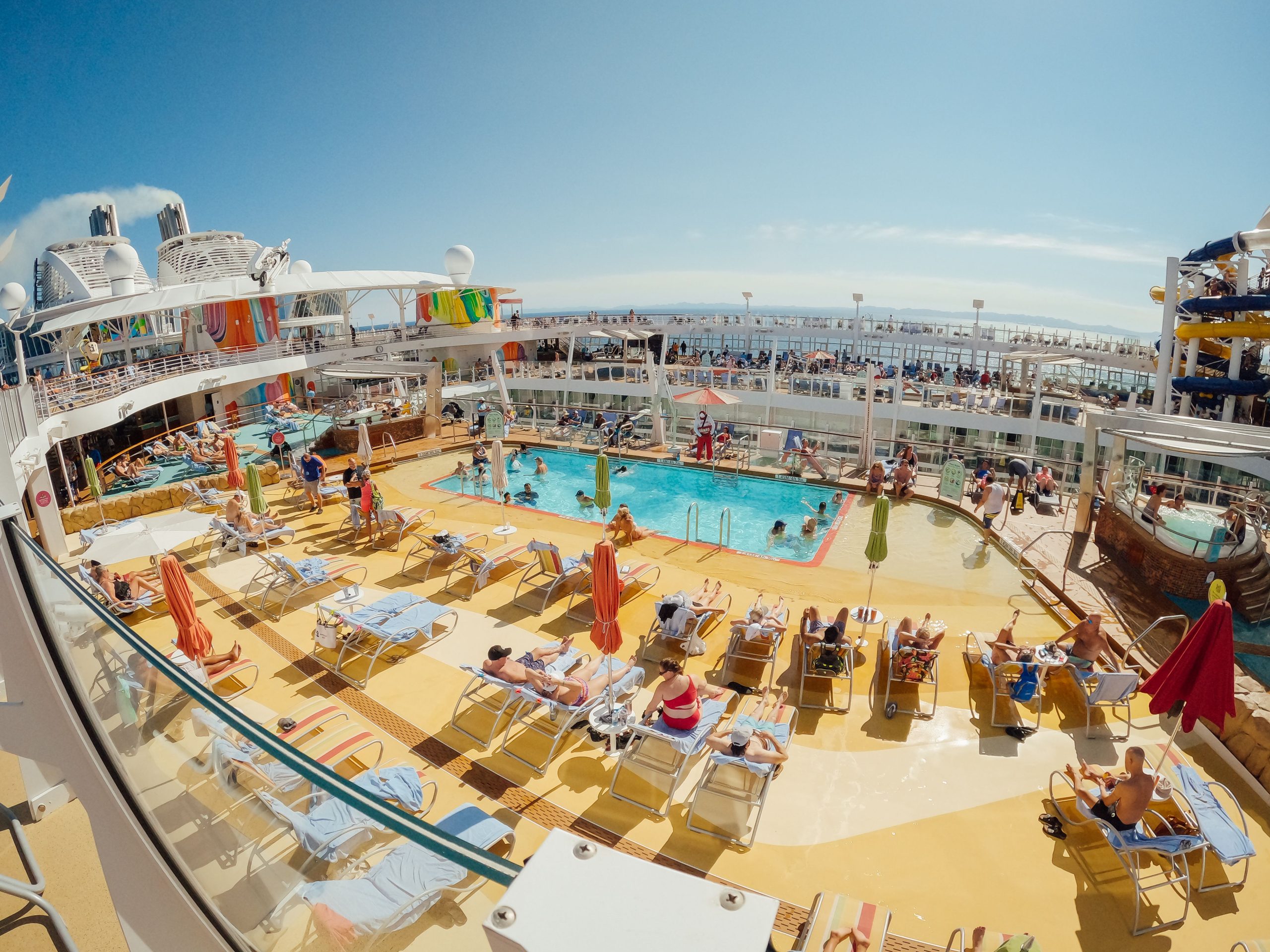
A cruise ship pool deck is a near-perfect setup for heat illness: reflective water, reflective decking, an ocean breeze that tricks you into thinking you’re cooler than you are, and drinks that dehydrate you faster than you’re replacing fluids.
Heat exhaustion comes on gradually — heavy sweating, dizziness, nausea, headache, cold or clammy skin. If you or someone with you starts showing this, get to shade or air conditioning, drink cool water, and loosen tight clothing. A cold, wet towel on the neck helps. Most people feel better within 20-30 minutes.
Heat stroke is the emergency version — hot, dry or flushed skin, confusion, a rapid pulse, sometimes passing out. This needs help right away. On most ships, dialing 911 from any ship phone connects you to onboard medical or security, not local emergency services — think of it like calling the front desk in a hotel. In port, use the local emergency number instead.
Kids and older adults overheat faster and often can’t tell you something’s wrong until it’s already serious. Check in on them more than feels necessary.
Bottom line: hydrate before you’re thirsty, take real shade breaks, and let your gear carry the weight sunscreen alone can’t.
The Gear Behind Real Cruise Sun Protection
This article contains affiliate links. If you purchase through a link on this page, I may earn a small commission at no additional cost to you. This does not influence my recommendations — I only link to products I would genuinely recommend to my own clients. See my full Disclaimer for details.
Travel Safety Authority is a participant in the Amazon Services LLC Associates Program, an affiliate advertising program designed to provide a means for sites to earn advertising fees by advertising and linking to Amazon.com. Associate ID: travelsafetya-20
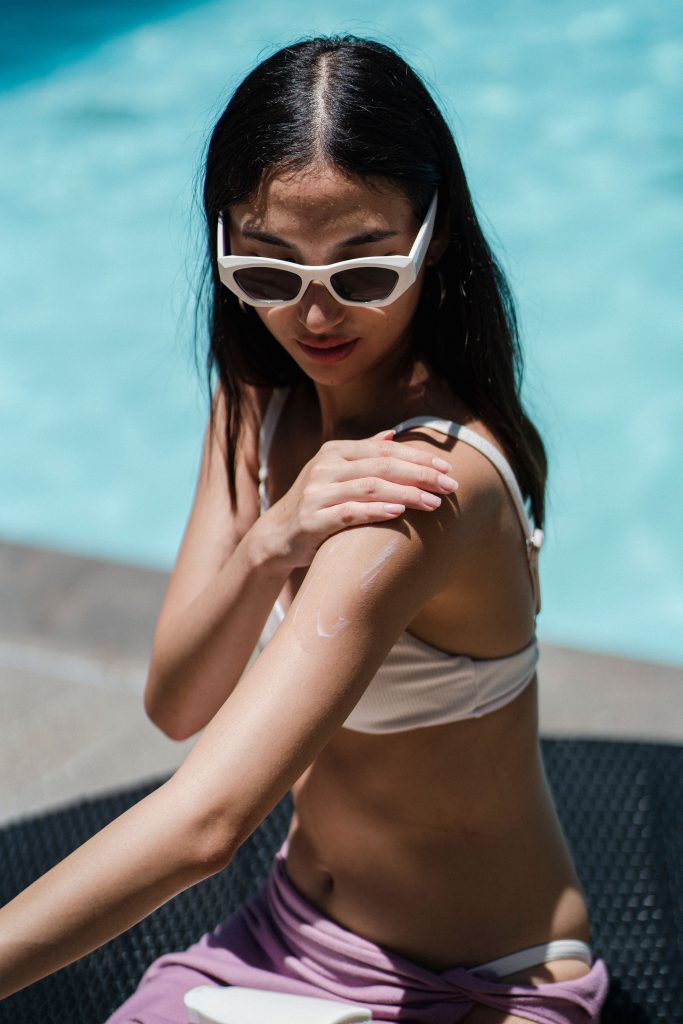
#1 — Cruise Sun Protection Starts With the Right Sunscreen
Most people either avoid reapplying because their sunscreen feels greasy, or go for chemical formulas that aren’t reef-safe once you hit a private island or snorkeling excursion. Blue Lizard’s mineral formula solves both problems — zinc oxide-based, fragrance-free, gentle enough for sensitive skin, and comes as a 2-pack so you’re not stuck mid-cruise with an empty tube.
Blue Lizard Mineral Sunscreen SPF 50+ — Shop on Amazon →
Insider Tip: Reapply sunscreen more often at sea than at home — salt water and constant toweling off strip it faster than a pool or lake would, even if the bottle claims 80-minute water resistance.
#2 — The Shirt That Doesn’t Wear Off in the Water
Sunscreen fails the moment you forget to reapply it, and that’s where cruise sun protection actually falls apart for most people. A UPF 50+ shirt doesn’t have that problem — it protects the same whether you remembered or not. Long sleeve, lightweight, quick-dry, built for exactly this kind of full-day sun exposure.
Northyard Men’s UPF 50+ Rash Guard Hoodie — Shop on Amazon →
Soothfeel Women’s UPF 50+ Rash Guard (with zip pockets) — Shop on Amazon →

#3 — The Hat That Actually Survives a Beach Bag
Most sun hats either don’t fold or don’t have a brim wide enough to matter. These do both — packable, wide-brimmed, and rated for real UV blocking instead of just looking the part.
FURTALK Women’s Packable Sun Straw Hat — Shop on Amazon →
FURTALK Men’s UPF 80+ Foldable Outdoor Hat — Shop on Amazon →
#4 — The Towel That Buys You Ten More Minutes Before You Overheat
This is the piece most people don’t think to pack, and it connects directly back to the heat illness section above. Soak it, snap it once, and it cools for up to three hours — a real tool for managing overheating before it becomes a problem, not just a comfort item.
Mission Max Plus Cooling Towel — Shop on Amazon →
Insider Tip: The worst time to assume you’re “in the shade” on deck is late afternoon. The sun angle drops low enough to bounce off the water and hit you from underneath the umbrella, not just from above it.
Real cruise sun protection isn’t about avoiding one bad sunburn — it’s about getting through a full week of pool deck days without your skin or your energy paying for it.
For more on making the most of cruise line private island beach days, check out Royal Beach Club Paradise Island, and for more cruise gear essentials, see 10 Tech Gadgets That Will Change the Way You Cruise.
Travel safe. Protect your skin and enjoy every sunny sea day.
— Rick Hayes, Travel Safety Authority
Have questions about planning a safer cruise? Work With Rick for personalized consulting — I’m not a booking agent in this context and earn no commission on where you sail; you book independently, I just help you plan smart.
This article contains affiliate links. If you purchase, book, or make a reservation through a link on this page, I may earn a small commission at no additional cost to you. Affiliate relationships include but are not limited to Amazon Associates, Viator, RoamRight, and other travel and product partners. This does not influence my recommendations — I only link to products, services, and experiences I would genuinely recommend to my own clients. Travel insurance recommendations are provided for informational purposes only. I am not a licensed insurance agent. Please review all policy details carefully before purchasing. See my full Disclaimer for details.
The information in this article is provided for general educational purposes only and reflects the personal experience and professional background of the author. It is not a substitute for professional security consultation or official government travel guidance. Safety conditions at any destination can change rapidly — always verify current advisories at travel.state.gov before your trip. Reliance on any information in this article is at your own risk. This site may contain affiliate links; see the full Disclaimer for details.