Cruise Ship Security: Crime, Accidents, and How to Protect Yourself
When people worry about cruise safety, this is usually the part they mean. Not norovirus — crime. Falls. The stories that make the news. This article does for cruise ship security what the companion guide did for health: it lays out what the official data says, explains the systems working behind the scenes, and gives you the handful of habits that meaningfully lower your personal risk. No alarm, no sugarcoating — just the picture as it actually is.
This article covers both categories of physical risk: accidents, which are far more common, and intentional harm, which is far rarer but understandably more feared. The series overview is here: How Safe Is Cruising?.
Cruise Ship Security Starts Before You Board
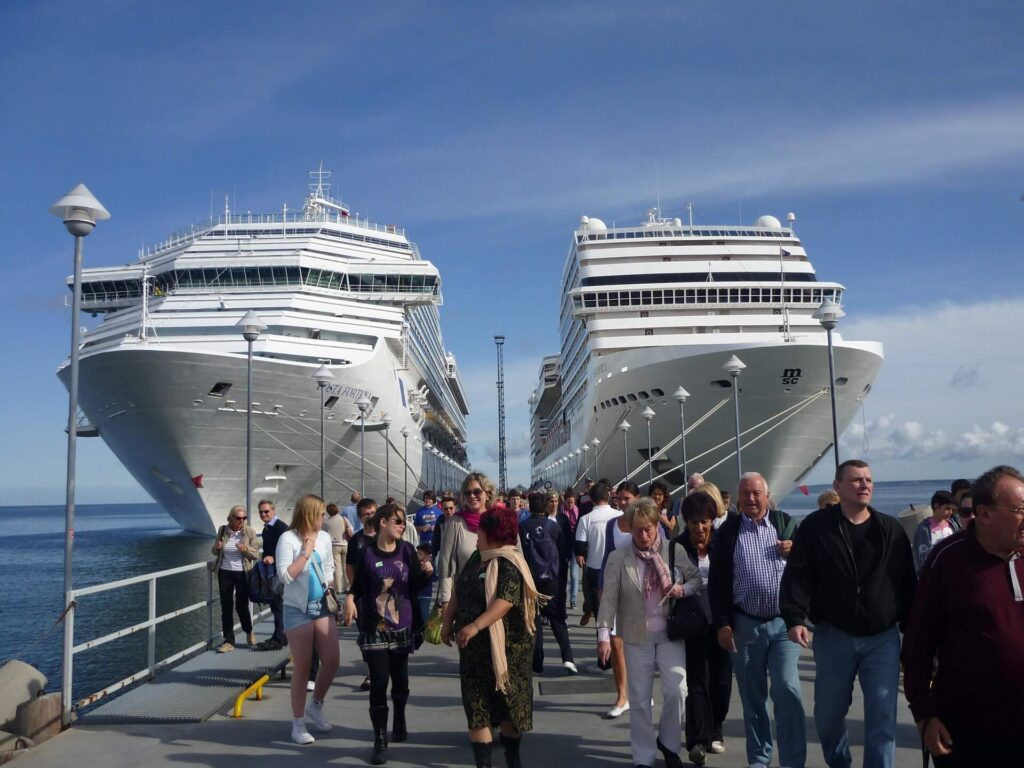
The security layer most passengers never think about is the one at the terminal. Every person and every bag boarding a cruise ship passes through screening, and every ship operates a visual identification access system — your cruise card or wearable is scanned every time you board or leave the vessel, which means the ship maintains a real-time record of exactly who is onboard at all times. Major lines also enforce strict no-visitor policies fleetwide: if you are not a booked passenger or working crew, you do not board, at the home port or at any port of call.
Think about what that means compared to a land resort. At a hotel, anyone can walk through the lobby. On a cruise ship, the entire guest population is screened, identified, documented, and tracked at every gangway. From a security design standpoint, a cruise ship is a controlled-access environment of a kind that land-based vacations simply cannot match.
The Law That Reshaped Cruise Ship Security
In 2010, Congress passed the Cruise Vessel Security and Safety Act — the CVSSA — and it remains the backbone of U.S. cruise security law. It applies to essentially every ship embarking passengers in the United States, and its requirements are specific:
Deck rails must be at least 42 inches high on decks passengers can access. Every stateroom door must have a peephole or equivalent, plus security latches and time-sensitive key technology. Ships must maintain video surveillance systems to document and support prosecution of onboard crime, and must integrate technology for detecting or capturing images of anyone going overboard. Ships must carry the means to perform sexual assault medical examinations, provide victims free and immediate access to sexual assault hotlines, and train crew in crime scene preservation. Every stateroom must include contact information for U.S. embassies at the ports on the itinerary. And — the piece that matters most for transparency — alleged serious crimes must be reported to the FBI whenever a U.S. national is involved, whether as the victim or the perpetrator, with the numbers published quarterly by the Department of Transportation for anyone to read.
Penalties for non-compliance run up to $25,000 per day, and the government can bar a ship from U.S. ports entirely. The cruise industry is the only travel sector in America with a federally mandated public crime ledger. Hotels have no equivalent. Airlines have no equivalent. Keep that in mind whenever a headline treats a cruise crime statistic as uniquely damning — the number exists because cruising is uniquely transparent.
What the Crime Numbers Actually Say
Here is the most recent official picture. In the first quarter of 2026, cruise lines reported 43 alleged crimes to the FBI across the entire industry, per the Department of Transportation’s quarterly incident report. That covers every ship of every major line — an industry that carried over 37 million passengers globally in 2025, according to CLIA. Put another way, millions of people complete a cruise every year without ever interacting with ship security beyond the routine screening at embarkation.
Two honest caveats belong next to that number. First, the reporting system counts only crimes involving U.S. nationals and only within specific categories, so the true total is somewhat higher than the published figure. Second, the most common category of reported crime, quarter after quarter, is sexual assault. That pattern deserves plain acknowledgment, not a euphemism — and it shapes the practical advice later in this article about cabins, drinks, and travel companions.
With those caveats stated, the proportional picture still holds: reported serious crime at sea is rare relative to the number of people sailing, and the environment — controlled access, universal surveillance coverage in public areas, security staff on duty around the clock, and every guest identified — is structurally hostile to the kind of stranger-on-stranger street crime people instinctively fear. Most onboard incidents involve people who know each other, and alcohol is a factor in a large share of them. That is not a cruise problem. That is a people problem that happens to be on a cruise.
Accidents: The Risk That Actually Fills the Medical Center
Now for the unglamorous truth: the physical risk most likely to affect your cruise has nothing to do with crime. It is a wet deck, a staircase, and gravity.
Slips, trips, and falls
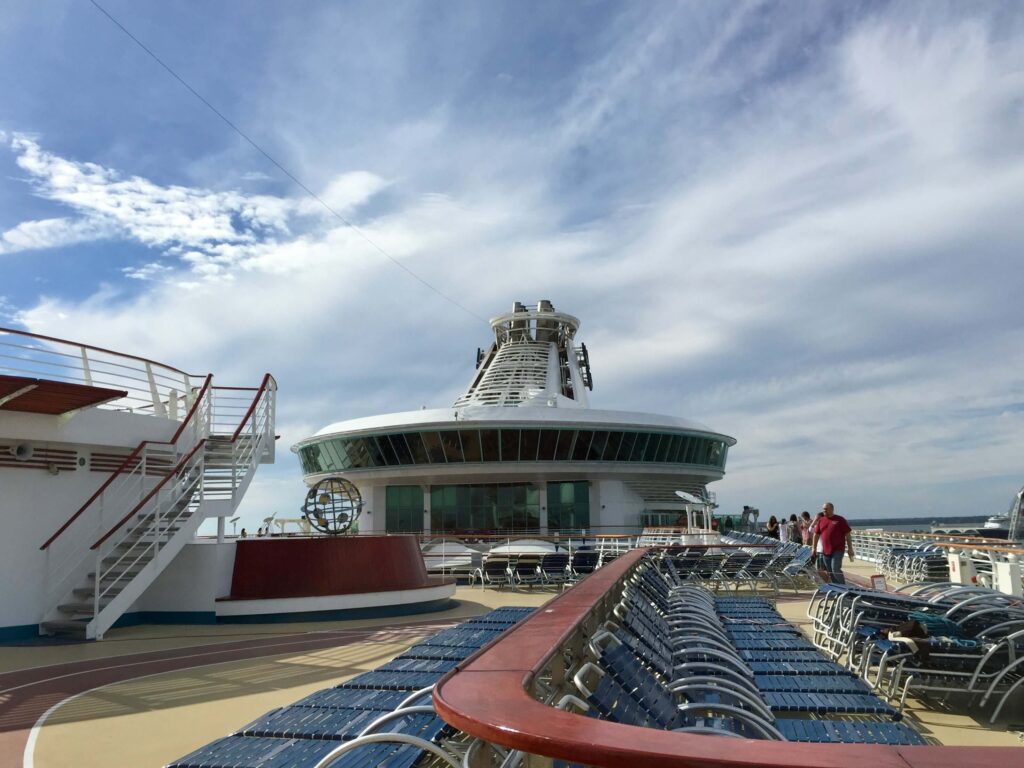
Pool decks are wet, ships move, and flip-flops have no traction. Falls are the workhorse injury of cruise travel. Use handrails on stairs — ships have them everywhere for a reason — wear footwear with grip near the pools, and be especially careful the first evening, before you have your sea legs, and any time the captain announces rough conditions.
Pools
Here is a fact that surprises many families: not every cruise ship pool has a lifeguard, and policies vary by line. Never assume supervision exists. If you are traveling with children, the pool rule is the same one I give for port days — an adult’s eyes on the kids, always, with a designated watcher who is not also three drinks into the afternoon.
The overboard myth, addressed plainly
People do not accidentally fall off cruise ships in any ordinary sense. The CVSSA’s 42-inch rail requirement means the railing hits most adults at the lower chest. Industry data compiled for CLIA recorded 212 overboard incidents — passengers and crew combined — across the eleven years from 2009 to 2019, an average of about 19 per year against tens of millions of annual passengers. Virtually every case involves someone climbing on a railing, sitting on one, or attempting to move between balconies, very often with alcohol involved. The prevention strategy is not complicated: never sit on, lean far over, or climb any railing, and never use a balcony as a shortcut or a photo prop. The rails do their job if you let them.
Alcohol: The Common Thread
I spent years working crowded environments where most of the incidents traced back to the same accelerant, and a cruise ship is no different. Alcohol shows up in shipboard falls, medical events, conflicts, overboard incidents, and crimes — on both sides of them. Cruise lines know this, which is why bartenders can and do cut passengers off, and why every major line’s guest conduct policy allows security to confine or disembark a passenger whose intoxication becomes a danger.
None of this means skip the drink package. It means the cheapest security upgrade on any cruise is deciding your limit at dinner rather than at midnight. Watch the bartender make your drink, keep it in your hand, and never leave one unattended and return to it — the standard advice from any bar on land applies without modification at sea.
Staying Safe on Excursions and in Port
The moment you walk down the gangway, the security environment changes. The ship’s controlled-access bubble stays behind you, and you become what you are: a visitor in a foreign country, in a port district that every local opportunist knows is full of visitors.
None of this has to be complicated. Before the cruise, check the State Department travel advisory for every country on your itinerary — levels run from 1 (normal precautions) to 4 (do not travel), and Caribbean cruise ports span a wider range than most passengers expect. Enroll in the free Smart Traveler Enrollment Program (STEP) so the nearest U.S. embassy can reach you with security alerts. In port, book excursions through the cruise line or through licensed, vetted operators — the ship waits for delayed ship-sponsored excursions and does not wait for independent ones, and vetted operators are also your protection against the equipment and safety-standard problems that show up in independent jet ski, ATV, and parasailing rentals. The U.S. Embassy in Nassau has issued specific warnings about unregulated jet ski operators there.
Beyond that, the rules are the ones that work in any city: keep valuables on the ship in your safe, carry your passport, one card, and modest cash in a hidden security pouch worn under your clothing rather than a visible bag pocket, stay in tourist corridors unless you have a specific reason and a vetted guide, keep your group together, and give yourself a hard deadline to be back at the pier well before all-aboard. For the full port playbook, see What to Do If You Miss Your Cruise Ship.
Severe Weather: What Ships Do When a Hurricane Forms
Hurricane season doesn’t change the security picture much — I cover the full mechanics of how ships reroute around storms, and why your embarkation port is the real risk rather than the ship itself, in the safety overview. What’s worth adding here: pools close and their water level gets lowered any time seas turn even slightly rough — a routine precaution, not a sign anything’s wrong. And this isn’t limited to bad weather: at night, crews stack and tie down pool deck loungers and furniture as a matter of course, storm or no storm. The short version worth repeating here: pair a hurricane-season sailing with real trip protection. My full breakdown is in Do You Really Need Travel Insurance for a Cruise?.
If Something Does Happen
If you are the victim of a crime onboard, report it to ship security immediately and ask that it be documented and reported to the FBI — under the CVSSA, serious allegations involving U.S. nationals must be reported, crew are trained in preserving evidence, and victims of sexual assault are entitled to a medical examination onboard and free, immediate, confidential access to support hotlines. Ask for a copy of any report you make. If the incident occurs in port, involve local police, contact the nearest U.S. embassy or consulate — the contact information is required by law to be available in your stateroom — and inform ship security as well when you return aboard.
Insider Tip: Reporting protects you after the fact. The stateroom security latch protects you before anything happens — use it every time you’re inside the cabin, and check the peephole before opening the door, the same discipline you’d use in any hotel. Crew members announce themselves and carry identification. Anyone who doesn’t is a knock you don’t answer.
For accidents and injuries, dial 911 from any ship phone — on every major line, that connects you to ship security, who coordinate directly with the medical team, not an outside dispatcher. The ship’s 24/7 medical center is the first stop, and everything I wrote about documentation and insurance in the health guide applies. Keep records of everything from the first minute. Calm, prompt, documented reporting is what protects you — legally, medically, and practically.
Insider Tip: On day one, take thirty seconds to photograph two things with your phone: the embassy contact page in your stateroom materials, and your ship’s daily program showing the ship’s name, date, and emergency number. If anything happens in port, everything you need to summon the right help is already in your pocket.
The Bottom Line on Cruise Ship Security
Cruise ship security is layered, legislated, and more transparent than any comparable industry — screened boarding, tracked access, constant surveillance, round-the-clock security staff, and a federal law with teeth behind all of it. The genuine risks that remain are mostly the ordinary ones: wet decks, too many drinks, and letting your guard drop in port because the vacation feeling followed you down the gangway. Handle those, and you have handled the overwhelming majority of what can actually go wrong.
For the complete picture, read the series overview, How Safe Is Cruising? What the Official Data Actually Shows, and the companion guide, Staying Healthy on a Cruise.
If Nassau is on your itinerary, the U.S. Embassy’s warnings about unregulated jet ski operators there are worth a read before you book anything on the beach.
Travel safe. Protect yourself, and enjoy the ride.
— Rick Hayes, Travel Safety Authority
Want an itinerary-specific security briefing — port risk levels, safe zones, emergency contacts, and excursion vetting for your exact sailing? Work With Rick.
This article contains affiliate links. If you purchase, book, or make a reservation through a link on this page, I may earn a small commission at no additional cost to you. Affiliate relationships include but are not limited to Amazon Associates, Viator, RoamRight, and other travel and product partners. This does not influence my recommendations — I only link to products, services, and experiences I would genuinely recommend to my own clients. Travel insurance recommendations are provided for informational purposes only. I am not a licensed insurance agent. Please review all policy details carefully before purchasing. See my full Disclaimer for details.
The information in this article is provided for general educational purposes only and reflects the personal experience and professional background of the author. It is not a substitute for professional security consultation or official government travel guidance. Safety conditions at any destination can change rapidly — always verify current advisories at travel.state.gov before your trip. Reliance on any information in this article is at your own risk. This site may contain affiliate links; see the full Disclaimer for details.