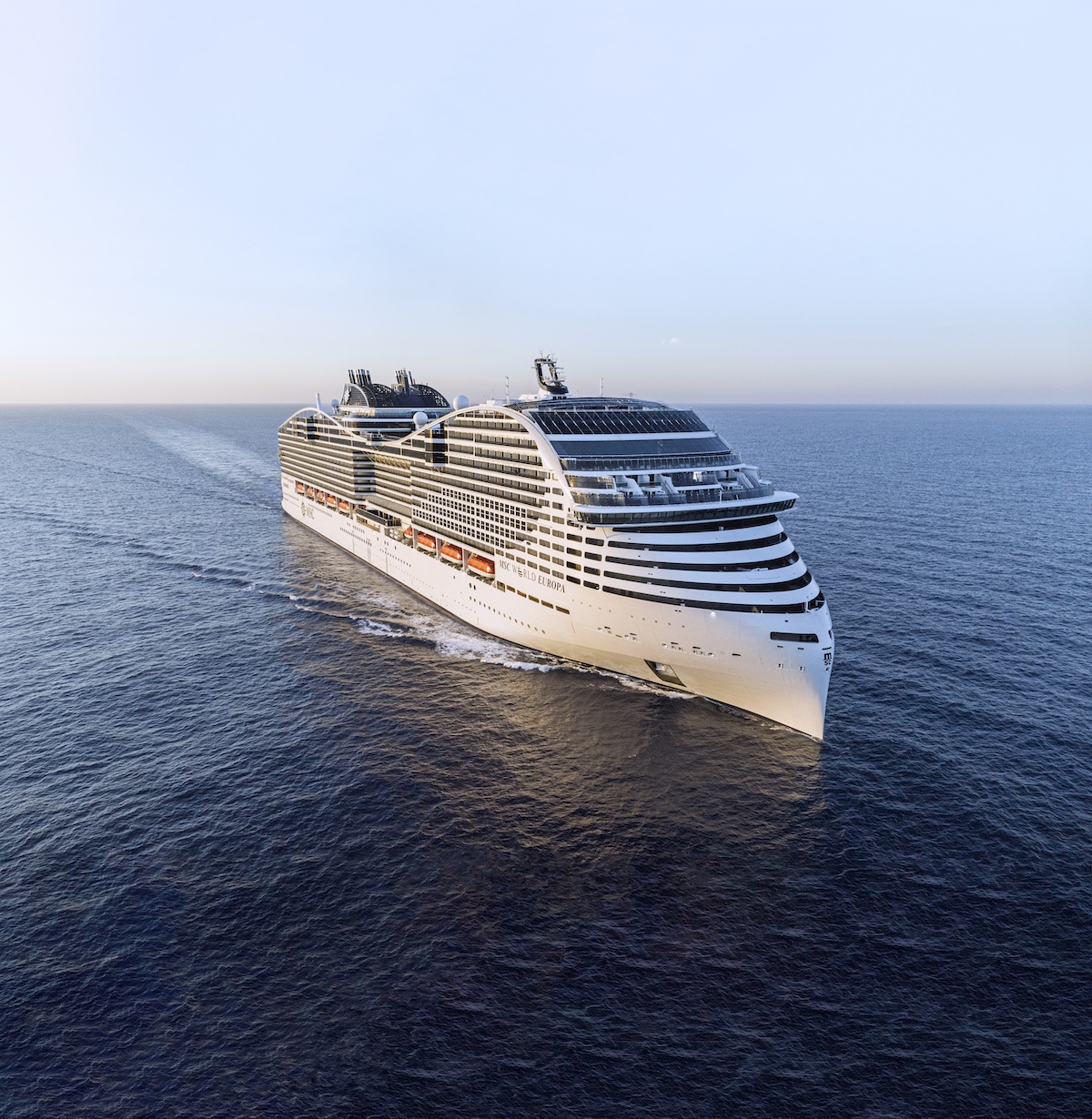
How Safe Is Cruising? What the Official Data Actually Shows
Every week, someone asks me some version of the same question: is cruising actually safe? Sometimes it comes from a first-time cruiser who saw a headline. Sometimes it comes from a parent planning a family sailing. As a cruise safety expert and retired NYPD officer, I have learned that the honest answer is not a slogan in either direction. The honest answer is in the data — and the data is worth understanding before you book.
This article is the overview. It answers the question of how safe is cruising as a whole, who is watching the industry, and what the numbers from official sources actually show. For the deeper dives, I have written two companion guides: one on health, medical care, and mental health at sea and one on cruise ship security, crime, and accidents.
How Safe Is Cruising?
The Short Answer: Cruising is one of the most heavily regulated forms of commercial tourism that exists, with oversight from the U.S. Coast Guard, CDC, FBI, and DOT. Serious incidents, onboard crime, and illness rates are all rare relative to the tens of millions of passengers who sail each year — and trending lower.
That is not a marketing line — it is a structural fact. A cruise ship that embarks passengers in the United States operates within an oversight framework that includes the International Maritime Organization, the U.S. Coast Guard, the Centers for Disease Control and Prevention, the Federal Bureau of Investigation, and the Department of Transportation. No hotel, resort, or theme park operates under that combination of oversight.
Does that mean nothing ever goes wrong at sea? No. Roughly 37 million people cruised in 2025, according to CLIA’s 2026 State of the Global Cruise Industry report. In any population that size — the equivalent of the entire state of California taking a vacation — some people will get sick, some will get hurt, and a small number will be victims of crime. When people ask how safe is cruising, the question that matters is not whether incidents happen. The question is how often they happen relative to the number of people sailing, and what systems exist to prevent them and respond when they occur.
By that measure, cruising holds up well. It also helps to understand why cruising can feel riskier than it is: the human brain naturally remembers dramatic events more vividly than ordinary ones, which is why a single viral cruise incident can outweigh millions of uneventful sailings in how safe the whole industry feels. Let me show you the numbers.
How Safe Is Cruising? The Numbers Behind the Question
Passenger volume keeps growing while serious incidents stay rare
CLIA — the Cruise Lines International Association, the industry’s global trade body — commissioned an independent review of operational incidents covering 2009 through 2019. Operational incidents include the serious stuff: fires, groundings, collisions, storm damage, and overboard events. Across that entire eleven-year period, the industry averaged about 18 significant operational incidents per year, and the trend line moved downward even as passenger capacity grew substantially. Fewer serious incidents, more passengers. That’s exactly the trend you’d hope to see.
Overboard incidents are extraordinarily rare — and preventable
The same CLIA review documented 212 overboard incidents involving guests and crew combined over those eleven years — an average of about 19 per year. Set that against tens of millions of annual passengers and the odds work out to roughly one in two million. Here is the part the headlines never include: modern cruise ships are required by U.S. law to have deck rails at least 42 inches high. People do not fall over those rails by accident while standing on deck. Nearly every overboard case involves someone climbing, sitting on a railing, or severely impaired. I cover this in detail in the physical safety guide.
Reported crime is low relative to passenger volume
Under the Cruise Vessel Security and Safety Act of 2010, cruise lines must report alleged serious crimes involving U.S. nationals to the FBI, and the Department of Transportation publishes those numbers quarterly at transportation.gov. In the first quarter of 2026, 43 crimes were reported across the entire industry — every ship, every line. For context, that is fewer serious reported crimes across a whole industry carrying millions of passengers than many mid-sized American cities log in a single weekend. The reporting system has real limitations, which I address honestly in the security article, but even reading the numbers cautiously, the rate is low.
Illness rates have been falling for years
On the health side, CDC data shows gastrointestinal illness rates among cruise passengers fell from 32.5 cases per 100,000 travel days in 2006 to 16.9 by 2019 — roughly cut in half. Outbreaks still happen, and 2026 has seen several that made news. The full picture, including what the ship’s medical center can actually do for you, is in the health and medical guide.
Who Is Actually Watching: The Oversight Behind Every Sailing
This is the section I most want you to read, because it is the part of cruise safety nobody sees from a deck chair. During my NYPD career, I learned that safety in any crowded environment — a subway station, Times Square on New Year’s Eve, a cruise ship — comes down to layers. No single measure prevents everything. Overlapping layers catch what any one layer misses. Cruising has more layers than almost any vacation you can take.
International law: SOLAS and the IMO
Every ocean-going cruise ship is built and operated under the International Maritime Organization’s Safety of Life at Sea convention — SOLAS. This is the global standard born out of the Titanic disaster and strengthened continuously since. Under SOLAS, ships must conduct a muster drill for all passengers within 24 hours of embarkation, and ships carry survival craft capacity for more people than are actually onboard. This might be boring, but it’s worth taking seriously in the rare chance there’s an emergency. When your cruise makes you stand through that safety drill on day one before you can get to the pool, that is international law working exactly as intended. Do not skip it, and do not scroll your phone through it.
U.S. federal law: the CVSSA
The Cruise Vessel Security and Safety Act of 2010 imposed specific, enforceable requirements on ships embarking passengers in the U.S.: minimum 42-inch deck rails, peepholes and security latches on stateroom doors, video surveillance systems, man-overboard detection technology, crime reporting to the FBI, crew training in crime scene preservation, and U.S. embassy contact information available in staterooms. Violations carry civil penalties of up to $25,000 per day, and the government can deny a non-compliant ship entry to U.S. ports entirely.
The CDC’s Vessel Sanitation Program
Any cruise ship carrying 13 or more passengers with a foreign itinerary that calls on a U.S. port is subject to unannounced CDC inspections twice a year. Inspectors board without warning and grade eight areas of the ship — food operations, drinking water, pools, medical, and more — on a 100-point scale. A score of 85 or below is failing and triggers mandatory reinspection. CLIA notes there is no comparable federal inspection program for hotels, airlines, or restaurants. You can look up your ship’s most recent score for free on the CDC’s Vessel Sanitation Program website before you ever book.
Onboard: security and medical, 24 hours a day
Every major cruise ship sails with a dedicated security team on duty around the clock, and CLIA’s mandatory medical guidelines — developed with the American College of Emergency Physicians — require at least one qualified medical professional available 24/7, plus an examination room, an intensive care room, and lab equipment onboard. You are never more than a phone call from trained help at sea.
Insider Tip: Before you book, spend five minutes on two free government websites. Check your ship’s latest inspection score at the CDC’s Vessel Sanitation Program page, and check the State Department travel advisory for each country on your itinerary at travel.state.gov. Ten minutes of reading tells you more than an hour of scrolling review sites.
Health Safety at Sea: The Short Version
A cruise ship is a small, dense, temporary city, and dense environments move germs efficiently — the same reason I watched flu season sweep through NYPD transit districts every winter. The cruise industry counters this with pre-boarding health screening, aggressive sanitation protocols, CDC oversight, and onboard medical centers that meet mandatory industry standards. Your own habits — handwashing, staying hydrated, reporting symptoms to the medical center instead of pushing through them — do the rest of the work.
The complete guide, including what onboard medical care costs, why medical evacuation insurance matters, how ships respond to mental health emergencies, and what medical care looks like in Caribbean ports, is here: Staying Healthy on a Cruise: Medical Care, Illness, and Mental Health at Sea.
Physical Safety and Security: The Short Version
Statistically, the biggest physical risks on a cruise are not the dramatic ones. They are slips on wet pool decks, falls on stairs, and poor decisions involving alcohol and railings. The crime that does occur onboard is reported to the FBI and published by the DOT, and ships maintain surveillance coverage, access control, and trained security staff to deter and respond. In port, your safety profile changes — you are a tourist in a foreign country, and the ordinary rules of street awareness apply.
The complete guide, covering the crime data in honest detail, accident prevention, excursion safety, and what to do if something happens to you, is here: Cruise Ship Security: Crime, Accidents, and How to Protect Yourself.
Safety in Port: The Caribbean Picture
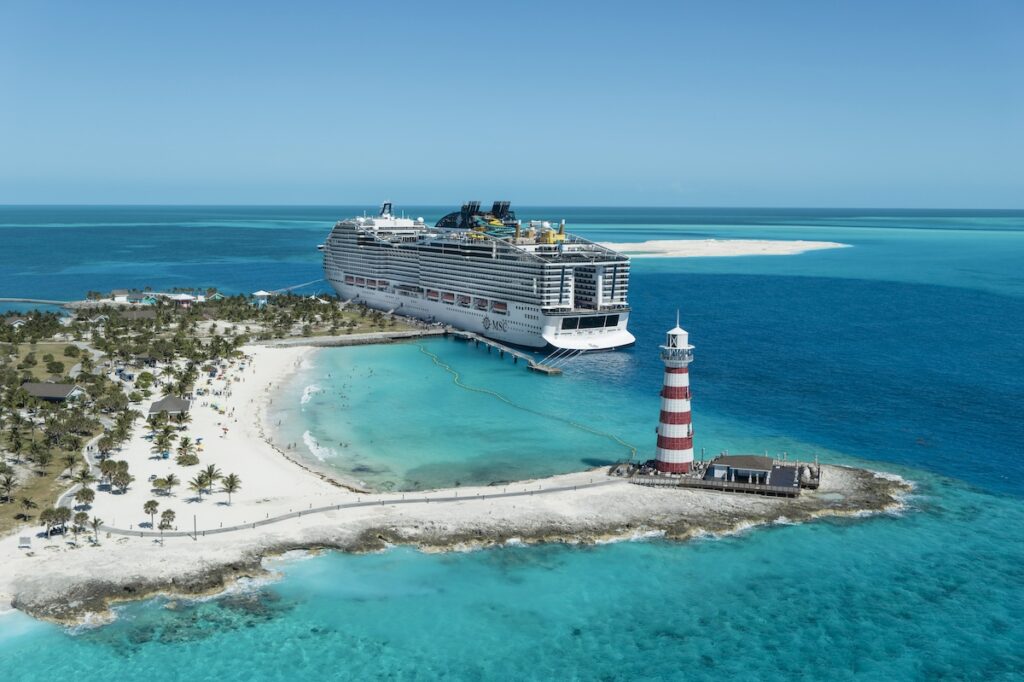
Part of answering how safe is cruising is looking at where you’ll actually be. Most Caribbean cruise itineraries visit some combination of the region’s major ports — Nassau, Cozumel, Grand Cayman, Jamaica, San Juan, St. Thomas, St. Maarten, Roatán, Aruba, and Curaçao. The U.S. State Department assigns every country a travel advisory level from 1 (exercise normal precautions) to 4 (do not travel), and the spread across cruise ports is wider than most travelers realize. As of mid-2026, destinations like Aruba, Curaçao, and the Cayman Islands sit at Level 1 — among the safest classifications the State Department issues. The Bahamas and Jamaica carry Level 2 advisories citing crime, with the State Department noting that tourist areas generally see lower rates of violent crime than other parts of those countries. Honduras carries a Level 3 nationally, though cruise traffic to Roatán is concentrated in the Bay Islands, which the advisory treats separately.
Advisory levels change, so always check travel.state.gov for your specific ports before you sail, and consider enrolling in the State Department’s free Smart Traveler Enrollment Program (STEP), which sends you real-time security alerts from the nearest U.S. embassy while you travel. I publish detailed port-by-port safety guides — including local medical care overviews — in the Port Guides section of this site, starting with Is Nassau Bahamas Safe for Cruise Passengers?
Hurricane Season and Your Cruise
Atlantic hurricane season runs June 1 through November 30, and it overlaps with some of the best cruise pricing of the year. Here is the even-toned truth: a cruise ship is one of the safest places to be relative to a hurricane, because unlike a beach resort, a ship moves. Cruise lines reroute itineraries days in advance based on National Hurricane Center forecasting, and modern ships are engineered for sea conditions far beyond anything an itinerary would deliberately approach.
The realistic hurricane risks for cruisers are logistical: changed ports, shortened sailings, and — most importantly — disruption at your embarkation port. If a storm threatens Florida the week you drive to Port Canaveral, your problem is not the ship. It is the highways, the airports, and your home you left behind. FEMA’s Ready.gov publishes free hurricane preparedness checklists and the FEMA app delivers real-time National Weather Service alerts for up to five locations — set one for home and one for your departure port. If you cruise during hurricane season, travel insurance stops being optional in my view; my full breakdown is in Do You Really Need Travel Insurance for a Cruise?
Insider Tip: Booking during hurricane season? Choose an itinerary with flexibility — Eastern and Western Caribbean routes give the captain more rerouting options than a tight island-hopping loop. And drive-to ports beat fly-to ports in September and October, because a canceled flight strands you; a car in a parking garage does not.
How Safe Is Cruising? The Bottom Line
So, how safe is cruising? Safer than the headlines suggest and safer than most vacations you could compare it to — not because nothing ever goes wrong, but because more overlapping systems exist to prevent, detect, and respond to problems at sea than almost anywhere else you could spend a week. The data from CLIA, the CDC, the Coast Guard, and the DOT all points the same direction: serious incidents are rare, trending rarer, and heavily scrutinized when they occur.
Your job as a passenger is simpler than you think: pay attention at the muster drill, wash your hands, respect the railings, watch your drink count, stay aware in port, and buy the insurance. The ship handles the rest.
If you’re still weighing how safe is cruising for your own trip, my deep dives cover everything here in detail: Staying Healthy on a Cruise and Cruise Ship Security: Crime, Accidents, and How to Protect Yourself.
Travel safe. Respect the ocean, be prepared.
— Rick Hayes, Travel Safety Authority
Planning a cruise and want personalized safety guidance for your specific itinerary? Work With Rick for one-on-one consulting built on real law enforcement and travel industry experience.
This article contains affiliate links. If you purchase, book, or make a reservation through a link on this page, I may earn a small commission at no additional cost to you. Affiliate relationships include but are not limited to Amazon Associates, Viator, RoamRight, and other travel and product partners. This does not influence my recommendations — I only link to products, services, and experiences I would genuinely recommend to my own clients. Travel insurance recommendations are provided for informational purposes only. I am not a licensed insurance agent. Please review all policy details carefully before purchasing. See my full Disclaimer for details.
The information in this article is provided for general educational purposes only and reflects the personal experience and professional background of the author. It is not a substitute for professional security consultation or official government travel guidance. Safety conditions at any destination can change rapidly — always verify current advisories at travel.state.gov before your trip. Reliance on any information in this article is at your own risk. This site may contain affiliate links; see the full Disclaimer for details.