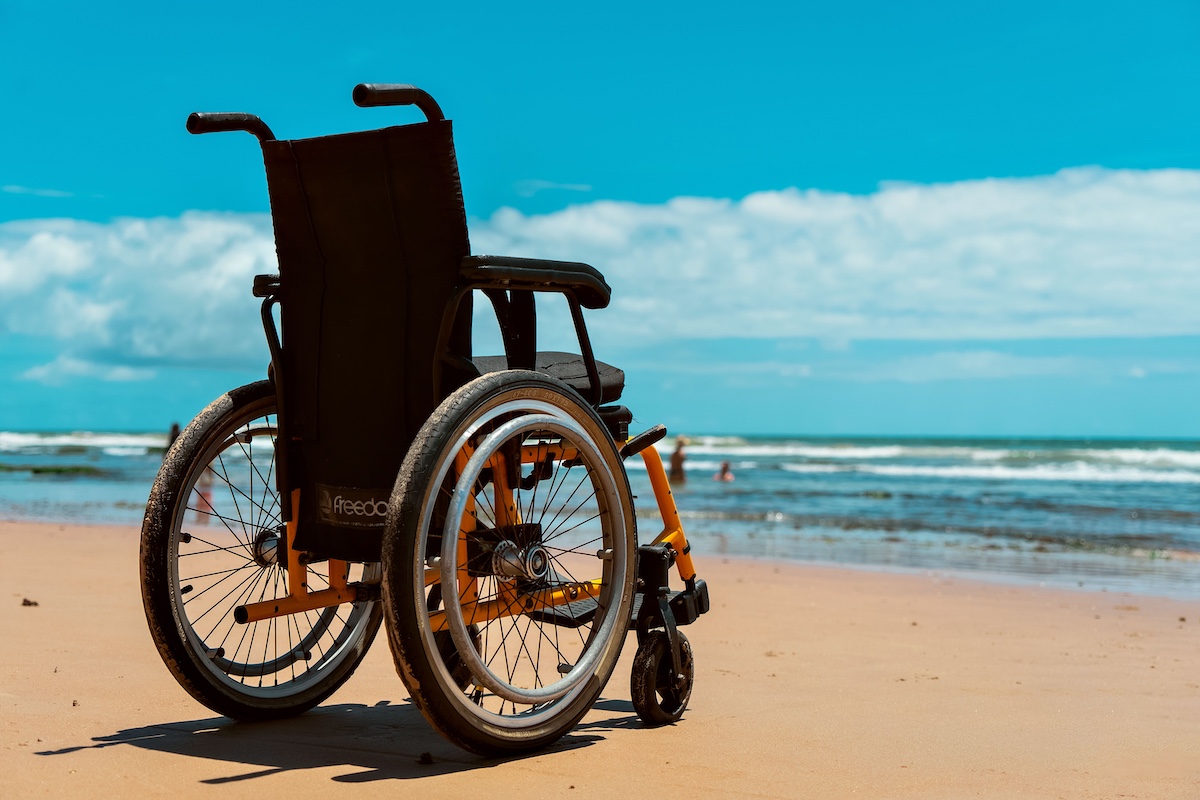
Cruising with a Wheelchair: What the Cruise Lines Provide — and What You Have to Ask For
Cruising with a wheelchair raises questions most travelers never have to think about. You’ve found a cruise you like. The price works, the dates work, and then the doubt creeps in: will the ship actually work for you? Will your chair fit through the cabin door? What happens at a port where the ship can’t dock? Nobody at the booking stage volunteers this information, and the answers are scattered across policy pages that read like they were written by a legal department — because they were.
Cruising with a wheelchair or mobility scooter is not only possible, it’s one of the most accessible ways to travel. One unpacking, no daily hotel changes, elevators to nearly everything. But the difference between a smooth cruise and a genuinely bad week comes down to what you confirm before you sail, not what you hope for once you’re aboard. I’m Rick Hayes, a cruise safety expert and retired NYPD Anti-Terrorism officer, and I also travel with a disability of my own — one that doesn’t fit neatly into any cruise line’s standard policy, which means I call the cruise line before every single sailing. This guide covers what I’d want a friend to know before booking: the cabins, the law, the tender problem, the battery rules, and the phone call that matters more than all of it.
This article is part of our five-part accessible cruising series: Cruising with a Disability (start here) · Medical Equipment & Medication · Mental Health & Psychological Conditions · Service Animals
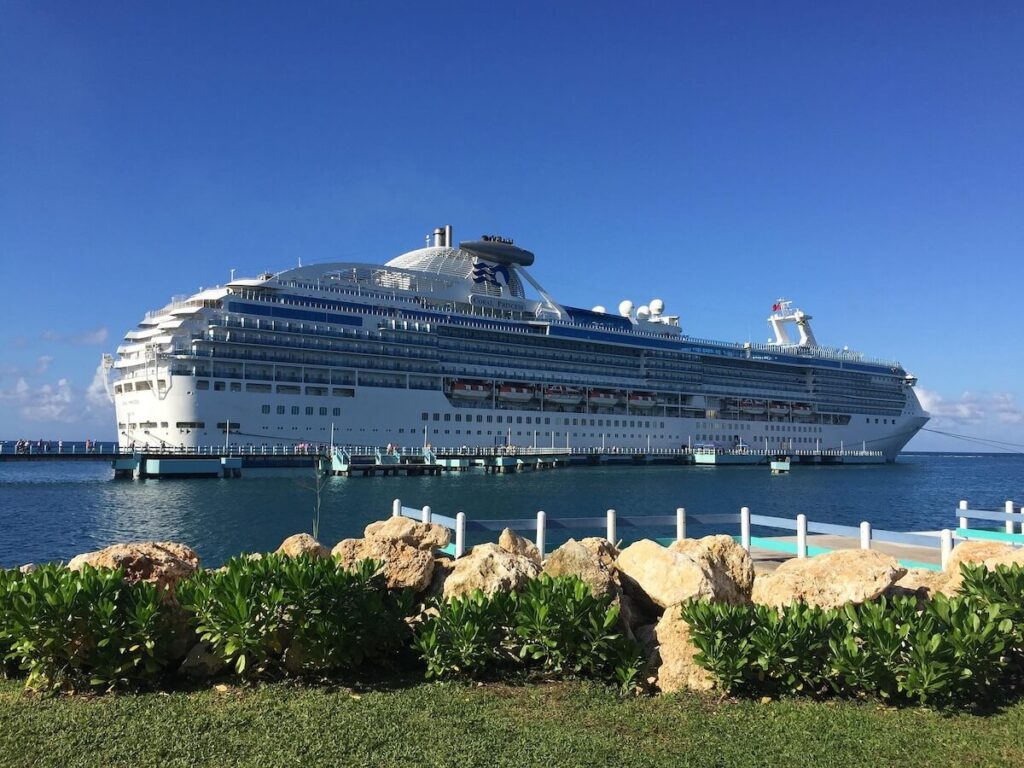
The First Call: Every Cruise Line Has an Accessibility Department. Use It.
Here’s the single most important thing in this article, so it goes first.
Why the Accessibility Department Matters
Yes, you can bring your own wheelchair or mobility scooter on a cruise, or rent one through the cruise line’s approved partners. Register the device with the cruise line’s accessibility department before sailing, confirm it fits your cabin door, and store and charge it inside your stateroom only.
Every major cruise line runs a dedicated team that handles accessibility, separate from the general reservation line and from your travel agent. Each line names it differently and sets its own forms and notice windows — which line to call, at which number, and how far ahead is laid out line-by-line in the series overview, Cruising with a Disability. For the rest of this article, I’ll call it the accessibility department — one plain term for the same job at every company — and focus on what it does for a mobility device specifically.
Who Actually Handles Non-Standard Needs
Your travel agent or cruise line representative is not the accessibility department. They can note “wheelchair” on your booking, but that note may or may not travel anywhere useful. The accessibility department is where actual arrangements get made — and just as important, it’s where non-standard needs get handled. Cruise line policies cover the common cases. If your situation falls outside the checkboxes on the form — and a lot of real disabilities do, whether that’s a mobility need paired with something like an oxygen concentrator or medication that needs refrigeration (see Medical Equipment & Medication for that side of things) — the accessibility department is the path, and using it is normal, not an imposition.
Don’t Book a Guarantee Rate
One booking mistake trips up more people than anything else here: never book a “guarantee” or “GTY” rate if you need an accessible cabin. A guarantee rate means the cruise line assigns your cabin later, and there’s no way to guarantee that assignment will be accessible. Accessible cabins must be selected specifically, and they’re limited — book the cabin first, then the flights.
Think Through the Emergency Before You Book — Not During One
The series overview explains why I push every disabled cruiser to think through an emergency before booking — it comes out of my NYPD years working crowd movement through places like Times Square, Penn Station, and the subway system, and the short version is that the people who do best in an emergency are the ones who already know their route out, because they’re not solving a puzzle under stress.
Know Your Route to the Muster Station
On a cruise ship, that principle matters more for a wheelchair or scooter user than for almost anyone else aboard, for one blunt reason: in a genuine emergency, ship elevators may be shut down, exactly like a building fire on land. Crews train for this. Ships carry evacuation chairs and assign crew to assist guests who can’t use stairs. But you should know your own plan, not just trust that one exists somewhere.
So build the habit I’d give any traveler, adapted for wheels. On embarkation day, before dinner:
- Find your muster station (your assigned emergency assembly point) and physically travel the route from your cabin, so you know it and not just the deck-plan version of it.
- Ask a crew member at the muster station how guests with mobility devices are assisted if elevators are unavailable. You want the answer for your ship, from its crew.
- Tell the accessibility department before sailing that you’ll need evacuation assistance. Lines document this and station crew accordingly — but only for the guests they know about.
None of this is alarmism. Serious shipboard emergencies are rare, and the cruise industry’s overall safety record is strong — I’ve written about the data in How Safe Is Cruising?. This is the same logic as knowing where the exits are in a theater: two minutes of attention that costs you nothing and can matter enormously.
Store Your Device Where It’s Supposed to Go
Mobility scooters and other assistive devices must be stored and charged inside your stateroom — never in hallways — so fire doors, corridors, and elevator lobbies stay clear for emergency evacuation. Every major line enforces this, some more aggressively than they used to, including turning away devices too large for the booked cabin at the pier. If your device fits your cabin, you’ll never think about this rule again. Confirm the fit before you sail, and it’s handled.
What the Law Actually Promises When You’re Cruising with a Wheelchair
If you’ve researched accessible travel on land, you know the Americans with Disabilities Act (ADA) as the law that requires ramps, accessible restrooms, and equal access to businesses. At sea, the picture is different — and knowing the real shape of it will save you from both false confidence and unnecessary pessimism.
How the ADA Applies at Sea
Title III of the ADA — plain English: the part of the disability law that applies to private businesses serving the public. In Spector v. Norwegian Cruise Line (2005), the Supreme Court ruled that Title III does apply to foreign-flagged cruise ships sailing from U.S. ports — before that, cruise lines argued a ship registered in the Bahamas or Panama wasn’t covered at all. But the same decision drew a real limit: the ADA cannot force structural changes to a ship that would conflict with international maritime safety rules or the ship’s internal workings.
The case itself shows what that looks like — passengers argued that ships’ coamings (plain English: the raised lips built into doorway thresholds) blocked wheelchair and scooter access throughout the ship. The Court treated removing them as a potential “permanent and significant alteration of a physical feature of the ship” — the kind of structural change the Court said cruise lines can’t be required to make.
That limit is narrower than it sounds. The same decision is explicit that Title III still reaches how a cruise line treats disabled passengers day to day, regardless of the ship’s physical layout: charging higher fares or special surcharges, keeping evacuation equipment in places disabled passengers can’t reach, requiring liability waivers or a companion that other passengers don’t have to provide, or reserving the right to remove a disabled passenger to spare other guests’ “comfort.” None of that involves the ship’s structure, so none of it gets the internal-affairs pass. The honest summary is a middle ground: the ADA follows you up the gangway and keeps working for how you’re treated once aboard — it just doesn’t require the ship to be rebuilt around it.
What “Readily Achievable” Actually Means
“Readily achievable” barrier removal — plain English: fix what can reasonably be fixed. This is the actual working standard for cruise ships, reinforced in litigation against Carnival (Walker v. Carnival Cruise Lines). Cruise lines must remove barriers where doing so is reasonable and doesn’t create an undue burden or a safety conflict. That’s a much softer standard than the detailed, measurable requirements that govern buildings on land.
Terminal vs. Ship
Terminal versus ship — this distinction matters and almost nobody explains it. The cruise terminal — the building where you check in, wait, and clear security — is a land-based facility, and it’s covered by the ADA the same way an airport terminal is. Accessible parking, accessible restrooms, accessible routes through the building: all required, full stop. The ship is a different regulatory world operating under the softer “readily achievable” standard above. Two different rule sets, and the line between them is roughly the gangway.
There is no binding federal design code for cruise ships, and that explains a lot about why ship accessibility varies. The U.S. Access Board — the federal agency that writes accessibility design guidelines — proposed detailed guidelines for large passenger vessels in 2013, covering onboard routes, doorways, guest rooms, alarm systems, and boarding, and those guidelines are still not finalized. Ship operators wouldn’t be required to comply until the Department of Transportation and Department of Justice adopt them as enforceable standards — which, as of this writing, has not happened. More than a decade after the proposal, the accessible features on any given ship reflect the cruise line’s own choices and the litigation landscape, not a federal rulebook.
What This Means for You
The law gives you real rights, but it does not give you a guarantee that any particular ship, cabin, or port day will work for your specific needs. The system that actually delivers your accommodations is the one from the previous section — the accessibility department, contacted early, in writing. The law is the floor, not the ceiling — cruise lines want repeat passengers, and in my experience they’ll generally work with you as far as they reasonably can, well past what any statute requires, because a guest who’s taken care of books again. The phone call is the plan.
Accessible Cabins: What They Are, and Why They Go First
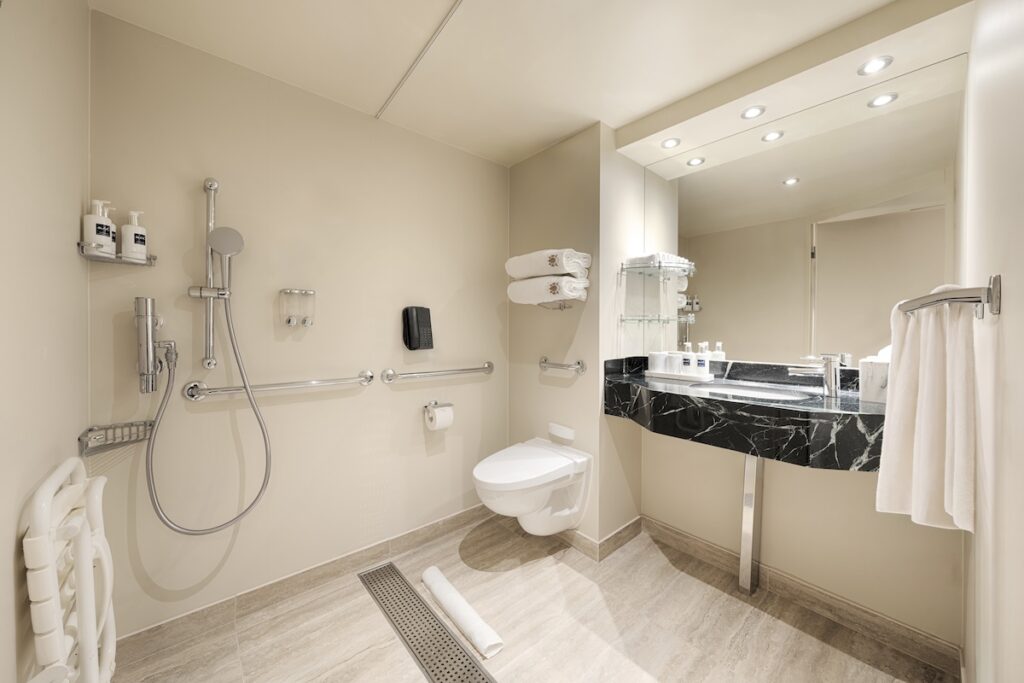
Cruise lines generally offer accessible cabins in most stateroom categories, from inside cabins to suites, and the good ones are genuinely good: wider doorways, roll-in showers with benches and grab bars, lowered fixtures, and turning space a standard cabin simply doesn’t have.
What Each Cruise Line Requires
The details differ by line, and this is a place where the differences are worth knowing rather than guessing:
- Royal Caribbean and Celebrity publish a simple fit rule: a device 23 inches wide or less fits through a standard stateroom door; a device 32 inches or less fits through an accessible stateroom door.
- Carnival breaks accessible cabins into named types — Fully Accessible Cabins for guests who use a wheelchair or scooter full time, Fully Accessible Single Side Approach cabins, and Ambulatory Accessible Cabins for guests who use a device for distance but can take a few steps — and requires that a device brought into a standard stateroom fit through a 22-inch entry door and fold for storage. Carnival also flags that on some of its newest ships, not every stateroom can accommodate a scooter, and asks scooter travelers to confirm against the ship’s accessible deck plan.
- Norwegian requires an accessible stateroom for motorized scooters and non-collapsible wheelchairs, and offers accessible rooms across categories from inside cabins to suites.
- MSC fits accessible staterooms on every ship in its fleet and asks that wheelchairs, scooters, and other mobility aids be stored inside the cabin.
Book Early and Measure Your Device
Three practical realities layered on top of those policies. First, accessible cabins are a small fraction of any ship and they’re allocated first come, first served — routinely the first category to sell out, especially on newer ships and popular sailings. If an accessible cabin is a requirement, it drives your booking timeline more than the fare sale does. Second, expect to attest that you actually need the accessible features; a guest who books one without needing its features can be moved to a non-accessible stateroom to accommodate a guest with a disability. Third — measure your device. Width, length, turning. Then confirm those numbers with the accessibility department against the specific cabin number you’re booking, not the category. It’s ten minutes of work that eliminates the single most common mobility-related boarding-day problem.
Renting Instead of Bringing Your Own
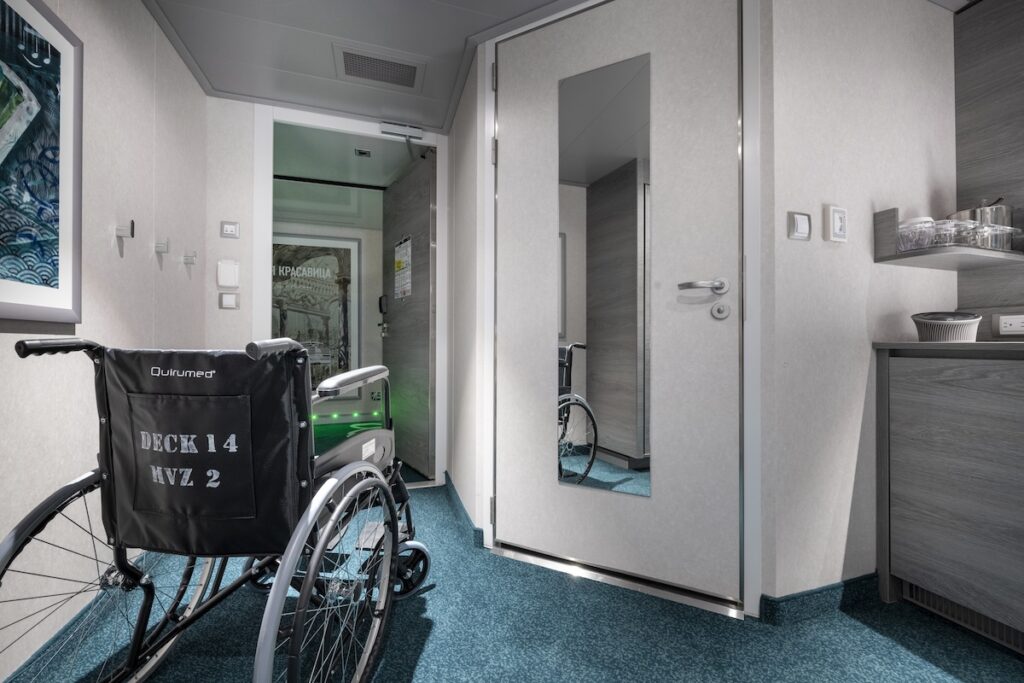
If you don’t own a travel-suited device, the major lines all point to the same small set of authorized rental companies — Scootaround and Special Needs at Sea are the two you’ll see named on official cruise line pages — which deliver a cruise-compliant wheelchair or scooter directly to your stateroom and collect it after the sailing. The cruise lines themselves keep only a limited supply of wheelchairs onboard, reserved for embarkation, disembarkation, and emergencies — don’t plan on borrowing one for daily use.
Tender Ports: The Limitation Nobody Mentions When You Book
Here’s a situation that blindsides people every season. You’ve booked a beautiful itinerary. One of the ports has no dock big enough for your ship — or the ship anchors offshore by design — so passengers ride to shore in smaller boats called tenders. And on tender day you learn, possibly at the tender platform itself, that your wheelchair or scooter can’t make the transfer.
What the Cruise Lines Actually Say
No, not always. Wheelchair and scooter users may be unable to go ashore at tender ports, where the ship anchors offshore and passengers ride small boats to shore. Crew are not permitted to lift guests or equipment onto a tender, so the final call depends on conditions that day.
This is real, it’s written into cruise line policy, and it’s the least-communicated accessibility limitation in the industry. Norwegian’s own guest terms state that, to ensure the safety of guests and crew, wheelchairs may not be used to transfer from the ship to a tender — meaning guests in wheelchairs may not be able to go ashore at tender ports at all.
Royal Caribbean and Celebrity’s own accessibility pages say motorized wheelchairs and mobility scooters cannot be taken on tenders unless roll-on capability is available, that roll-on capability is not guaranteed, and — importantly — that for safety reasons, crew are not permitted to lift guests or their equipment onto a tender. The Captain and crew make the final call based on conditions that day. Carnival’s policy says some tenders may not be accessible to wheelchair and scooter users, and that weather, sea, swell, current, or tide conditions can make a safe transfer impossible at a given port on a given day.
What This Actually Means for Your Trip
What these policies have in common: the final call is made at the port, on the day, by the crew, based on conditions. Nobody can promise in advance that you’ll get ashore at a tender port. A calm morning with a stable platform might be easy; two-foot swell at the same port might end the discussion. This isn’t the cruise line being difficult — transferring a person and a powered device between two moving vessels is a genuine safety problem, and the crew making that call would be the ones responsible if it went wrong.
How to Avoid Getting Stuck
So the fix happens at booking, not at the platform:
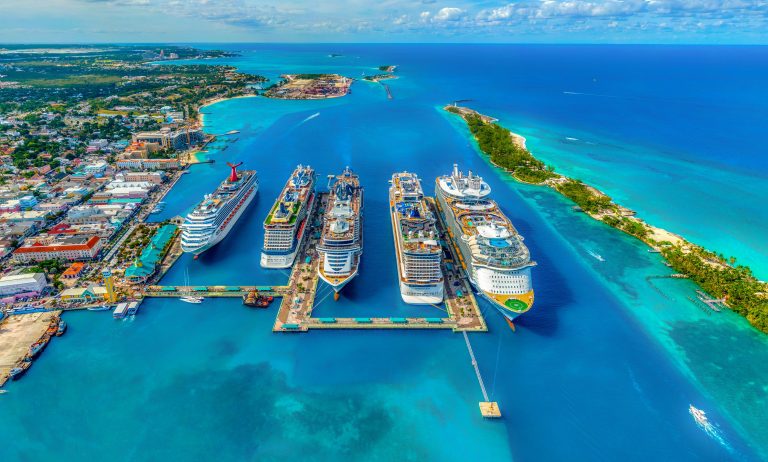
- Find the tender ports before you book. The itinerary detail on the cruise line’s own site marks each stop as docked or tendered (sometimes phrased as “anchorage”). Two common Western Caribbean examples: George Town, Grand Cayman has no cruise ship pier at all, according to the Port Authority of the Cayman Islands, so every ship anchors offshore and tenders passengers to one of three shoreside terminals; Belize City works the same way, with the Belize Port Authority designating Fort Street Tourism Village as the official cruise tender facility.
- Don’t trust any list as permanent — including this one. Port infrastructure changes faster than you’d expect: Norwegian’s private island, Great Stirrup Cay, opened its first-ever cruise ship pier in December 2025 after decades as a tender-only stop, then closed that same pier again in April 2026 to finish building out a second berth so two ships could dock at once, sending guests back to tendering in the meantime. A destination can flip from docked to tendered and back within a single sailing season, so confirm docked-vs-tendered status for your specific sailing date.
- Weigh the itinerary honestly. If two of your four ports are tendered and going ashore everywhere matters to you, a different itinerary may serve you better than the same itinerary plus disappointment.
- Ask the accessibility department, in writing, about each tender port on your sailing — whether the port typically has roll-on capability and what the line’s process is for mobility device users that day.
Insider Tip: On the morning of a tender day, go to Guest Services early — before the general tender rush — and ask directly whether roll-on tender boarding is available for that port and what time window gives you the best conditions. The crew often knows by early morning how the day is shaping up. Asking at 7:30 gets you a real answer and options; showing up at the platform at 10:00 in a scooter gets you whatever the line decides in front of a crowd. And if the answer is no, remember the ship on a port day is the least crowded it will ever be — pools, restaurants, and quiet decks essentially to yourself. It’s a genuinely good consolation prize, but it should be a choice you saw coming, not a surprise.

Batteries: The Airline Rules and the Cruise Rules Are Not the Same
Many cruisers fly to their embarkation port, which means your mobility device has to satisfy two different rulebooks on the same trip — and they don’t match.
Flying With a Mobility Device
The rules for flying come from the FAA, and they turn on battery chemistry:
- Non-spillable batteries — plain English: sealed batteries (gel cell or absorbed electrolyte) that can’t leak acid if tipped. These are the easy case. The battery can generally remain installed if it’s securely attached, protected from damage, and the terminals are protected from short circuit.
- Spillable (wet cell) batteries — plain English: old-style batteries with liquid acid inside. Flying with these gets complicated fast. TSA allows them installed in a mobility device only when the battery is securely attached, its housing protects it from damage, and the terminals are protected — and airlines may require the battery to be removed and boxed as hazardous material, with advance notice. If you have any choice in the matter, a wet-cell device is the wrong device for travel, full stop.
- Lithium-ion batteries — the modern standard for travel scooters. Spare lithium batteries must ride in the cabin with you, not in checked baggage — a maximum of one spare up to 300 watt-hours, or two spares up to 160 watt-hours each, with terminals protected. The battery location must be reported to the airline, which notifies the pilot. Call your airline at least 48 hours ahead; this is routine for them, but it is not a show-up-and-wing-it process.
Cruise Line Battery Rules
For the ship, there’s no single federal chart to point to the way there is for flying — each cruise line sets its own device and battery rules as private policy. Norwegian’s own accessibility policy, for example, requires that motorized wheelchairs and scooters in its accessible staterooms be powered by gel-cell batteries, with chargers adaptable to 110 volts. Most cruise lines follow a similar pattern for the same fire-and-spill logic that governs the in-stateroom charging rule above, but the specifics vary by line and aren’t all published in one place — so this is exactly the kind of detail to confirm directly with the accessibility department when you register your device: give them the make, model, dimensions, weight, and battery type, and get their confirmation in writing. Rental devices from the cruise-authorized companies sidestep the whole question, since their fleets are built to cruise specifications.
One nuance worth naming: “watt-hours” (Wh) is the measurement that matters for lithium batteries, printed on the battery itself or in the manual — it is not the same number as the motor’s wattage. If your battery’s label doesn’t show watt-hours, multiply volts by amp-hours to get it. Knowing this number before you call the airline turns a twenty-minute call into a five-minute one.
Getting On and Off the Ship
Embarkation day with a mobility device is mostly a solved problem — if the line knows you’re coming.
What to Expect at the Terminal
The terminal side, as covered earlier, is standard ADA territory: accessible parking, accessible routes, accessible restrooms, same as an airport. (If you’re driving to your port and need something beyond standard accessible parking — an oversized wheelchair van, for example — contact the port authority directly before your cruise; several major U.S. ports handle non-standard parking arrangements by request, and I cover port-by-port specifics in the hub article of this series.)
Boarding Assistance by Cruise Line
From the terminal door to the ship, here’s what the lines actually provide. Royal Caribbean offers complimentary wheelchair assistance for embarkation and disembarkation only — a crew member with a wheelchair takes you from check-in up the gangway, and the same service runs in reverse at the end of the cruise. Carnival works the same way, with guests asked to contact an embarkation host on arrival at the port.
Norwegian’s version comes with a detail worth knowing in advance: crew cannot exit the terminal, so you must get yourself from the curb into the terminal before wheelchair assistance can begin, and assistance ends at boarding — not at your stateroom. On disembarkation, crew drop guests at the checkout area, and you make your own way out of the terminal to the curb. If you can’t manage the curb-to-terminal stretch on your own, that’s a problem to solve before travel day — a companion, a porter, or your own device — not one to discover with a suitcase in your lap.
Crossing the Gangway
The gangway itself deserves one honest sentence: it’s a ramp between a fixed building and a floating ship, its slope changes with the tide, and at some ports on some days it’s steep. Crew assist as a matter of course. If you self-propel a manual chair, this is the one stretch of the trip where accepting a push is simply the smart move.
And to say it one final time, because it’s the thread that runs through everything above: every one of these arrangements — the boarding assistance, the cabin fit, the tender answer, the battery approval, the evacuation notation — starts with the same phone call to the accessibility department, made when you book. Policies change, ships differ, and this article describes the landscape as of its writing — always confirm the current version of any policy with your cruise line directly. Cruising with a wheelchair rewards the traveler who asks every question early, and the industry, whatever its gaps, has built a real apparatus for answering them. Use it.
For more on what happens if something goes wrong at sea, read Cruise Ship Emergency Procedures. And for the medical side of accessible cruising — equipment, medication, and care onboard — see Staying Healthy on a Cruise.
Travel safe. Every deck, every port, on your terms.
— Rick Hayes, Travel Safety Authority
Need an independent opinion on whether a specific ship or itinerary is the right fit for your travel style? Visit the Work With Rick page to schedule a consulting session. I provide independent safety and travel planning guidance, with no booking commissions or sales incentives.
This article contains affiliate links. If you purchase, book, or make a reservation through a link on this page, I may earn a small commission at no additional cost to you. Affiliate relationships include but are not limited to Amazon Associates, Viator, RoamRight, and other travel and product partners. This does not influence my recommendations — I only link to products, services, and experiences I would genuinely recommend to my own clients. Travel insurance recommendations are provided for informational purposes only. I am not a licensed insurance agent. Please review all policy details carefully before purchasing. See my full Disclaimer for details.
The information in this article is provided for general educational purposes only and reflects the personal experience and professional background of the author. It is not a substitute for professional security consultation or official government travel guidance. Safety conditions at any destination can change rapidly — always verify current advisories at travel.state.gov before your trip. Reliance on any information in this article is at your own risk. This site may contain affiliate links; see the full Disclaimer for details.