Cruising with Anxiety: What the Cruise Lines Can Do, What They Can’t, and What to Ask Before You Sail
For a lot of people, the hesitation about booking a cruise isn’t the ocean. It’s the muster drill — even in today’s format, watching a safety video on your stateroom TV and then finding your way to an unfamiliar muster station to get your card scanned, standing among strangers while a crew member checks you off a list. Or it’s the idea of a packed elevator, a dining room at full volume, and no door that leads home for seven days. If you’re cruising with anxiety, panic disorder, or another mental health condition, you’ve probably already run the mental simulation, and the simulation is exactly why you’re reading this.
So let me start with the good news. Cruising with anxiety is genuinely doable, and a cruise ship can be a friendlier environment than most vacations — one unpacking, one bed, a predictable daily rhythm, and quiet corners most passengers never find. But the accommodations that make it work are unevenly documented, they vary by cruise line and even by sailing, and almost none of them happen automatically. I’m Rick Hayes, a cruise safety expert and retired NYPD Anti-Terrorism officer, and I also travel with a disability of my own that requires a call to the cruise line before every sailing. This article covers what’s actually verifiable about mental health accommodations at sea — and it’s just as direct about where the official information runs thin and the answer is “ask your cruise line directly.”
This article is part of our five-part accessible cruising series: Cruising with a Disability (start here) · Mobility & Physical Accessibility · Medical Equipment & Medication · Service Animals

A Note on Source Material
One note before we start, because this series doesn’t invent things to sound authoritative: the official source material for mental health accommodations on cruise ships is genuinely thinner than what exists for physical disabilities. Cruise lines publish detailed pages about wheelchairs and oxygen; most publish far less about panic disorder. Where a specific cruise line has published something real, I’ll name it and the line. Where the honest answer is “this varies and you must confirm it,” I’ll say exactly that.
Cruising with Anxiety: The Accessibility Department Handles This Too
How Do Cruise Lines Handle Anxiety and Panic Attacks?
Cruise lines handle anxiety and panic disorder through a dedicated accessibility department that arranges psychological and cognitive accommodations, not just physical ones. You don’t need to share a diagnosis to get help — explaining what you need, like talking through the muster drill, is enough to start real accommodations.
Every major line runs this department separately from the general reservation line, each under its own name with its own form and its own deadlines — the series overview, Cruising with a Disability, lists who to contact at each line and how far ahead. For the rest of this article, I’ll call it the accessibility department — one plain term for the same job at every company.
The standard forms lean heavily toward physical needs, and your situation may not fit a checkbox. That’s fine — that’s what the phone call is for. “I have anxiety and panic disorder, I need help with getting on board” is a sentence these departments hear, and it starts a real conversation. You don’t have to share a diagnosis to get help — Royal Caribbean’s own guidance says it doesn’t require details about the extent of a disability — but the more you can explain what you need, the more specifically they can arrange it. This is the recurring theme of this whole series, and it applies to mental health exactly as much as to mobility: the published policy covers the common cases, and the accessibility department is the path for everything else.
Embarkation and Disembarkation: What Minimizing the Wait Looks Like in Practice
For a lot of anxious travelers, the boarding line is worse than anything that happens once you’re actually on the ship. I treat embarkation day as its own project, and I do it the same way every time.
How Can I Avoid Long Lines When Boarding a Cruise with Anxiety?
Book the earliest boarding slot available and arrive minutes before it, not hours early — showing up before the midday rush avoids most lines entirely. Complete check-in in the cruise line’s app beforehand, and contact the accessibility department when you book and again 30 days out for line-skip accommodations.
I research the port before I book — specifically the parking situation and the expected wait, because that varies by cruise line as much as it varies by port. At Port Canaveral, Royal Caribbean and Norwegian move fast, from the luggage drop-off to walking onto the ship. Disney Cruise Line, same port, has been my longest wait. I book the earliest boarding time available, usually 10:30 or 11 a.m., and I arrive about five minutes before it — not hours early. Everything has to be done in the cruise line’s app ahead of time; occasionally they’ll ask for an updated photo at the terminal, which adds a minute or two.
I contact the accessibility department twice, once when I book and again about 30 days out, and if there’s any kind of line when I arrive, I tell whoever’s at the entrance that I spoke with the accessibility department and what they told me. At Royal Caribbean, any staff member can point you the right way or get a supervisor. At Norwegian, they gave me the accessibility office’s port phone number directly — though I’ve only had to actually call it once, when the ship itself arrived late. That time, someone walked me through security alongside the Haven suite guests and got me straight onto the ship; there was a short wait, but it was separate from the main crowd. Every sailing, I’m on the ship within 20 minutes of pulling into the parking garage.
What This Means for You
That’s not a guarantee — it’s one example of what’s possible when you plan for it instead of hoping for the best. And it’s a fair summary of why a cruise, done right, can be an easier vacation for anxiety and panic disorder than most people assume: your stateroom is never more than a five-minute walk away, quiet areas of the ship are available around the clock, and the crew’s entire job is helping you get whatever you need.
Getting Off the Ship
Disembarkation works the same way, just in reverse. The afternoon before you leave the ship, go to Guest Services and explain what you need — don’t wait until departure morning, when the desk is busy with a hundred other things at once. They’ll usually offer a few options: leave with the mobility-assistance group for a walked, no-wait exit; be at the gangway with your luggage at the very first departure time, which is often the fastest way off the ship on its own; or, if neither fits, they’ll work out something custom.
I’ve had them let me stay in my stateroom until the last possible call, which meant walking off after the crowd had cleared and no wait at the gangway — the tradeoff was sitting in traffic getting out of the parking garage on the other end. There’s no single right answer here. What matters is picking the version that trades the kind of wait you can tolerate for the kind you can’t, because anxiety doesn’t look the same for any two travelers.
This all still runs through the same accessibility department contact pattern the rest of this series relies on — the difference is what you ask for. For mobility needs, that’s often a wheelchair escort. For anxiety, it’s usually about avoiding an unpredictable wait in a line, and being told plainly what to expect if one does form.
The Muster Drill: What It Is Now, and How to Make It Workable
Let’s deal with the elephant first, because for anxiety and panic disorder it’s the single biggest question, and it’s also the topic where I have to be most careful about what I claim.
What Happens During a Cruise Muster Drill If You Have Anxiety?
Cruise lines now let all passengers complete the muster drill individually — watching a safety video, then checking in at your muster station to be scanned off a list. If crowds are the concern, ask the accessibility department about a private safety briefing or seated accommodation before you sail.
The muster drill — plain English: the mandatory safety briefing where every passenger learns their emergency assembly point before the ship sails — is required by international maritime safety law, and there is no version of cruising that skips it entirely. But what the drill physically looks like has changed a lot, and mostly in a direction that helps. The old format packed every passenger onto the deck at once, in rows, sometimes in life jackets, for an extended presentation. Carnival, according to its own pages, made this shift official in 2021 — the self-mustering process described above.
Muster Drill Policies Change — Confirm Before You Sail
Now the part I need you to actually hear, because it’s the difference between this article helping you and this article misleading you: muster drill formats and accommodation options are among the least stable policies in cruising. They differ by cruise line, they have changed multiple times in recent years, and they can differ by ship and by sailing. Whatever you read anywhere — including here — describes the landscape at the time it was written. Before you sail, confirm your specific sailing’s muster process and accommodation options directly with your cruise line’s accessibility department. That’s not a lawyer’s disclaimer; it’s the actual state of things.
What to Ask For
With that said, here’s what’s verifiable and what to ask for:
- A private or modified safety briefing. Carnival’s special needs pages state that guests with sensory or cognitive needs can meet with Guest Services onboard to discuss accommodations including a private safety briefing. That’s the strongest published example of exactly the accommodation an anxiety or panic disorder traveler needs — the required safety information, delivered without the crowd. On other lines, this is the question to put to the accessibility department: “What are my options for completing the safety briefing if I can’t stand in a crowd for its duration?” Ask it before sailing, and ask again at Guest Services on embarkation day.
- A physical accommodation if you can’t stand for the duration. Whether the issue is psychological, physical, or both, tell the accessibility department. Seating at or near the muster station is the kind of arrangement they exist to make — and this is a case where the physical and psychological accommodation is often the same accommodation.
Timing Your Muster Check-In
Check-in windows for self-muster formats span hours, and when you go matters almost as much as whether you go.
Insider Tip: Crowds bunch at deadlines — I watched that pattern professionally for years in high-volume transit hubs, and it holds on a cruise ship. The muster check-in crush happens in the final stretch before the deadline, when every procrastinator on the ship shows up at once. Board early, and go to your muster station in the first hour the check-in opens. You’ll often find a short line or none, crew with time to answer questions, and space to actually see the room. You get the same requirement completed with a fraction of the sensory load — and you’ve walked your emergency route while calm, which is worth more than any pamphlet.
And one reframe worth carrying with you, from someone who spent a career around emergency planning: the muster drill is not the emergency. It is the thing that makes an emergency survivable and — this is the part that matters for anxiety — it’s information that reduces uncertainty. You’ll know exactly where you go and what happens. For a lot of anxious travelers, having that plan is genuinely calming once the drill itself is behind them.
Choosing Your Cabin Like It Matters — Because It Does
No cabin selection eliminates anxiety, but the wrong cabin can feed it three times a day, and this is the accommodation you control completely at booking. A few principles from years of matching travelers to ships:
Is a Balcony or Interior Cabin Better for Anxiety?
Neither is universally better — it depends on your specific anxiety. A balcony gives private outdoor air with no crowd attached, often the single accommodation worth paying extra for with claustrophobia. Interior cabins run darker, quieter, and cheaper, and many anxious travelers find them cocoon-like rather than confining.
- Mid-ship, lower decks move least. If any part of your anxiety ties to motion or the feeling of the ship being a ship, midship on a lower passenger deck is the steadiest real estate aboard. The bow and stern and the high decks amplify movement.
- Know what’s above and below you. The deck plan is public — read it before booking. A cabin under the pool deck hears chairs dragging at dawn. A cabin beside the elevator lobby or above the nightclub hears people. A cabin sandwiched between other passenger decks is the quiet default.
- Balcony versus interior is a real decision, not a formality. If you go with a balcony, treat it as your on-demand quiet space — step outside anytime you need air without leaving the cabin. If you go interior, blackout curtains and a white-noise app turn the extra quiet into an advantage instead of a drawback. There’s no right answer, but there is a right answer for you, and it’s worth deciding on purpose rather than by price alone.
Beyond the Cabin: Location and Ship Size
- Near a stairwell beats near the elevators. Stairs let you skip the crowded-elevator moment entirely, and stairwell-adjacent cabins avoid the elevator-lobby noise.
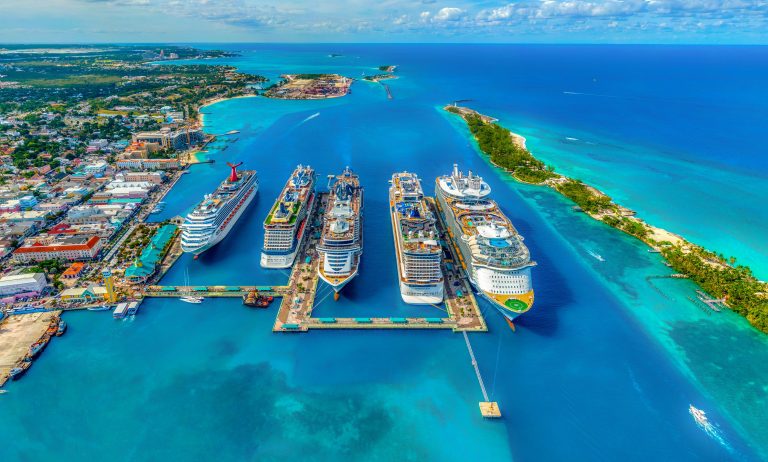
- Ship size is itself an accommodation. MSC’s own accessibility guidance makes a point that deserves more attention than it gets: the cruise environment involves noise, crowds, and bright lights, and guests with cognitive, behavioral, or mental health conditions should consider ship size and passenger capacity when planning a cruise. That’s a cruise line telling you plainly that a 2,000-passenger ship and a 6,000-passenger ship are different experiences. Smaller and mid-size ships have fewer people, shorter lines, and a calmer baseline — and choosing one is an accommodation nobody has to approve.
Sensory Support Onboard: The Program Worth Knowing About
One cruise line has published, verifiable sensory support infrastructure worth describing specifically. Carnival’s special needs pages describe its certification as “sensory inclusive” through KultureCity, a nonprofit focused on sensory needs and invisible disabilities — Carnival’s pages name conditions including autism, ADHD, and PTSD. According to Carnival, guest-facing crew are trained to assist guests with sensory and cognitive needs, and complimentary sensory bags — containing noise-canceling headphones, fidget tools, and related items — can be checked out at Guest Services for the length of the cruise, first-come, first-served.
I’m describing Carnival’s program because Carnival has published it in detail — not because other lines offer nothing. Other lines handle sensory and psychological needs through their accessibility departments case by case, which is less visible but is still a real path. If a published, structured sensory program is a deciding factor for you or someone you’re traveling with, that’s a legitimate reason to weigh lines differently — and it’s a specific question to put to any line’s accessibility department: “What sensory support resources exist onboard, and how do I access them?”
Your Medication Crosses Borders Too
If you take medication for anxiety, panic disorder, depression, ADHD, or any other condition, everything in our companion guide — Bringing Medication on a Cruise — applies to you, and one part applies with extra force: several common psychiatric medications, including benzodiazepines and stimulant medications, are controlled substances — plain English: medications governments track more tightly because they can be misused. That’s not a problem; it’s a paperwork detail. Original pharmacy containers, medication in your carry-on rather than checked luggage, a copy of each prescription, enough supply for the whole cruise plus extra days, and a check of the State Department country page for each stop on your itinerary. The full walkthrough, including refrigeration and what the ship’s pharmacy can and can’t do, is in that guide.
One addition specific to this article: talk to your prescriber before the cruise, not just about the paperwork but about the plan. What do you do if you have a panic attack at sea? What’s the guidance if you miss a dose crossing time zones? Ships have 24/7 medical centers staffed with licensed physicians — Norwegian’s pages describe its centers as equipped for routine issues and emergency stabilization — but a ship’s medical center is an urgent-care resource, not a psychiatric practice, and the CDC’s Travelers’ Health resources recommend travelers with ongoing health conditions build a plan with their own clinician before traveling. Fifteen minutes with the professional who knows you is worth more than anything a policy page can offer — and having the plan in your pocket is, for many people, itself the thing that keeps the plan from being needed.
What the Cruise Lines Can’t Do — Said Plainly, Because Pretending Otherwise Helps Nobody
A few limits show up consistently across the lines’ own published guidance, and knowing them in advance prevents the worst version of a surprise:
- Ship staff don’t provide daily personal assistance or one-on-one care. MSC’s accessibility page says this directly — staff cannot provide daily personal assistance, and the medical team handles emergencies, not daily care. Norwegian’s guidance says guests who can’t manage their own basic needs must travel with a capable companion. If a condition means you need day-to-day support, the support person comes with you; the crew supplements, but doesn’t substitute.
- A companion may be part of the safety conversation for some situations — but it isn’t a blanket requirement. Royal Caribbean states plainly that it does not require a guest with a disability to travel with another person. MSC’s guidance recommends guests with cognitive, behavioral, or mental health conditions consider traveling with a companion for support, and notes that depending on local regulations a fitness-to-travel certificate may be needed. Those are different postures, which is the pattern of this whole article: the answer depends on the line, so ask yours.
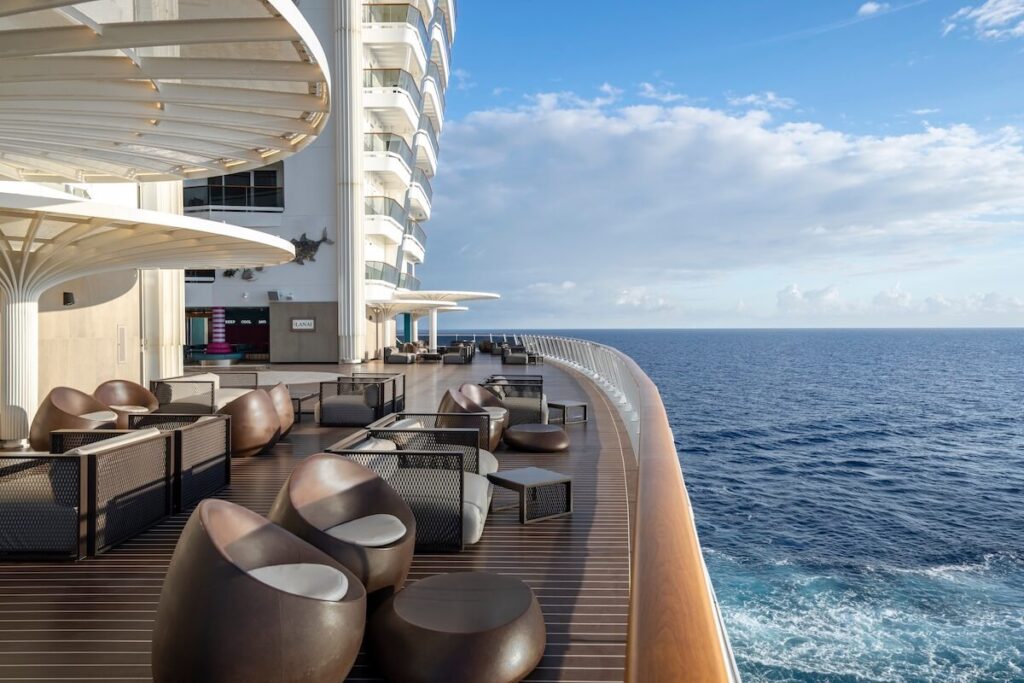
- The environment is what it is. No accommodation makes embarkation day quiet or a Caribbean pool deck calm. The realistic play isn’t to change the ship — it’s to use the parts of the ship that already work: the adults-only quiet areas most lines maintain, the early or late dining seatings, the forward observation lounges on sea days, breakfast in the cabin. Every ship has a quiet version of itself running in parallel with the loud one. Finding it is a day-one project, and worth treating like one.
A Perspective on Crowd Safety
I’ll add the perspective I bring from the other side of crowd management, because I think it helps more than it comforts: cruise ships are among the most supervised, most safety-engineered crowded environments you will ever stand in. The crowds that feel chaotic are moving through spaces designed for exactly those numbers, run by crews drilled on exactly those movements. Feeling overwhelmed in a crowd and being unsafe in a crowd are different things — and on a well-run ship, the second one is rarer than almost anywhere else you vacation. That knowledge doesn’t switch off anxiety. But for some travelers, it’s a useful fact to hold onto while the feeling passes.
Insider Tip: On embarkation afternoon — the most overstimulating hours of the entire cruise — do one fifteen-minute scouting walk with a single goal: find your two quiet places. One indoors (a library corner, an empty lounge, a chapel on ships that have one), one outdoors (a stretch of promenade deck, a forward rail). You’re not relaxing yet; you’re doing homework you’ll thank yourself for on day four. Knowing exactly where you’ll go when you need to step away converts “there’s no escape on a ship” — the thought at the center of a lot of cruise anxiety — into a checked box with two answers on it.
The Realistic Bottom Line
Most cruises taken by people with anxiety and panic disorder go fine — not because the conditions vanish at sea, but because a cruise is a more controllable environment than it looks from the outside, and because real accommodation options exist even where they aren’t well advertised. The gap in cruising with anxiety isn’t a gap in willingness; the lines have commercial reasons and, on the published evidence above, real programs for getting this right. The gap is in documentation — too much of what’s available depends on asking, and nobody hands you the list of what to ask.
So here’s the list. Call the accessibility department when you book, not after final payment. Ask about the muster drill format on your specific sailing and what your options are — and confirm it again before you sail, because that policy moves. Pick your cabin on purpose. Sort your medication paperwork with the companion guide. Build the plan with your own clinician. Find your quiet places on day one. None of that is a burden invented for you — it’s the same preparation this whole series preaches for every disability, applied to one that happens to be invisible.
And if the muster drill has been the thing stopping you from booking for years: it’s fifteen minutes, there are more ways through it than there used to be, and the ocean on the other side of it is worth the conversation it takes to arrange.
Next Steps
For the broader picture of health at sea — including what ship medical centers can actually treat and an honest look at mental health resources onboard — read Staying Healthy on a Cruise. And for what to expect from shipboard emergency systems themselves, see Cruise Ship Emergency Procedures.
Travel safe. Find your quiet deck, and take the trip.
— Rick Hayes, Travel Safety Authority
Need an independent opinion on whether a specific ship or itinerary is the right fit for your travel style? Visit the Work With Rick page to schedule a consulting session. I provide independent safety and travel planning guidance, with no booking commissions or sales incentives.
This article contains affiliate links. If you purchase, book, or make a reservation through a link on this page, I may earn a small commission at no additional cost to you. Affiliate relationships include but are not limited to Amazon Associates, Viator, RoamRight, and other travel and product partners. This does not influence my recommendations — I only link to products, services, and experiences I would genuinely recommend to my own clients. Travel insurance recommendations are provided for informational purposes only. I am not a licensed insurance agent. Please review all policy details carefully before purchasing. See my full Disclaimer for details.
The information in this article is provided for general educational purposes only and reflects the personal experience and professional background of the author. It is not a substitute for professional security consultation or official government travel guidance. Safety conditions at any destination can change rapidly — always verify current advisories at travel.state.gov before your trip. Reliance on any information in this article is at your own risk. This site may contain affiliate links; see the full Disclaimer for details.