Taino Bay Cruise Port: The Complete Safety Guide — What to Expect and What to Watch For
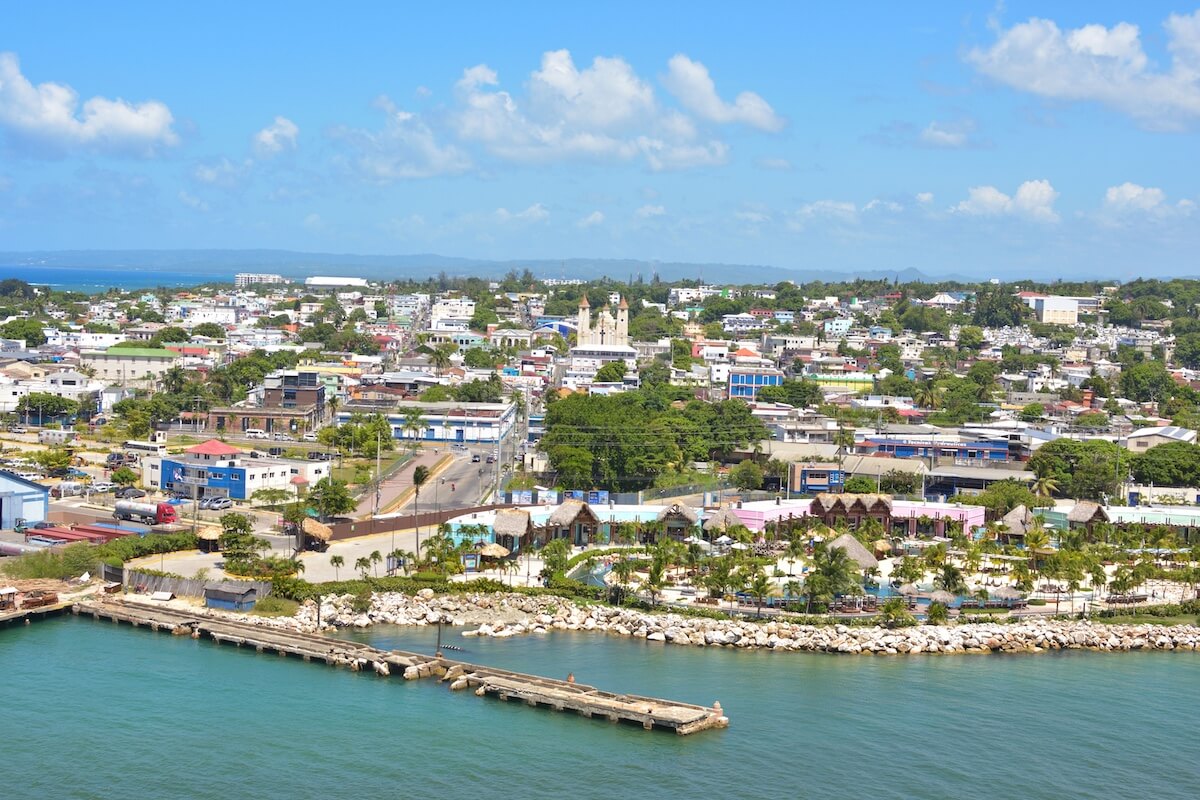
Search for the Puerto Plata cruise port and you’ll find two different answers, because there are two of them — Taino Bay and Amber Cove — and most search results never draw that line for you. Puerto Plata gives cruise lines two completely different front doors, and which one your ship uses changes the entire shape of your day. The Taino Bay cruise port puts you at the edge of a working Dominican city rather than inside a fenced resort compound a twenty-minute drive from anything. That proximity is the appeal. It is also the reason this stop deserves more thought than the average Caribbean port day.
Our guide to cruise ship security systems covers what protects you onboard and at the gangway. This one picks up where those end — at the port exit and in the city beyond it.
What Arriving at the Taino Bay Cruise Port Is Actually Like
Is the Taino Bay cruise port safe?
The Taino Bay cruise port is a gated, controlled-access complex open only to passengers from ships in port, with private security throughout. Inside the gate, risk is low. The variables that matter — street crime, traffic, and unlicensed guides — begin outside the exit, in the city of Puerto Plata.
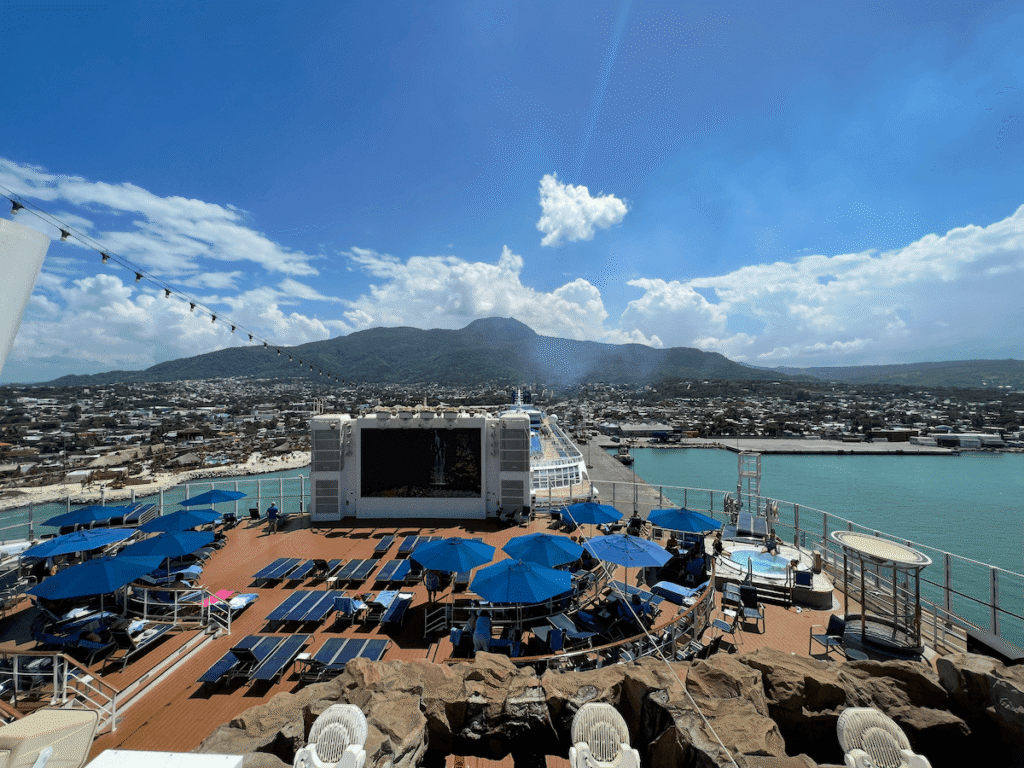
Stay inside the gate and this is a low-stress stop — genuinely controlled, with everything below about what happens once you leave it. Ships dock directly at the pier here — no tender required. The terminal is run by ITM Group, a Cancún-based port operator that also runs Puerto Costa Maya in Mexico, Port Roatán in Honduras, and Port Cabo Rojo on the Dominican Republic’s southern coast. If you have been to Costa Maya, you already know the template — a self-contained entertainment complex built around the pier rather than a passenger building with some shops attached.
A Bit of Background on the Port
ITM won the Taino Bay concession in a competitive bid against a dozen other companies and put $80 million into the first phase, which replaced Puerto Plata’s old cargo pier. The port opened on December 15, 2021, with the arrival of MSC Seashore. A second phase in February 2023 added the third berth and expanded the reception areas, bringing capacity to roughly 14,000 passengers at once.
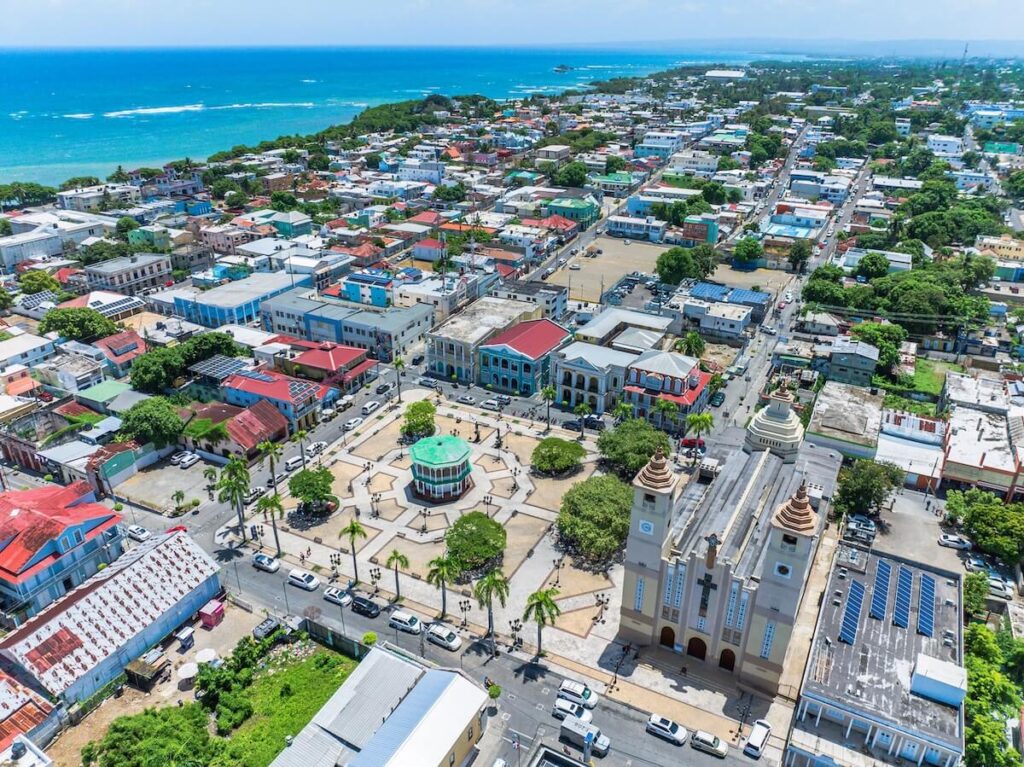
Historically, that site mattered before it was a cruise port. Taino Bay sits alongside the 16th-century San Felipe Fortress, and the port project was tied to a government-led renovation of a 16-block area of the colonial center — the reason the historic district you will walk into looks the way it does today.
The layout is straightforward. You clear the pier and land in a courtyard-style complex. The port’s own map marks restrooms, a photo spot, a transport area, a separate exit for pre-booked shore excursions, a last-minute booking booth, and a clearly signed port exit toward the city. Two drugstores sit inside the shopping area, which matters more than it sounds like it should.
Transport runs the length of the pier between the ship and the terminal entrance. No official source confirms how that service is operated or whether it carries a charge, so plan on walking and treat a ride as a convenience if it is running.
What is there to do at Taino Bay without booking an excursion?
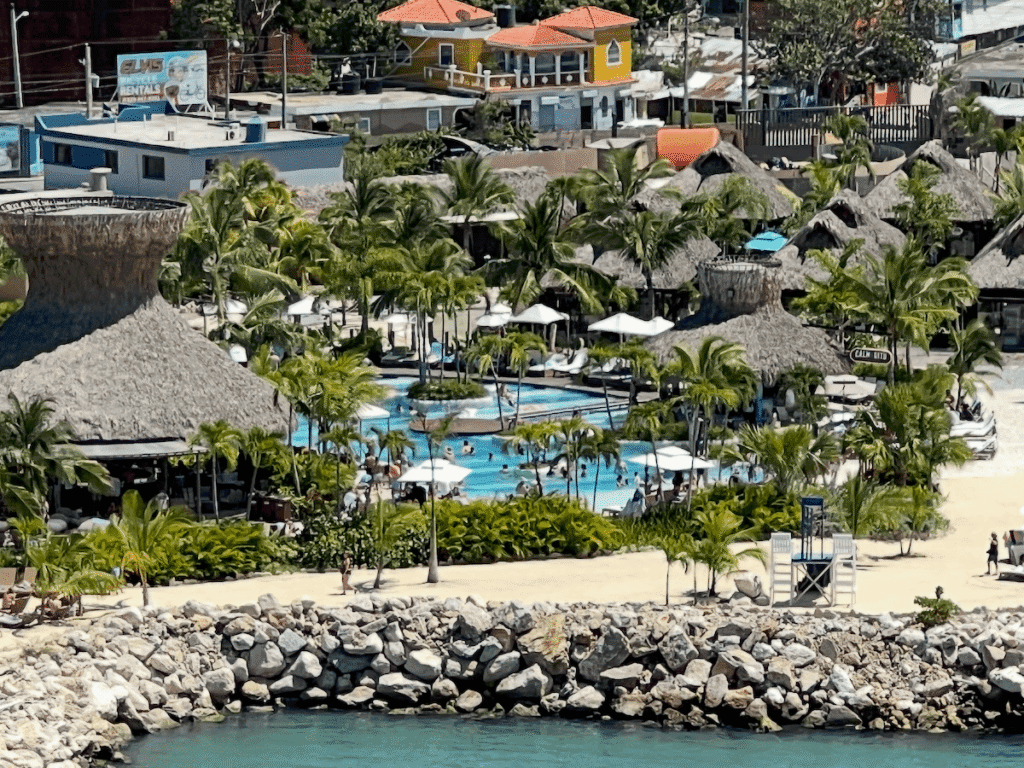
Taino Bay includes free pool and lazy river access, a hammock area, a sand play area, live shows, restaurants, bars, and shopping. Paid add-ons include Monkey Island, an aviary, a spa, a rum tasting experience, and a surf simulator. Most passengers can fill a port day without leaving the complex.
Staying inside the port for the whole day is a real choice here, not a consolation prize — the complex is built for exactly that, and plenty of passengers take it. Nothing in this guide argues against it.
Can you swim at Taino Bay?
No. Taino Bay has a sand area and water features, but there is no ocean swimming at the port. The complex sits on a rock and breakwater shoreline rather than a swimming beach. Passengers who want ocean time need a beach excursion or a resort day pass at Playa Dorada or another nearby beach.
This trips people up, because the port’s own materials describe a beach area and the aerial view shows sand. The sand is real. The swimming is not. If your plan for the day was a beach day, plan it as an excursion rather than something you can walk to.
Which cruise lines actually dock at Taino Bay?
The port lists Celebrity, MSC, Norwegian, Oceania, Regent, Royal Caribbean, and Virgin Voyages among the lines calling there. Carnival Corporation brands generally use Amber Cove instead.
Do not assume based on the line alone. Norwegian’s own Puerto Plata port page currently names Amber Cove as the terminal where its ships dock, and some Norwegian sailings do call there. Check the terminal name on your specific booking confirmation rather than on a cruise line’s general destination page. The two ports are not close together, and a day planned around walking into town does not work from the other one.
Puerto Plata Cruise Port: Taino Bay or Amber Cove?
Puerto Plata’s two terminals produce genuinely different days, and they are not close to each other.
Amber Cove sits west of the city in the Bay of Maimón and opened in 2015 as a self-contained resort-style complex on 25 acres. Everything beyond the gate requires transportation. Taino Bay sits at the edge of downtown Puerto Plata, which places the historic district, the fortress, and the city’s shops and restaurants within reach on foot.
That difference is the whole safety conversation in one sentence. At Amber Cove, leaving is a decision you make deliberately, with a vehicle. At Taino Bay, leaving is as simple as walking through a gate — which is exactly what people love about it, and exactly why more passengers end up in an unfamiliar city with no plan.
The Security Picture in Puerto Plata
Is Puerto Plata safe for cruise passengers?
Puerto Plata is generally safe for cruise passengers who stay within the port complex, the historic district, and organized excursions. The Dominican Republic carries a Level 2 U.S. travel advisory for crime. Most incidents affecting visitors are thefts and street robberies rather than violence directed at tourists.
The State Department placed the Dominican Republic at Level 2 — exercise increased caution — on June 12, 2025, with crime as the only reason given. The advisory language is direct: violent crime is a concern despite heavier police presence in tourist areas, and travelers are told not to display wealth. It also notes plainly that criminals are rarely caught and prosecuted.
The Bureau of Diplomatic Security’s country report, published in January 2026, fills in the texture. Most crimes are random armed robberies. Most offenders travel by motorcycle. Phones and bags are taken from pedestrians on sidewalks, including in well-off neighborhoods and tourist areas.
Homicide sat at roughly eight per 100,000 through mid-2025, down from about ten the year before, and most of those deaths trace to domestic and social disputes rather than crimes against visitors. Terrorism is assessed as a low threat, and maritime security risk is low.
The UK Foreign, Commonwealth and Development Office describes the same environment from a different angle, and its wording is worth reading because it is blunter. It flags bag-snatching by thieves on motorcycles, including riders reaching through car windows at red lights, and notes that foreigners have been robbed at gunpoint or knifepoint in daylight. Its advice on being robbed matches the State Department’s: do not fight back.
What changes if you are sailing in November or December
One detail matters specifically for anyone sailing in late November or December. That January 2026 report notes that theft and robbery rise across the country between November and January, when workers receive their year-end “thirteenth month” bonuses and more cash is moving. It also notes that Dominican security services increase police and military presence during the same window to counter it.
Two things move in opposite directions at once. There is more street theft happening and there are more uniforms on the street. Neither cancels the other out. What it means in practice is that a December port day in Puerto Plata will look and feel more secure than a quiet Tuesday in September, while the actual chance of having a phone taken off you is slightly higher.
I spent my career working crowded transit corridors and tourist districts, and the pattern that produced most of our victims was never exotic. It was a person walking with a phone held out at chest height, attention fully on the screen, moving predictably along a sidewalk with vehicle access on one side. That describes plenty of cruise passengers walking from a port gate into a historic district for the first time. The fix costs nothing: phone in a pocket when you are moving, out only when you have stopped somewhere with your back to something solid.
What security actually looks like on the ground
You will encounter several distinct groups, and they are not interchangeable.
The National Police handle internal security and are the only agency authorized to conduct criminal investigations in the Dominican Republic. POLITUR, the tourist police, functions as a first-responder service for visitors and states that it maintains a security program across the country’s cruise port destinations. POLITUR will help you get to a police station, file a report, and connect you with further assistance. The central line is 809-200-3500, with English-language assistance available, and the U.S. Embassy also publishes a POLITUR WhatsApp number, +1-809-520-8665. The Puerto Plata and Cofresí office can be reached at 809-320-0365, and the Playa Dorada office at 809-320-4603. Private security covers the port complex itself.
The same January 2026 report is candid about police corruption remaining a serious problem, with internal affairs investigations under-resourced despite hundreds of officer terminations a year. It also records a small number of kidnapping cases in which victims were approached by men in police uniforms who claimed they needed to verify identity. Kidnapping itself is rare, and this is not a reason to be afraid of every officer you see. It is a reason to know that a legitimate stop does not require you to get into an unmarked vehicle, and that asking to contact your embassy is always an available move.
Insider Tip: In the first few minutes after you clear the port gate, look at what the uniforms are actually doing. Officers facing the crowd, standing where people funnel — a gate, a corner, a crosswalk — with their eyes moving are doing prevention work. Officers standing in a group facing each other, parked in the shade, or looking at their phones are a response force at best. They will help you after something happens, not before. That read takes about ten seconds and it tells you how much room you have. Where the presence is real, you can loosen up a notch. Where it is decorative, you are your own security, and you should keep your route shorter and closer in.
About that search result you are going to find
If you look up crime in Puerto Plata, you will probably come across a 2016 case in which a German tourist was shot and killed during a robbery on the city’s seawall. The case is real, it was widely reported, and it happened on ground that is walkable from where your ship now docks. Nearly six years passed between that killing and the Taino Bay cruise port opening, and the stretch of city where it happened has since been rebuilt as part of the port development and the renovation of the colonial center.
A single incident from a decade ago is not a pattern, and there is no current U.S. advisory singling out Puerto Plata. I am including it because you are going to find it whether or not I mention it, and finding it on your own with no context is worse than reading it here with some.
Getting Around: Official Transportation Versus Going Independent
Inside the complex, the port separates its transportation functions. Pre-booked shore excursions have their own exit. A last-minute booth handles same-day bookings from the port’s own catalog, which includes a downtown walking tour, the Damajagua waterfalls, Monkey Island, Playa Dorada, buggy and off-road expeditions, and beach day passes. A transport area sits nearby. Outside the gate, independent taxi drivers and tour sellers wait for passengers who did not book anything.
Is it safe to leave the Taino Bay cruise port on your own?
Yes, within limits. Independent travel around Puerto Plata is common and usually uneventful, but the U.S. Embassy recommends driving rather than walking in areas you do not know. Use transportation arranged through the port or a rideshare app, agree on the fare before you get in, and return well before all-aboard.
The Embassy’s transportation guidance is specific and worth following as written. Stick to authorized taxis — clearly marked vehicles with official identification — and always agree the fare first. Avoid hailing taxis off the street. Avoid the shared vans and route taxis that locals use, which are not built to U.S. safety standards and sometimes run without doors. Motorcycle taxis are common and not recommended, because they frequently lack helmets and follow few traffic rules. U.S. government employees are prohibited from riding them outright.
Uber operates in Puerto Plata. The Dominican Republic’s Ministry of Tourism lists it as one of three cities in the country with Uber service, alongside Santo Domingo and Santiago. The Embassy’s advice for using it is the same anywhere: verify the driver’s name and plate before you get in. One practical wrinkle — because the port is closed to anyone who is not a cruise passenger, plan on walking out to the gate area to meet a rideshare driver rather than being picked up inside.
The bigger risk here is traffic, not crime
Traffic accidents became the leading cause of death in the Dominican Republic in 2024, and the country’s road fatality rate ranks among the highest in the world. Motorcycles make up roughly half of registered vehicles and routinely run lights and ride on sidewalks. Pedestrians do not have the legal right of way, so crosswalks and signals mean considerably less than they do at home.
Dominican law adds a legal wrinkle on top of that: police take a driver into custody after any accident causing serious injury or death, regardless of fault, with a standard 48-hour detention that can run much longer. Only the driver is held. For a cruise passenger on a single port day, that settles the rental-car question by itself. Let someone else drive.
A word on the off-road excursions
Taino Bay’s headline adventure offerings are UTV expeditions and countryside buggy tours, and they sell well because they are genuinely fun. They also sit in a category the U.S. Embassy has specifically flagged: ATV accidents are common in the Dominican Republic. Add to that the State Department’s observation that the country’s tourism industry is unevenly regulated, that safety inspections may be lacking, that hazards are not always marked, and that staff may not be trained or certified.
That is not a reason to skip the excursion. It is a reason to treat it as a real activity with real injury potential rather than a theme park ride, and to ask the questions our ATV excursion safety guide walks through before you sign the waiver.
What Happened to Us on the Walk Into Town
No U.S. government advisory currently identifies a scam specific to the Taino Bay cruise port. That is a real finding rather than a gap in this guide, and I would rather say so than invent a threat. What I can give you is what happened to me.
We left the port on foot and headed up Calle Duarte toward the historic center. A man approached us on the street, told us he was with the tourism department, and said his job was to help tourists. A Puerto Plata polo shirt was the only credential he had — no badge, no identification. He fell in behind us and kept talking as we walked, telling us where we should go and steering the route the whole way. Nothing was ever asked for outright; he simply attached himself and didn’t leave.
He left when I told him firmly and unambiguously to stop. Not the polite version — the version that removes any doubt about whether the conversation is continuing.

Why a polo shirt is not a credential
What makes that worth writing about is this: tour guiding in the Dominican Republic is a licensed profession. The Ministry of Tourism certifies guides through a formal training and credentialing process, requiring registration and an official license to operate legally. A branded polo shirt is not a credential. Neither is a verbal claim of working for a government office.
I do not know what he was working toward. Maybe it was a tip at the end of a tour I never asked for. Maybe it was a commission at whatever shop we ended up in. Or it may have been something worse. I know he had already lied to me about who he was, and I was not going to spend the afternoon finding out what came next.
That is the whole principle, and it does not require knowing his intent. Once someone has misrepresented their authority, everything downstream is unknowable — and the correct response is the same either way. Do not let a stranger who opened with a lie decide where you walk next.
Insider Tip: The reason this works on people is not that the pitch is clever. It is that most travelers are managing their own discomfort about seeming rude in a foreign country, so they hedge — a weak “no thanks,” a half-smile, continuing to answer questions. Every one of those reads as an opening. A firm, complete, unmistakable refusal is not rude, and it ends almost every one of these encounters immediately. Practice saying it before you need it. The discomfort lasts four seconds. The alternative is an afternoon you did not choose.
The documented patterns
Beyond that, what is on record for the Dominican Republic is countrywide and surfaces anywhere tourists concentrate — including the sidewalk outside a port gate on a three-ship day.
Card skimming and card fraud. Credit card fraud is described as commonplace, and ATM skimming is common enough to be called out by name. Machines inside banks, malls, and hotels are considered more reliable than standalone units on the street. The UK government adds card cloning to the list and advises keeping your card in view during any transaction.
Snatch thefts from motorcycles. This is the signature street crime of the country. It happens in daylight, it happens in nice neighborhoods, and phones are the most common target.
Counterfeit medication. The State Department specifically warns about counterfeit pills sold locally and advises buying only from a pharmacy with a doctor’s prescription. Two drugstores operate inside the port complex, and the ship’s medical center is a few hundred yards away. Neither is a reason to buy prescription medication from a pharmacy in town on a port day.
The impersonation call. The country’s best-known fraud does not target the traveler at all. Someone phones an older relative back home, claims to be police or an embassy official, says a family member has been arrested or hurt in the Dominican Republic, and pressures them to wire money. The embassy receives these calls regularly. If you are traveling here and you have family who would panic first and verify second, tell them before you leave that no real emergency will ever arrive as a demand for a wire transfer.
One Rule That Covers Most of It
One general principle covers most of what you will meet outside the gate: ask the price before you accept anything. Whether it is a service, a product, or a photo opportunity, the moment to establish what it costs is before you say yes. If someone puts something in your hands or on your shoulder without asking, assume payment is expected. For more on how these approaches show up across the Caribbean, our guide to spotting cruise port scams covers the common threads.
On money generally: the Dominican peso is the local currency, dollars circulate widely in tourist areas, and change comes back in pesos at whatever rate the seller decides. Know the day’s rate before you pay for anything in cash.
If Something Goes Wrong: Medical and Legal Help in Puerto Plata
What should you do in a medical emergency in Puerto Plata?
Call 911, which operates nationwide and dispatches police, fire, and ambulance from a single call. Puerto Plata is one of the few areas where ambulance service is comparatively reliable. Expect a private hospital to require payment before treatment. Notify your ship immediately, because the port agent coordinates with the vessel.
The two Puerto Plata facilities that appear on the U.S. Embassy’s medical provider list are Centro Médico Bournigal at Calle Antera Mota esquina Dr. Zafra, reachable at 809-586-2342, with a dedicated international insurance extension, and Clínica Brugal Mejía at Calle José del Carmen Ariza #15, at 809-586-2519. Both are in the city itself, minutes from the terminal. Bournigal is the one worth knowing specifically — it’s the region’s largest private clinic, with a 24-hour emergency department built around treating international patients.
The port’s own map doesn’t show a first-aid station beyond its two drugstores. If something happens closer to the terminal than either embassy-listed option, the nearest hospital by name recognition is Hospital Ricardo Limardo, the region’s public teaching hospital. Puerto Plata’s public hospitals serve the local population at low cost, which generally means more demand on fewer resources than a private facility built around international patients. This isn’t a recommendation — it’s the name worth having if Bournigal isn’t reachable in time.
What Paying for Care Actually Looks Like
Understand the payment structure before you need it. Medicare and Medicaid do not function abroad. Most Dominican providers do not accept U.S. health insurance and will not file a claim on your behalf. Hospitals and doctors require a deposit before service, and private hospitals want advance payment or proof of accepted international coverage before admitting anyone. Cash up front is normal.
One protection is worth knowing about because it is frequently violated: it is illegal under Dominican law to hold a patient or retain a passport over an unpaid medical bill. Private clinics have done it anyway. If it happens, the embassy is the call.
If you are arrested, detained, or a crime victim
The United States maintains a consular agency in Puerto Plata, which is a meaningful advantage over most Caribbean ports where the nearest help is a plane ride away. It sits at Plaza el Doral on Carretera Luperón KM 3½ and is open Monday through Friday, 8:00 a.m. to 5:00 p.m., at 809-586-4204 or 809-586-8023. Outside those hours, the embassy in Santo Domingo answers at 809-567-7775 — dial zero and ask for the duty officer. From the United States or Canada, the State Department’s 24-hour line is 1-888-407-4747; from abroad, 1-202-501-4444.
Carry your passport ashore. The State Department advises U.S. citizens in the Dominican Republic to carry passports at all times, because immigration enforcement operations produce frequent vehicle and pedestrian stops, and some Americans have been temporarily detained after being mistaken for Haitian migrants. If you are detained for any reason, ask the officers to notify the U.S. embassy.
What to Do If a Crime Happens to You
There is one procedural detail that catches cruise passengers specifically. Crimes can be reported online or through the Dominican police reporting app, but the case does not advance until you appear in person. A passenger who sails at 5:00 p.m. cannot do that. If you are the victim of a crime ashore, get a report started before you return to the ship rather than deciding to handle it later, and tell your ship’s security officer what happened before the gangway closes.
Here is the order to work in:
- Call 911 for police, fire, or ambulance.
- Call your ship. The port agent’s number is printed in your daily program and posted at the gangway.
- Contact POLITUR at 809-200-3500, or by WhatsApp at +1-809-520-8665, for tourist-specific assistance including help filing a report.
- Contact the consular agency in Puerto Plata at 809-586-4204, or the embassy after hours at 809-567-7775.
- Photograph everything — documents, receipts, injuries, the scene — before you leave the country.
What the embassy can do is real but bounded. It can replace a stolen passport, help you find medical care, assist you in reporting a crime, contact family with your consent, and provide a list of local attorneys. It does not pay medical bills, provide legal representation, or get charges dropped.
The Numbers Worth Having Before You Go Ashore
What are the emergency contact numbers for Puerto Plata?
In Puerto Plata, dial 911 for police, fire, or ambulance. For hospital care, Centro Médico Bournigal is reachable at 809-586-2342. The nearest U.S. consular presence is the Puerto Plata consular agency at 809-586-4204, and POLITUR, the tourist police, can be reached at 809-200-3500.
These are the numbers worth having on you, not just saved somewhere on your phone.
- Emergency Number: Call 911 for police, fire, or ambulance
- Nearest Hospital: Centro Médico Bournigal — 809-586-2342
- U.S. Consular Agency: Puerto Plata office — 809-586-4204
- Tourist Police: POLITUR — 809-200-3500 (WhatsApp +1-809-520-8665)
Add your own insurer’s 24-hour line and your ship’s port agent number before you sail, and keep the whole list on paper as well as your phone. Phones get taken, batteries die, and roaming fails at the worst possible moment. Our guide to medical emergencies in foreign ports explains what actually happens when a passenger is left behind for treatment.
The Bottom Line
The Taino Bay cruise port is one of the more rewarding stops in the Caribbean precisely because it is not a manufactured environment. You are docked at the edge of a real city with real history, and the walk-off access is genuine. The trade-off is that ordinary urban awareness applies the moment you clear the gate, in a country the State Department flags for crime and where traffic is a bigger daily hazard than crime is.
None of that argues against going ashore. It argues for going ashore with your phone in your pocket, a fare agreed in advance, a passport on you, five phone numbers written down, a firm answer ready for anyone who attaches themselves to you, and a clear sense of when you need to be back.
Next Steps
For the habits that apply at every port, not just this one, start with 10 Cruise Port Safety Tips From a Retired NYPD Officer. If you want to see how this same analysis reads for a very different Caribbean stop, Is Nassau Bahamas Safe for Cruise Passengers? covers a port with a considerably more active advisory history.
Travel safe. Enjoy the port, and know the way back.
— Rick Hayes, Travel Safety Authority
Need an independent opinion on whether an independent day in Puerto Plata is the right fit for your travel style? Visit the Work With Rick page to schedule a consulting session. I provide independent safety and travel planning guidance, with no booking commissions or sales incentives.
This article contains affiliate links. If you purchase, book, or make a reservation through a link on this page, I may earn a small commission at no additional cost to you. Affiliate relationships include but are not limited to Amazon Associates, Viator, RoamRight, and other travel and product partners. This does not influence my recommendations — I only link to products, services, and experiences I would genuinely recommend to my own clients. Travel insurance recommendations are provided for informational purposes only. I am not a licensed insurance agent. Please review all policy details carefully before purchasing. See my full Disclaimer for details.
The information in this article is provided for general educational purposes only and reflects the personal experience and professional background of the author. It is not a substitute for professional security consultation or official government travel guidance. Safety conditions at any destination can change rapidly — always verify current advisories at travel.state.gov before your trip. Reliance on any information in this article is at your own risk. This site may contain affiliate links; see the full Disclaimer for details.