Medical Emergencies in Foreign Ports: What Happens and Who Can Help You
The moment you step off the gangway in a foreign port, something changes that has nothing to do with scenery: you switch legal systems. The police who respond to you, the hospital that treats you, the rules for who pays and how you get home — all of it now runs on the laws and infrastructure of the country you’re standing in, not the one on your passport. Most cruisers never feel that switch because most port days end uneventfully. This article is about the days that don’t — because medical emergencies in foreign ports are not something you want to be figuring out for the first time from a hospital waiting room, thousands of miles from home.
As a cruise safety expert and retired NYPD Anti-Terrorism officer, I want to be upfront about what I can and can’t responsibly tell you. Everything here is sourced from official channels — the U.S. State Department, U.S. government agencies, official tourism and hospital authorities, and Divers Alert Network (DAN) for how an evacuation actually gets coordinated. I won’t give you medical instructions; what to do for an injury or illness is between you and local medical professionals. What I will give you is the jurisdiction, infrastructure, and logistics picture across four ports — St. Thomas, Nassau, Cozumel, and Puerto Plata — because one of those four is legally unlike the others, and the difference should shape how you plan. This is a companion piece to my full independent shore excursion guide.
Jurisdiction Is the First Fact of Every Emergency
Here’s the part of my background that applies directly here. Every emergency response I ever took part in ran on one invisible foundation: jurisdiction. Who has legal authority here, what system dispatches help, what rules govern the responders. In New York that foundation was so solid nobody thought about it. Abroad, it’s the first thing you should think about, because your legal protections don’t travel with you — the local system’s rules apply to you the moment you’re ashore.
Three things follow from that, and each one has a practical response:
Local police operate under local law and procedure. Response times, report processes, and victim services vary by country, and the State Department notes for the Dominican Republic — candidly, in its own advisory — that criminals are rarely caught and prosecuted. The point isn’t to be afraid; it’s to adjust what you expect from local police and take a little extra care ashore because of it, and to know which official resources exist before you need them (more on those below, port by port).
The ship’s medical center stops being your option. Once you’re ashore and especially once the ship sails, the shipboard clinic I covered in Staying Healthy on a Cruise is out of the picture. Shoreside, you’re in the local system, which is what most of this article walks you through.
What the U.S. Government Can (and Can’t) Do For You
The U.S. government helps, but narrower than people assume. Per the State Department’s own guidance, consular officers can help you locate doctors and hospitals, contact family with your permission, and explain options for transferring money — but the U.S. government does not pay medical bills abroad, and in many places facilities require payment or a deposit before treating you. That’s not my characterization — the State Department’s Medicine and Health page states it plainly. The fix here is financial: coverage arranged before you sail, covered in The Money Reality below.
Insider Tip: Before every port day, I build what I’d call a pre-port intel card — one note on my phone, one printed copy: the local emergency number, the name and address of the nearest hospital, the address and phone of the nearest U.S. embassy, consulate, or consular agency, my insurer’s 24-hour assistance line, and the ship’s port agent contact from the daily program. Five lines. In an emergency, the person with the addresses moves first — and I never once regretted having information I didn’t need.
What Happens During a Medical Emergency in a Foreign Port?
In a foreign port medical emergency, you fall under local law, not U.S. law or cruise line policy. Call local emergency services first, then your travel insurer’s 24/7 assistance line. Consular officers can help locate care — but the U.S. government won’t pay medical bills or arrange transport.
The U.S. Territory Difference: St. Thomas
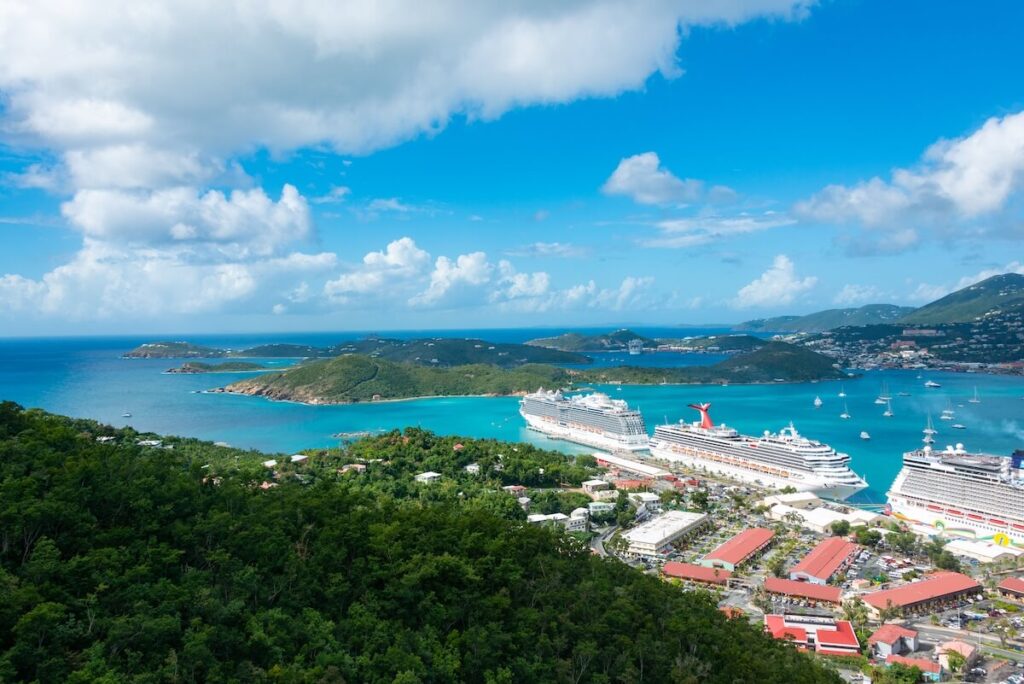
St. Thomas is the outlier in our four-port set, and the difference is structural: the U.S. Virgin Islands are United States territory. You haven’t left the country. That single fact rearranges the entire emergency picture.
The emergency system is the one you already know. The USVI’s official tourism authority confirms it directly: for emergencies in the territory, you call 911. Police, fire, and EMS operate under U.S. and territorial law. There is no consulate to find because you don’t need one — you’re on U.S. soil, with U.S. legal protections.
The medical infrastructure is real, and it has limits you should understand. The Roy Lester Schneider Hospital — part of Schneider Regional Medical Center — is the only acute-care hospital on St. Thomas, a full-service facility with 24-hour emergency services that serves residents and the more than a million annual visitors arriving by air and cruise ship. The territory’s official health information page notes that patients needing extensive care from St. John are transferred to St. Thomas, and that medical evacuation services are available in the territory — which tells you the honest picture: excellent access for an island, with the most complex cases still potentially requiring transfer to larger mainland facilities, as is true across island medicine everywhere.
Insurance and the Ship-Wait Rule
The insurance picture is different here too. Because the USVI is U.S. territory, the hard line that Medicare and most U.S. health plans draw at the border generally doesn’t apply the way it does in a foreign port — Medicare’s own guidance on travel outside the U.S. frames its restrictions in terms of care received outside the United States and its territories. Verify your own plan’s specifics, but understand the structural point: in Charlotte Amalie, you’re inside the U.S. system.
One thing that does not change in St. Thomas: the ship-wait rule. Miss your ship on an independent excursion here and the cruise line still owes you nothing — U.S. soil makes the emergency easier, not the logistics of catching your ship. The hub guide lays out the full rule.
Foreign Jurisdiction: Nassau, Cozumel, and Puerto Plata
Now the contrast. Everything below comes from the State Department’s own country resources, and what’s worth noticing is that each destination has real official infrastructure — different in each port, and all of it worth knowing by name before you walk ashore.
Nassau, Bahamas
The Bahamas is a sovereign nation under a State Department Level 2 advisory. The advisory documents two things relevant here. First, crime concentrated in specific areas of Nassau — the advisory names the Over the Hill area south of Shirley Street — which is jurisdiction knowledge of the most practical kind: know where the advisory tells you to stay alert.
Second, its watercraft warnings — unregulated boating, injuries and deaths, and reported assaults by jet ski operators — are, among other things, a medical-infrastructure fact: watersport injuries in a jurisdiction where the activity is inconsistently regulated mean the quality of the response depends heavily on which operator you chose. Prevention is the medical plan: choose watercraft operators as carefully as the hub guide recommends, or book that category through the ship. The U.S. Embassy sits in Nassau itself, which matters for the consular services described below, and the State Department recommends STEP enrollment so the embassy can reach you and locate you in an emergency. For the ground-level picture of the port, my Nassau safety guide goes deeper.
Cozumel, Mexico
Cozumel sits in the Mexican state of Quintana Roo, under a Level 2 advisory. Two official resources stand out for cruisers. First, the Mexico advisory’s Quintana Roo guidance recommends downloading the state government’s Guest Assist app — emergency numbers, legal help, police-report assistance, and a way to file a complaint against a service provider, all in one official tool. Load it before port day, not during a crisis. Second, the U.S. maintains a Consular Agency in Playa del Carmen that serves the Cozumel area, so consular help is closer than the embassy in Mexico City.
On the medical side, Cozumel is an island with an unusual wrinkle: as one of the world’s premier dive destinations, it has hospital-based hyperbaric treatment capability, confirmed by DAN’s own reporting on the island’s chamber — the exact scenario DAN’s evacuation network exists for, covered below. As with all island medicine, complex cases may require transfer to mainland facilities, a logistics reality (ferry or air) that belongs in your mental model. For current destination-level health details, check the CDC Travelers’ Health pages for Mexico before you sail.
Puerto Plata, Dominican Republic (Taíno Bay and Amber Cove)
The DR carries a Level 2 advisory, and the State Department’s country resources list exactly the infrastructure a cruiser should memorize: the Dominican Republic operates a 911 emergency response system; it fields POLITUR, a professional tourist police force dedicated to visitor safety in tourist zones; and — unusually convenient for cruisers — the U.S. maintains a consular agency in Puerto Plata itself, with after-hours duty officer access. That’s three official lifelines within reach of both terminals. The two-terminal layout matters medically the same way it matters tactically: Taíno Bay sits essentially in the city, while Amber Cove is a self-contained complex outside it, so an emergency at Amber Cove involves transportation logistics that Taíno Bay doesn’t.
Tourist-area medical care in the DR is commonly delivered through private clinics, and — as the State Department notes for foreign care generally — payment can be required up front. Review the CDC Travelers’ Health page for the Dominican Republic for the current health picture before your cruise.
What Consular Officers Can and Cannot Do
Because “call the embassy” is the most common piece of half-right advice in travel, here’s the accurate version, straight from the State Department’s published guidance. In a serious medical situation abroad, consular officers can help you find local doctors and hospitals, contact your family or friends with your permission, and explain the available options for transferring money from home. They cannot pay your hospital bill, provide medical care, or override local law and procedure. The U.S. government does not pay medical bills abroad — the State Department says so in exactly those terms. Knowing both halves of that sentence before you sail is the difference between using the consulate well and losing an hour discovering its limits.
The Money Reality
This is the section that motivates everything else, and it’s built entirely on official statements.
Medicare does not cover medical costs outside the United States. That’s the State Department’s flat summary, with the details at Medicare.gov. Most health plans that do cover routine care abroad still don’t pay for medical evacuation by air ambulance — and the State Department’s published guidance warns that an air-ambulance evacuation back to the U.S. can run from the tens of thousands of dollars into six figures depending on location and condition. Foreign facilities may require payment or deposits before treatment.
Put those three official facts together and there’s one honest conclusion, with no salesmanship needed from me: the financial layer of an overseas emergency is something you either arranged before sailing or absorb personally. The State Department itself recommends considering medical evacuation coverage as part of travel insurance. Whatever provider you use, the homework is identical: confirm the medical expense and evacuation benefits, the exclusions, and the 24-hour assistance number — then put that number on the intel card. If you’re weighing excursion-specific coverage on top of this, Shore Excursion Insurance: What It Actually Covers breaks down what that layer does and doesn’t include.
Medical Emergencies in Foreign Ports: How an Evacuation Actually Gets Arranged
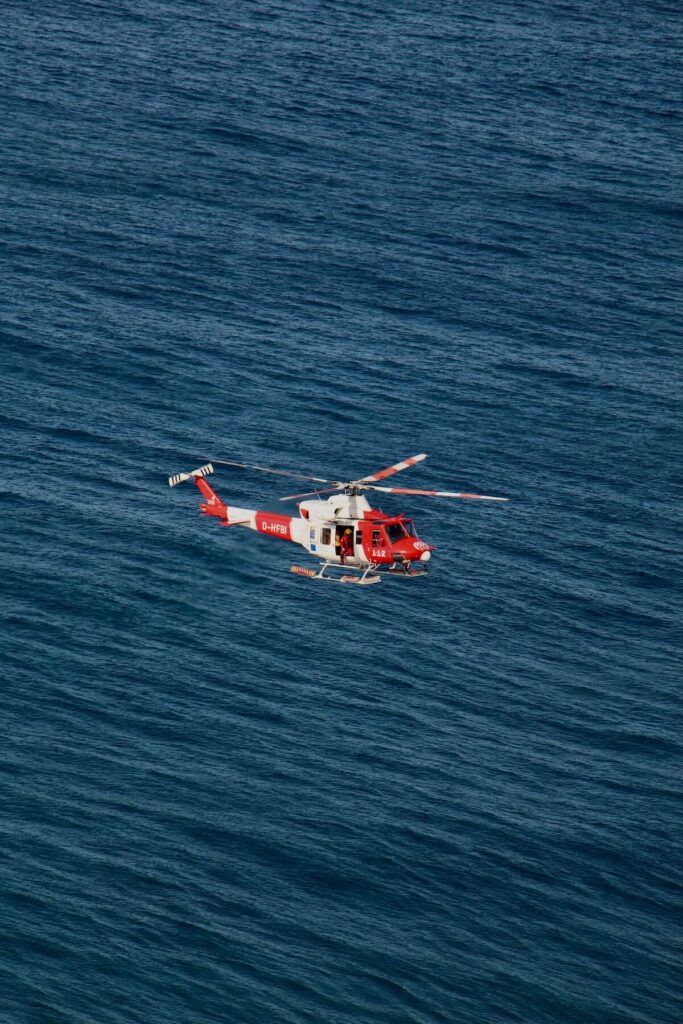
Medical evacuation isn’t a helicopter appearing because someone wished for it — it’s a coordination chain, and the clearest publicly documented model of that chain comes from Divers Alert Network, the nonprofit that has run dive-emergency assistance for decades. DAN’s own published guidance sets the order of operations that generalizes to every assistance provider: in a life-threatening emergency, contact local emergency services first — 911 or the local equivalent — and get the patient to the nearest medical facility for stabilization and assessment. Then call the assistance hotline. From there, DAN’s documented process shows what the chain looks like: medics consult with the treating local physician, a medical director weighs in on the appropriate destination facility, and the assistance service contracts the air ambulance and manages the transfer — in dive cases, even specifying aircraft that hold sea-level cabin pressure for the patient’s condition.
What This Means If You’re Not a Diver
Two takeaways travel well beyond diving. First, evacuation decisions are medical decisions made between physicians and coordinators — the patient’s job, and the family’s, is to activate the chain, not design it. Second, the chain activates by phone number: local emergency services first, then your insurer or assistance provider’s 24-hour line. If those numbers aren’t with you ashore, the chain starts late. If you dive, DAN’s hotline and membership structure are worth knowing on their own terms; for everyone else, your travel insurer’s assistance line occupies the same slot in the plan.
Insider Tip: Groups fall apart in emergencies for a predictable reason — everyone assumes someone else is handling it. Before you go ashore, quickly assign roles: one person makes the calls (emergency services, insurer hotline, consular contact), one person keeps track of everything (photos of documents, names of facilities and staff, times), and everyone knows the rally point and the ship’s all-aboard time. Sixty seconds of sorting that out at breakfast turns a panicked group into a functioning one.
What This Means for Your Port Day Decisions
Bringing this together, this is what it means for how you plan your port day. In St. Thomas, you’re inside the U.S. system — plan normally, respect island-medicine limits. In Nassau, Cozumel, and Puerto Plata, you’re a guest of another sovereign system — so carry the intel card, enroll in STEP, load the official tools (Guest Assist for Cozumel), know your insurer’s assistance number, and let the jurisdiction shape your activity choices, especially for the categories the advisories specifically flag. None of this is dramatic. It’s the same principle that ran through my entire career: the plan you make when nothing is wrong is the one that works when something is. For the full pre-port planning list this feeds into, see Shore Excursion Safety: The Independent Excursion Checklist.
A Necessary Word Before You Go
Nothing in this article about medical emergencies in foreign ports is medical advice, and none of it should delay real help. In any actual emergency, contact local emergency services immediately — 911 in St. Thomas and the Dominican Republic, or the local emergency number wherever you are — and follow the guidance of medical professionals on scene. For coverage and evacuation specifics, your own travel insurance provider and their 24-hour assistance line are the authoritative source for what applies to you. The official pages linked throughout — the State Department, CDC Travelers’ Health, and DAN — are where this article’s facts live and where you should verify them before your own sailing, because advisories and resources change.
For the onboard half of the medical picture — ship medical centers, illness at sea, and the CDC’s actual data — read Staying Healthy on a Cruise. And for the statistical context that keeps all of this in proportion, my report on how safe cruising actually is covers what the official numbers show.
Travel safe. Know the ground you’re standing on.
— Rick Hayes, Travel Safety Authority
Need an independent opinion on whether an itinerary’s ports are the right fit for your travel style? Visit the Work With Rick page to schedule a consulting session. I provide independent safety and travel planning guidance, with no booking commissions or sales incentives.
This article contains affiliate links. If you purchase, book, or make a reservation through a link on this page, I may earn a small commission at no additional cost to you. Affiliate relationships include but are not limited to Amazon Associates, Viator, RoamRight, and other travel and product partners. This does not influence my recommendations — I only link to products, services, and experiences I would genuinely recommend to my own clients. Travel insurance recommendations are provided for informational purposes only. I am not a licensed insurance agent. Please review all policy details carefully before purchasing. See my full Disclaimer for details.
The information in this article is provided for general educational purposes only and reflects the personal experience and professional background of the author. It is not a substitute for professional security consultation or official government travel guidance. Safety conditions at any destination can change rapidly — always verify current advisories at travel.state.gov before your trip. Reliance on any information in this article is at your own risk. This site may contain affiliate links; see the full Disclaimer for details.