Shore Excursion Safety: The Independent Excursion Checklist
Every unit I ever served with believed the same thing: you win or lose in the planning, and the plan that matters most is the one for when things go wrong. Cruisers who explore ports on their own need that same mindset scaled down to vacation size — not paranoia, just a plan. This article is that plan: a shore excursion safety checklist built around working backward from all-aboard, covering the time buffers, how to stay reachable, how to spot licensed transportation in the ports where it’s genuinely an issue, and the payment tricks you’ll actually run into. It pairs with my full independent shore excursion guide— that piece covers the booking decision; this one covers the day itself.
Why Port Days Need a Real Plan
Start with the fact this entire series is built on. If you booked your excursion through the cruise line and the tour runs late, the ship makes every effort to wait — and if it truly can’t, the cruise line is responsible for getting you to the next port at its own expense. If you’re traveling independently, none of that exists. The ship sails at all-aboard, and getting to the next port becomes your problem, your logistics, and your money. That’s the whole reason independent travelers need a plan, and cruise-excursion passengers don’t.
In my NYPD years — Anti-Terrorism, Transit Special Operations, the details where thousands of people moved through spaces we had to keep safe — planning meant working backward from the moment that couldn’t move. The parade steps off at noon whether you’re ready or not. A cruise port day has exactly one immovable moment: all-aboard. Everything in this checklist is built backward from that moment, and every risk below comes with its fix attached. Most travel blogs will tell you a risk exists and stop there. This one tells you how to prevent it — and what to do if it happens anyway.
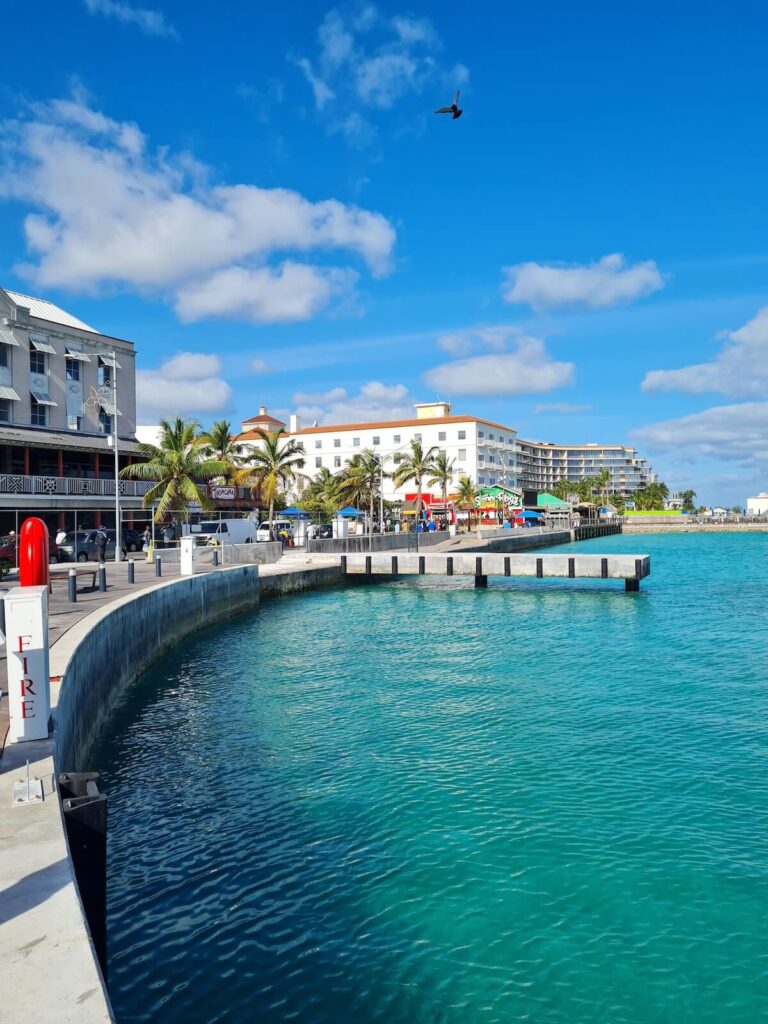
One more framing note: the two ports I’ll reference most for transportation and payment tactics are Nassau and Puerto Plata, because those are the two ports covered in this series where unofficial transportation is a recurring, documented issue. That’s not a knock on either destination — both host enormous cruise volumes overwhelmingly without incident. It’s just where the real problems show up, so that’s where the preparation needs to focus.
What Belongs on a Shore Excursion Safety Checklist?
A shore excursion safety checklist covers four things: a time buffer built backward from all-aboard, a communication plan for staying reachable ashore, verified licensed transportation, and a plan for what to do if something still goes wrong. Everything below builds out each piece.
The Timeline: Working Backward From All-Aboard
Before the cruise: the decisions that can’t be made at the pier
Carry a passport, even if your closed-loop cruise doesn’t require one. U.S. Customs and Border Protection permits U.S. citizens on closed-loop cruises — sailings that begin and end at the same U.S. port — to travel with a birth certificate and government photo ID instead of a passport; the rules live on CBP’s Western Hemisphere Travel Initiative page. Here’s what that permission doesn’t cover: flying. If you miss the ship in a foreign port or have to leave the cruise for an emergency, you’ll need a passport to fly back to the United States — and the traveler standing in Nassau with a birth certificate is about to learn how long an emergency passport takes. Bring a passport anyway. It’s one extra document, and it’s the difference between flying home and waiting on an emergency one.
Build the offline kit. Excursion confirmations, your tour company’s phone numbers, insurance assistance line, the pre-port intel card from my guide on medical emergencies in foreign ports — saved locally to your phone and printed once. Enroll in STEP so the nearest U.S. embassy can push alerts and locate you if it matters.
Read the fine print now, not later. What your tour company actually promises if they return you late, and what your travel insurance actually says about your planned activities, are questions with written answers — the full breakdown is in What Third-Party Excursion Insurance Actually Covers.
The morning of: two numbers and one trap
Two numbers go on your phone’s lock screen or a card in your pocket before you walk down the gangway: all-aboard time and the ship’s port agent contact — the local representative listed in the ship’s daily program for exactly the scenario where you’re delayed ashore. The port agent is the number most cruisers never record and the first number that matters when a day goes sideways.
Now the trap. Ships run on ship’s time, and ship’s time does not always match local time. Several Caribbean destinations sit in different time zones than Florida home ports or handle daylight saving differently, and smartphones helpfully auto-update to local time the moment you step ashore — which means the phone in your pocket can be silently lying to you about how long you have. Passengers miss ships over this every season, and it is entirely preventable.
Insider Tip: Treat ship’s time the way we treated duty time: one authoritative clock, no exceptions. Wear a cheap watch set to ship’s time and consider it the only clock that counts, or switch your phone’s automatic time zone off for the day and set a labeled alarm — TURNAROUND, in ship’s time — for the moment you must start heading back. When the alarm sounds, you move. Not after the next photo. It feels like overkill — until the day it’s the reason you’re back at the pier early instead of watching your ship pull away.
The buffer standard
This is where that difference turns into real numbers you have to plan around. If you’re on a cruise line’s own excursion, the cruise line manages the schedule and carries the delay risk — that’s a real part of what you paid for. Book independently, and building that cushion becomes your job — here’s the standard I recommend:
- Baseline, near-port activities: be physically back at the pier no less than 90 minutes before all-aboard. Not at the taxi stand, not in the terminal shops — at the pier.
- Anything requiring a drive of 30 minutes or more, water-based activities, or multi-stop days: stretch the buffer to two hours or more, because your return-trip risk stacks — traffic, boat schedules, one slow lunch.
- The distance test before you book: take the one-way travel time to the activity, double it, add the activity’s stated duration, add your buffer — if that total doesn’t fit comfortably inside the port call, the excursion doesn’t fit, no matter how good it looks. Amber Cove illustrates the principle: the terminal sits outside Puerto Plata proper, so every downtown plan is really a transportation plan with a downtown attached.
If a buffer that size feels like wasted vacation, think of it differently: the last 90 minutes belong to the pier neighborhood — a final drink, the shops you skipped, photos of your ship. The buffer isn’t lost time; it’s where you spend it that changes.
The Communication Plan
Staying reachable ashore is a safety issue, and it fails exactly when you’ve improvised it. Four layers, from cheapest to most reliable:
Your cell plan, decided before you sail. Whether your phone works in port, and at what cost, is knowable in advance — I wrote the full playbook in how to use your cell phone in a cruise port without surprise charges. The specific failure to prevent: discovering at 3:40 p.m., with the tender line growing, that you have no service and no way to call your tour company.
The tour company’s real phone number, tested. Not the marketplace’s generic support line — the number that reaches the human running your tour that day. Message them the morning of to confirm pickup; a dead number at 8 a.m. is a cancellation warning you received in time to re-plan, which beats discovering it at the meeting point.
Ship Wi-Fi as backup channel. If you carry a ship internet package, messaging apps can reach the ship’s onboard team and your travel companions even when cellular fails. Know before you leave the ship whether your package works at the pier.
Offline everything. Download the port’s offline map before you sail, and keep the intel card and confirmations stored locally. A phone with no signal still navigates on GPS with an offline map — a phone that needs a connection to load anything is a paperweight at exactly the wrong moment. And because a dead battery erases all four layers at once, a charged portable battery pack rides in the day bag.
Finally, the group rule from my jurisdiction piece applies here too: agree on a rally point and a check-in time the moment you split up, and make the rally time ship’s time, not local.
Licensed vs. Unofficial Transportation: Nassau and Puerto Plata
Unlicensed transportation is the most common independent-travel risk in the Caribbean, and it’s concentrated at the pier gates, where the walking traffic is. The general rule everywhere: licensed transportation is identifiable by the destination’s own system — plates, credentials, dispatch stands — and anyone whose legitimacy can’t be verified in about ten seconds has answered your question. Here’s what that looks like in the two ports where it matters most.
Nassau
The Bahamas runs a formal licensing system for taxis and tour vehicles, and licensed Bahamian taxis are identifiable by their distinctive yellow taxi plates — in Nassau, coded for New Providence — with driver credentials displayed in the vehicle. Fares are typically negotiated, not metered, which keeps the routine simple: confirm the vehicle’s taxi plate, confirm the driver’s displayed license, and agree on the full fare before you get in — per person or per vehicle, stated out loud. The freelancer waving you toward an unmarked car with a better price has stripped away every protection the licensing system exists to provide.
Separately, the State Department’s Bahamas advisory documents that commercial watercraft operate with inconsistent regulation and that assaults by jet ski operators have been reported — the same check-the-credentials rule extended to the water, where the stakes are higher. The fix is the same one from the hub guide: in this port, watercraft bookings get your maximum scrutiny or go through the ship.

Puerto Plata (Taíno Bay and Amber Cove)
Both terminals maintain official taxi dispatch inside the port area — organized stands with posted, fixed-rate structures — and the Dominican Republic fields POLITUR, the dedicated tourist police force listed in the State Department’s country resources, around tourist zones. The routine: use the official dispatch inside the terminal rather than accepting offers beyond the gates, confirm the rate at the stand before departing, and arrange your return ride — time and place — with the same driver or stand before you leave. Yes, the fixed rates cost more than the freelance offer outside the fence; the difference buys you a registered driver with someone to answer to, and that’s exactly what you’re paying for. If a transportation or vendor dispute does arise, POLITUR exists for visitors — locate the tourist police rather than escalating a street argument yourself.
One more distinction that trips up first-timers at Amber Cove in particular: transportation sold inside a terminal’s official system and a tour sold by someone standing near the terminal are different categories with different accountability, no matter how similar the sales pitch sounds. For booked activities, the tour-vetting steps from the hub guide apply. If you’d rather book independents through a marketplace with published policies and a real way to file a complaint, Viator is a legitimate option.
Payment and Scam Tactics: The Greatest Hits
I wrote a full field guide to spotting cruise port scams; here are the payment-specific tactics relevant to an independent port day, each with its counter. The pattern to internalize first: every one of these works by creating pressure at the moment money changes hands — so every counter works by settling terms before that moment.
The price change on arrival. The tour quoted at one price becomes “per person” instead of “per group,” or gains fuel surcharges, equipment fees, and mandatory tips at the dock. Counter: get the total, all-inclusive price in writing before port day, restate it out loud before departure — “forty total, for both of us, everything included” — and treat renegotiation-at-the-dock as the exit cue it is. Walking away at the pier costs you a plan; paying an invented price costs you money and teaches the company it works.
Cash-only, suddenly. The tour company that took a card deposit online insists the balance is cash-only on site, unreceipted. Sometimes that’s genuinely how small outfits run; sometimes it’s how disputes are prevented from ever existing. Counter: ask the payment method question before booking, prefer companies that take cards for the balance, and if cash is unavoidable, get a written receipt with the business name — the same principle again: a name on paper you can point to later.
Cash and Card Handling Risks
The “no change” tactic. You hand over a large bill; the driver or vendor regretfully has no change, and the difference becomes a tip you didn’t choose. Counter is prevention, and it’s the second tip below.
Counterfeit and confusion risks. Two related traps in cash-heavy ports: receiving bad or worthless change in a currency you don’t know well, and ATM-adjacent trouble. In the Dominican Republic, prices float between U.S. dollars and Dominican pesos, which is fertile ground for creative exchange-rate math at the register. Counter: know the rough exchange rate before you go ashore, confirm which currency a quoted price is in before agreeing, count change deliberately, and if you need local cash, use bank-affiliated ATMs in secure locations — terminal or bank premises — rather than standalone machines or street changers. And skip the street money changers entirely; the convenience premium is where the risk lives.
Insider Tip: Small bills are a security tool. Before every port day I break my shore cash into fives, tens, and singles, split between two pockets — never one visible wad. Small denominations defeat the no-change tactic outright, keep you from flashing your full holdings every time you pay (exactly the wealth display the State Department’s DR advisory warns against), and cap your exposure in any single transaction. Pulling out a fat wallet in the wrong place is an easy way to become a target. Keep it slim, keep it split, and keep it out of sight until you need it.
Card Skimming Exposure
Cards leaving your sight in unfamiliar establishments carry cloning risk anywhere on earth. Counter: pay where the terminal comes to you, watch the transaction, use one designated travel card with alerts enabled rather than your whole wallet — and let RFID-conscious carry handle the passive side, a habit I covered in the pool deck security guide.
If It All Goes Wrong Anyway
Plans reduce risk; they don’t eliminate it. If the day breaks badly despite the buffers, the sequence is: contact the ship’s port agent immediately (that number you recorded this morning), then follow the full playbook in What to Do If You Miss Your Cruise Ship — it walks through the eight steps from the pier to your next-port reunion, and it’s exactly why the passport recommendation above isn’t optional-feeling advice. Remember the asymmetry one last time: on an independent booking, reaching the next port is your responsibility and your expense, executed through your own logistics. Follow this checklist and you shouldn’t ever need that sentence. The missed-ship article is there in case you do.
The One-Page Checklist
Condensed for the fridge, the day bag, and the group chat:
Before the cruise:
- Passport packed, regardless of closed-loop rules
- Fine print read
- Offline kit built
- STEP enrolled
- Cell plan decided
Port day morning:
- All-aboard time recorded in ship’s time
- Port agent number recorded
- Tour company contact confirmed live
- Watch or phone locked to ship’s time
- TURNAROUND alarm set
- Small bills, two pockets
- Intel card on body
Off the ship:
- Licensed transportation only — plates, credentials, official dispatch
- Full price agreed out loud before boarding anything
- Rally point and check-in set the moment the group splits
Deadline:
- Back at the pier 90 minutes before all-aboard — two hours or more if you went far or went on the water
Something goes wrong:
- Port agent first
- Missed-ship playbook second
- Panic never
Staying Safe on Your Own
Shore excursion safety comes down to this: know your deadline, carry a backup plan, and never let a stranger’s price or a stranger’s car make the decision for you. Follow the checklist above and the odds of needing anything beyond it drop close to zero — but if the day does go wrong, you’ll already know exactly what to do next.
Two companion reads before your next port day: What to Do If You Miss Your Cruise Ship is the contingency this entire checklist is built to keep theoretical, and my cell phone in port guide covers staying connected in full.
Travel safe. Make all-aboard with time to spare.
— Rick Hayes, Travel Safety Authority
Need an independent opinion on whether an independent port day plan is the right fit for your travel style? Visit the Work With Rick page to schedule a consulting session. I provide independent safety and travel planning guidance, with no booking commissions or sales incentives.
This article contains affiliate links. If you purchase, book, or make a reservation through a link on this page, I may earn a small commission at no additional cost to you. Affiliate relationships include but are not limited to Amazon Associates, Viator, RoamRight, and other travel and product partners. This does not influence my recommendations — I only link to products, services, and experiences I would genuinely recommend to my own clients. Travel insurance recommendations are provided for informational purposes only. I am not a licensed insurance agent. Please review all policy details carefully before purchasing. See my full Disclaimer for details.
The information in this article is provided for general educational purposes only and reflects the personal experience and professional background of the author. It is not a substitute for professional security consultation or official government travel guidance. Safety conditions at any destination can change rapidly — always verify current advisories at travel.state.gov before your trip. Reliance on any information in this article is at your own risk. This site may contain affiliate links; see the full Disclaimer for details.